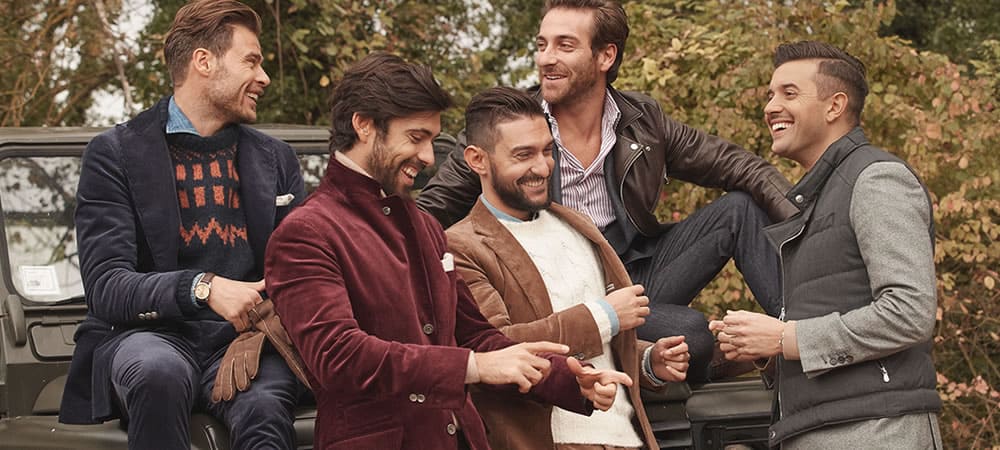
“Italians see fashion as a search for beauty,” says Matteo Persivale, one of Milan’s best-dressed men and a senior writer at Corriere della Serra, the country’s leading daily newspaper.
Perhaps that’s why those in less tropical climes are still so drawn to the Italianate style — it breaks free of the workaday pragmatism of traditional tailoring, and lives with a passion that most rarely allow their more buttoned-up wardrobes to experience.
Italian style has a classic quality about it, but right now it’s also pushing envelopes and generating hype for fun. Luxury brands like Gucci, Moncler and Stone Island – all with strikingly different heritage – are enjoying crossover success, appealing to one-percenters and streetwear-loving millennials alike.
Not that you have to be a high roller to sprinkle some sprezzatura over your wardrobe. Here are 10 of the finest Italian menswear brands, and the particulars of their own search for beauty.
Incotex
Best For: Versatile Trousers
Venetian label Incotex is part of the much-loved Slowear collective — a group of craftsmen and design houses with a shared belief in producing higher quality clothes and a distinct aversion to disposable garments and fast fashion. The brand’s simple but expertly built chinos are a staple of most Italian men’s wardrobes, where their understated colourways and traditional detailing means they’re equally at home below a blazer or paired with a T-shirt and sneakers.
Aspesi
Best For: Expertly Engineered Outerwear
Since 1969, Aspesi has specialised in the kind of lifelong clothing companions that will weather any storm and grow better with age. The brand’s founder, Alberto Aspesi, seldom gives interviews and designs his garments without any outer logos. Instead, he lets the garments speak for themselves, mainly through their precise craftsmanship and rich materials. Its field jackets, for example, are some of the most coveted in the world thanks to their military-issue detailing, utilitarian feel, and year-round versatility.
Brunello Cucinelli
Best For: Indulgent Investment Pieces
It’s little wonder the Italian press dubs Mr Brunello Cucinelli ‘The King of Cashmere’. Aged 25, having recently dropped out of university, he took the bold step of being the first to dye the ultra soft textile to create his designs. Today, Cucinelli’s clothes sit at the higher-end of the men’s market, worn by everyone from the Hollywood elite to royalty, but they’re characterised by such next-level craftsmanship that they’re well worth saving up for.
Rubinacci
Best For: Neapolitan Flair
Triple-pleated trousers! Voluptuous silk pocket squares! Butter-soft ‘Belgian’ loafers! Rubinacci is Neopolitan flair incarnate. But this dandified label isn’t just the fare of Pitti Peacocks and their overly choreographed carelessness, this is the real deal. Founded under the watch of Gennaro Rubinacci in 1932, the brand continues to be run three generations later by the same family. The Napoli-based house’s construction is near masterful, with an emphasis on super light tailoring and exquisite detailing: most Rubinacci blazers, for example, are silk-lined and printed with extravagant baroque scenes.
Gucci
Best For: High-Fashion Fun
Under the visionary gaze of Alessandro Michele, one of Italy’s most established fashion houses has finally got its groove back. Though timeless staples like the horsebit loafer add a pinch of classic Ivy League style to any outfit, it’s in the newer, more outlandish designs and collaborations that Gucci has come to life (and been restored to the top of luxury fashion’s best-seller list). Don the label’s statement outerwear or ornately embroidered knitwear for a dose of go-to-hell Italian expressionism.
Loro Piana
Best For: Cashmere
For Loro Piana, it’s all about the fabric. Since its conception in 1924, this family business has weaved some of the finest cashmere known to man and is still the world’s largest producer of the soft stuff today. That’s not to say the design and finishing aren’t pretty special too — expect versatile wardrobe staples like chambray shirts and suede trucker jackets in a range of high-tech finishes. The wind and water-resistant Storm System coating, for example, protects its baby cashmere without ever diminishing its handfeel.
Tod’s
Best For: Statement Footwear
Few things embody that certain un certo non so che (the Italian version of ‘je ne sais quoi’) like a pair of Tod’s Gommino driving shoes. Their soft soles, each set on the brand’s signature rubber pebbles (133 to be exact), and illuminated colourways show a healthy disdain for our soggy Anglo Saxon weather, but they’re worth a punt no matter the climate. Owned by the achingly stylish Della Valle family, Tod’s has also developed a wider range of sturdier, year-round options that will complement any wardrobe. We particularly like its take on the traditional chukka boot.
Armani
Best For: Double-Breasted Suiting
Perhaps Italy’s best-known designer, Giorgio Armani is a purveyor, ambassador and creator of truly immaculate tailoring. The house, which is still overseen by the eponymous man himself, made its mark with the kind of flawless double-breasted suits that could create an A-lister overnight (we’re looking at you, Mr Gere), with subtle touches such as patch pockets on half-lined blazers that continue to be adored the world over.
Prada
Best For: Retro Colour
After starting life as a high-end leather goods shop in 1913, Prada quickly became a darling of the Italian royal family and its official supplier of livery and court clothing. Though today we don’t have much use for ornamental gold epaulettes, there is a space in most wardrobes for the label’s distinctly retro, 1970s-inflected suiting, mid-century Cuban collar shirts and bold, nigh-on fluorescent sneakers.
Persol
Best For: Dolce Vita Eyewear
Steve McQueen wore Persols religiously, which tells you pretty much everything you need to know about the eyewear dons. Rugged yet refined, equally at home on the open road as on the red carpets of Venice, a pair of Persols is the ultimate Italian accessory. Their silver hallmark, dubbed the ‘Supreme Arrow’, is a sign of remarkable build quality and badass elegance wherever it’s spotted. One for the pub quiz: the company developed the first ever flexible stem sunglasses, which allow the arms to contour to any head shape.
How To Dress Like an Italian
Accessorise Artfully
“Italy’s a diverse country, with a diverse climate, diverse habits and diverse cultures,” says Persivale. As such, the accessories that Italian men wear are personal, unique and distinctive.
“Your ties, pocket squares, the patterns of your fabrics: every accessory carries the values of the Italian man who wears it.” Translated, accessories can be extravagant and overstated (most often in the south) or muted and understated (in Milan and the north), but they should always be true to the wearer’s own style.
Live And Breathe Sprezzatura
“Sprezzatura is the gift of making difficult things look easy,” says Persivale. “It’s hard to explain to people that it can’t be forced.
“Look into yourself, find the piece of wardrobe that better expresses your taste, your attitude, and go ahead. Rules aren’t really there any more, just break them in a way that makes sense to you, and allow them to tell a story.”
Master Unstructured Tailoring
Lighter, less structured tailoring is a staple of Italian dressing. And even though it lends a more relaxed look to an ensemble, there are still conventions to observe.
“A higher armhole and a fuller sleeve are a thing of beauty on unstructured suiting,” says Persivale. “Also, I’d rather have a slightly higher waist than a too-low waist.”
Trouser Length Is Everything
“I’d always advise paying attention to the way the leg falls on your shoe when you’re having your trousers altered,” says Persivale. “It doesn’t matter if you’re sample size or need significant alterations, find the best tailor for alterations that you can afford.”
The general rule for elegant trousering the Italian way is simple: “Show your shoe without necessarily showing your ankle.”
Novartis is adding on to its capabilities in radiopharmaceuticals through a deal to acquire Mariana Oncology, a startup with a drug pipeline and technologies that diversify the pharmaceutical giant’s scope in this fast-growing area of cancer drug research.
According to the deal terms announced Thursday, Novartis is paying $1 billion up front. Milestone payments could bring the shareholders Mariana another $750 million.
Novartis is already a leader in radiopharmaceuticals with two commercialized therapies, Lutathera for gastroenteropancreatic neuroendocrine tumors and Pluvicto for prostate cancer. Both products employ the radioisotope lutetium, a beta particle. Beta particles are smaller, making them good at penetrating tissue. But they are less potent than alpha particles.
The research of Watertown, Massachusetts-based Mariana spans both alpha and beta particles. When Mariana emerged from stealth in 2021, co-founder and CEO Simon Read told MedCity News that working with both types of particles enabled the company to select the one best suited for a given cancer. Alpha particles could be used for smaller tumors while beta particles could be used for larger ones.
Mariana says it designs its peptide-based radioligand therapies to maximize tumor penetration while minimizing toxicity. Lead program MC-339, based on the alpha particle actinium, is in development as a treatment for small cell lung cancer. Mariana has not disclosed the target of this radiopharmaceutical.
Novartis’s two commercialized radiopharmaceuticals are from acquisitions: Lutathera came in 2017 followed by Pluvicto in 2018. The Swiss pharma giant’s purchase of Mariana continues a newer streak of radiopharmaceuticals dealmaking by other big pharma layers. Last year, Eli Lilly entered the radiopharmaceuticals space with the $1.4 billion acquisition of Point Biopharma. Bristol Myers Squibb soon followed with its $4.1 billion acquisition of RayzeBio. In March, AstraZeneca agreed to pay $2 billion to buy partner Fusion Pharmaceuticals.
Mariana was formed by the venture capital firms Atlas Ventures, Access Biotechnology, and RA Capital Management, launching in 2021 backed by $75 million in Series A financing. At that time, it was known as Curie Therapeutics. When Mariana closed its $175 million Series B financing last September, the company said it was preparing to advance MC-339 to the clinic in 2024. Besides MC-339, Mariana has not provided details about other programs in its pipeline.
“This acquisition of Mariana Oncology brings to Novartis phenomenal talent and new capabilities in radioligand therapeutic research that complement our wide-ranging internal research and drug discovery efforts, in addition to our translational and clinical development capabilities,” Shiva Malek, global head of oncology for biomedical research at Novartis, said in a prepared statement.
It was only a generation ago (give or take) that a basin-cut was still a legitimate men’s hairstyle for some barbers. Before the barbershop renaissance in the 21st century, the trade often amounted to a hairy half hour in the chair as someone with minimal training took a hack-it-and-hope approach to your head.
A lot has changed. These days even high-street barbers are capable of creating haircuts akin to artwork, using tools that wouldn’t look out of place in an operating theatre.
Case in point: the taper fade.
This modern haircut element is the perfect mix of classic and contemporary, providing the ideal foundation upon which to build almost any style. As sharp on a LinkedIn bio as it is on a Tinder one, it’s a next-level barbering technique and one that will get you noticed. But just what exactly is it?
Taper Vs. Fade: What’s The Difference?
The first thing to understand about the taper fade is that it is actually an amalgamation of two different barbering tricks – somewhat unsurprisingly, the taper and the fade.
These two cutting methods are similar in that they both offer a way to graduate smoothly between differing lengths of hair. The distinction between the two is that a taper deals with longer hair and sculpts using both scissors and clippers, while a fade is performed with clippers only and is much shorter, right down to the skin usually.
Leading barber Joe Mills, of Joe & Co., has a handy analogy to make it clear.
“Think about trousers that taper, says Mills. “They gradually get narrower. So, in haircut terms, a taper is not down to skin but the hair gradually gets shorter. A fade is similar but fades away entirely, hence the term ‘skin fade’. It’s more extreme than a taper.”
What Is A Taper Fade Haircut?
Combining a taper with a fade allows barbers to neatly transition from hair of a significant length, right down to a skin fade with – quite literally – razor-sharp precision. This creates the sort of modern, polished look that would have had the hairdressers of yesteryear scratching at their butchered barnets in astonishment.
How Did The Taper Fade Become Popular?
Both tapered and faded styles have had a huge resurgence over the past few years, thanks in no small part to certain period dramas opening men’s eyes to a new (or old) style of grooming.
“It descended from the old days when hair clippers were hand powered and you could only go short,” explains Mikey Pearson, director of Manifesto barbershop. “They would cut along the hairline to create a kind of wedge then blend it in with scissors. If hair flicked out from above the ears you would be classed as ‘scruffy’.”
The taper fade harks back to this, while keeping one foot firmly planted in the here and now, making it the trim of choice for so many contemporary, style-conscious gents.
“It’s a clean, crisp look,” says Pearson. “And thanks to the likes of the Peaky Blinders we’re seeing more and more men asking for it.”
Is It For You?
The taper fade is a versatile trim, because it’s essentially a boss-level version of the short back and sides. It can be worn with anything from a short crop to an all-singing, all-shiny pompadour on top. Because of this versatility, it’s a cut that can be adapted to suit most face shapes.
However, if you’re cursed with a boat race longer than Seabiscuit’s and want to try this style, you’re best advised to steer clear of anything with too much height. The close-cut sides and length left on top mean that the taper fade naturally lends the face some additional length. Which, unless you’re deliberately going for the equine vibe, is probably something to avoid.
“The taper fade is suited to most as you can adapt the height and shape of the fade and weight of the blend to suit any client,” explains Tom Chapman, founder of the Lions Barber Collective and ambassador to The Bluebeards Revenge. “If you have a more daring client in the chair you can take the shortest grad up pretty high and leave a heavy blend. You can also leave more weight at the sides behind the ear by creating an arch as your base shape instead of the usual straight shape.”
The Best Taper Fade Styles And How To Get Them
Before you buzz off to the barbers for one of the decade’s defining chops, take a look at some of the style’s most popular variations for a bit of follicular inspiration.
Taper Fade & Short Crop
They say less is more and, looking at the minimalist styling of this particular trim, we’re inclined to agree. It’s perfect for the kind of guy who wants something smart and low maintenance that won’t leave him wincing at old photographs 10 years down the line.
“This style has a very graduated skin-fade from the base up to a longer layer,” explains Mark Woolley, founder of Electric Hairdressing. “The top layer is slightly disconnected from the back and sides.”
Think this might be the cut for you? Woolley always recommends taking a photo along with you to avoid any awkward, post-trim mirror moments.
“You ultimately want to ask for a fading cut with a slightly disconnected top layer which gives you a nice, choppy texture,” he says.
Apply a salt spray or matte clay/paste roughly with your fingers to increase separation and help emphasise the natural, care-free texture created on top.
Recommended Products
Taper Fade & Pompadour
If Johnny Cash had been born 60 years later, there’s no doubt that this would be the do he’d be rocking. A perfect blend of old and new, the pompadour is a nod to one of the defining styles of the last century, while the taper fade on the back and sides brings things right up to date.
So, how can you get the look? Again, you’ll want some inspiration.
“A picture is worth a hundred words,” says Mills. “This is doubly true when getting a cut. Take an image in so at least your barber knows what you are thinking. The terminology we use can be confusing and for me the consultation with the client is key.”
Mills adds that the trick to getting the cut right is to know how close you want to go at the back and sides. “Ideally the top should be at least four or five inches longer than at the back and sides,” he says.
“To style it you will need a decent hair dryer and a Denman vent brush,” advises Mills. “This isn’t a wash and go look.
“I recommend a styling mousse on clean damp hair. Evenly distribute a tangerine-sized amount through the hair and then using your brush and dryer, style it back away from the face creating height and direction.” Finish with a strong-hold hair spray if you find your style loses its pomp after a couple of hours.
Recommended Products
Taper Fade & Side-Swept Length
Generally speaking, the graduated back and sides of a taper fade is geared towards shorter haircuts. However, with some clever, asymmetrical styling, there’s no reason you can’t embrace your inner grunger at the same time.
“The key characteristics of this cut are the low fade on the back and sides with a disconnected top,” says Pearson.
“Ask for a low fade, something like a five into a four. Keep the top disconnected, cutting short to long to keep length at the fringe. As always I would recommend taking a photo with you.”
In terms of styling at home, Pearson suggests using a volume spray in damp hair and blow drying upwards. Once dry, he recommends finishing off with a matte clay to add texture.
Recommended Products
Taper Fade & Short Braids
A few short braids or dreads thrown into the mix adds a nice touch of personality to a taper fade, while remaining clean and smart enough to dress up or down. Highly-experienced barber Joseph Lanzante, who runs his own barbering academy, is certainly a fan.
“A taper fade finished with short dreads on top has become a very popular haircut as it provides a clean and stylish finish to the overall style,” he says.
“To create a clean-cut taper fade, you will need to ask your barber for a grade one cut on the back, fading up to grade two and three. Make sure you keep your hair long on top long to ensure you can create the short dreads that are key to this style.”
Another plus point for this particular style is that management at home couldn’t be easier. Lanzante recommends nothing more complex than coconut oil. Rub the oil through the hair to keep it nourished and moisturised but be careful not to use too much or it could wind up looking oily.
Data privacy became a significant issue in the healthcare sector in 2023. Many lawsuits were filed, fines and regulations were imposed, and some healthcare websites had to report breaches. Regulatory bodies like The Department of Health and Human Services (HHS) and the Federal Trade Commission (FTC) issued warnings to multiple healthcare organizations that third parties may be unlawfully collecting health data on their websites.
The focus on data privacy has only intensified in 2024, with new laws adding to the patchwork of regulations already in place. This article explores where we’ve been, where we’re going, and how healthcare organizations can protect themselves from privacy risks caused by the Meta pixel and other third-party trackers.
Review of 2023 – Regulatory actions and lawsuits in healthcare
2023 kicked off with the FTC’s fine to GoodRx for $1.5 million in February. The issue at hand is one that so many healthcare companies have since learned firsthand: GoodRx was sharing personal health information with Meta, Google, and other third parties without the required consumer disclosure and consent from their website visitors.As we have now seen in hundreds of cases, websites usually are not intentionally sharing this data with third parties, but avoiding this sharing on a modern website can be harder than it seems.
Similarly, Betterhelp faced a $7.8 million fine the following month. In July, a joint letter from the FTC and HHS warned 120 hospitals and telehealth systems about using the Meta Pixel, potentially sharing personal health information, and how that could be considered a HIPAA violation. The FTC warned that using third-party pixels could potentially breach the FTC Act, HIPAA Privacy, Security, and Breach Notification Rules, as well as various state and federal laws. 2023 also shed light on the viability of Meta pixel lawsuits, with many hospitals settling lawsuits, including Advocate Aurora Hospital for $12.25 million in August. While the focus on healthcare data was clear, the overall solution was less so, as many healthcare and retails sites came to learn.
These enforcement actions are catching up to the current state of data sharing that has typically been BAU when building websites. It’s not so much that a company wants to share your data or has ill intentions. Third parties use the data they receive to offer companies the opportunity to target ads or custom content to consumers. That’s where things get sticky with healthcare and other sensitive data.
Here’s the scenario we all want to avoid. When visiting your hospital’s website to check your appointment, you decide to search for various medical conditions for you or a loved one. That information is shared with other trackers, and in turn other trackers and data aggregators, and often ends up with data brokers. The data is then used as criteria for whether or not you see ads for, let’s say, cancer treatment on other websites across the internet. This can lead to some embarrassing moments if you’re screen sharing at work and happen to open up a search bar (think ad for addiction rehab).
The issue gets considerably more serious when precise location tracking is used and shared. Consider this happening when searching for sensitive conditions like reproductive health care, addiction or mental health treatments, etc. Isn’t this the privacy HIPAA promised to protect?
2024 – Current privacy landscape & privacy predictions
As we move into 2024, the focus on healthcare continues. Currently, 16 state privacy laws have been signed, with five states (California, Colorado, Virginia, Connecticut, and Utah) already enacted. Additionally, two healthcare-specific laws, one in Nevada and one in Washington, became effective on March 31, 2024. Three more states (Tennessee, Florida, and Oregon) will enact laws on July 31, 2024 followed by Montana on October 1, 2024. With states taking the lead, companies face a complex regulatory landscape, navigating multiple state-specific regulations.
On April 5th, two key members of Congress proposed a draft bipartisan, bicameral federal privacy bill known as the American Privacy Rights Act. Even if this bill is not passed, it shows the urgency and popularity of regulating privacy.
The Washington My Health My Data Act (MHMDA) is particularly noteworthy for several reasons:
It broadens the definition of consumer health data to include various personal information linked to a consumer, encompassing medical records, interventions, reproductive health, biometrics, and inferences from non-health data like online browsing histories.
MHMDA mandates clear, affirmative, informed, and unambiguous opt-in consent for data collection, sharing, and sale, setting a high bar for valid consent.
The law allows consumers to sue organizations for violating consent and data handling requirements, enhancing enforcement and potentially broadening the law’s interpretation. And with one of the first allowed “private rights of action”, individuals can now initiate lawsuits.
This law marks a significant change in how companies must manage sensitive health data, extending beyond the current HIPAA regulations. It addresses health data collected and shared through tracking tools like the Meta pixel and others. We anticipate more lawsuits and expect more states to enact similar laws in 2024.
Challenges and tools for compliance
While regulations are being passed with increasing frequency, the lack of practical guidance on how to comply remains. Other things that make compliance challenging is the complexity and dynamic nature of the web and the fact that the existing tools that address compliance actually fall short in many instances.
Websites evolve daily, so do trackers on them, but consent tools often struggle to keep up with the daily discovery of new trackers. When it comes to implementing consent tools, there’s often a perception that simply employing a consent management tool equates to automatic compliance. This is NOT the case. Consent tools require a significant amount of manual configuration during initial setup. Additionally, they need manual oversight and updates to remain compliant with the frequent changes to trackers on websites. Other problems with the setup are that they’re often missing from certain pages and don’t pick up different types of data collection mechanisms like pixels and fingerprinters that collect data, meaning your company might not have proper consent.
In summary, most companies want to do right, but the rules are unclear, and the tools often don’t work as they should.
Staying ahead: Protection strategies
Effort and intent to abide by privacy regulations go a long way. To safeguard against unauthorized data collection, companies should:
Gain visibility and control over all third parties on their websites and apps. Implement real-time scanning and blocking tools to inform you of known and unexpected third parties.
Know the scope of your data sharing to ensure tools are in place to limit the scope and use of data with all third parties receiving data. Even if a contract is in place, you still want to monitor their data collections practices.
Scan often to reliably manage the risk of new trackers and tags being added. Because a third party can suddenly permit another third party to collect data on your sites, the scope of third parties can be constantly changing.
Obtain explicit user consent to ensure ongoing management and compliance with evolving regulations. They should also regularly audit consent tools to ensure they function properly, gathering consent for all sources of data collection and on all pages.
Regular data audits, training teams on privacy practices, and fostering collaboration between IT and legal departments are crucial. With dynamic technological changes, vigilant monitoring is essential to avoid unintended consequences.
Organizations must prioritize transparency, limit data collection, block unknown third parties, and establish clear processes for navigating the regulatory landscape. It is also crucial to embrace data minimization, implement robust security measures, foster a privacy-first culture, and adapt to ongoing changes.
Photo: LeoWolfert, Getty Images
As CEO & Founder of LOKKER, Ian Cohen is dedicated to providing solutions that empower companies to take control of their privacy obligations. Before founding LOKKER in 2021, Cohen formerly served as CEO for Credit.com, and CPO for Experian, where he focused on consumer-permissioned data.
You don’t have to be a haulier to get a lot of mileage out of a trucker. Or a cowboy. The jean jacket has, like a lot of workwear staples, gone from being a beat-up old-reliable of menswear to a go-to for more dress codes than you’d imagine. But what do you pair with a denim jacket besides… More denim? That’s where this guide to men’s jean jacket outfits comes in.
“A denim jacket is a fantastic option to have at your disposal for its versatility, especially at this time of the year,” says Daniel Rhone, stylist and personal shopper for a squad of top, top Premier League footballers – emphasis on ‘ballers’. “I like to layer one as a middle tier between my choice of outerwear and an underlayer of a tee or shirt. Particularly if I’ve underestimated the temperature outside.”
You don’t have to take his word for it, although you should, because he’s a very cool guy, even when he wraps up warm. But to drive the point home, here are 10 different ways to wear a jean jacket so that you can keep on trucking down the road.
Key Takeaways
Discover how to style a men’s denim jacket for any occasion with our concise guide. A denim jacket offers unmatched versatility, pairing well with everything from casual chinos and white tees to more refined black jeans or tailored trousers.
Adapt your look to suit different seasons by layering effectively or keeping it simple. For an optimal fit and a stylish ensemble, focus on coordinating colors and appropriate sizing. Elevate your wardrobe by integrating this timeless piece, blending classic and contemporary styles seamlessly.
View More Styles an Asket
Jean Jacket With Chinos
You’re effectively wearing jeans on your top half, and you know that double denim is dangerous territory. But so is going out half-naked. Enter chinos. They can be smart, with formalising features such as pleats, creases and a tab closure, but they can also be casual.
Their military history and typically utilitarian cotton-twill fabric nevertheless make them a dependable denim ally; the original khaki – technically a colour, not a style – is a classic pairing. Add a white T-shirt (see below) and you’re Don Draper at the weekend.
Jean Jacket With A White T-shirt
This is another classic pairing enshrined in Americana. A crisp but fuss-free look, it’s not quite as easy as you might think.
Its success largely hinges on finding the perfect white tee, which can be a Goldilocks-ian quest: not too slim, not too baggy; not too translucent, not too bulletproof; not too “gunny”, not too modest; not too much like a dress, not too much like a crop-top; not so high on the neck so that it’s an undershirt-cum-garotte, not so low that it’s a clavicle-exposing deep-U.
Whoever called the white tee a basic was wrong.
Jean Jacket With Joggers
A denim jacket doesn’t exactly fall under the category of sportswear, unless you’re a rodeo rider. But it provides a degree of structure to offset the softness of your joggers, as well as more prosaically just not being another piece of jersey, thereby saving you from having to go full tracksuit or ‘Tesco tuxedo’.
This isn’t a hard-and-fast rule (there aren’t many of those left in menswear) but you’re probably best to steer clear of cowboy details on your denim jacket. Style historians don’t record athleisure as having been a key trend in the Old West.
Jean Jacket With Black Jeans
Double denim can be doubly good even if you flagrantly transgress the ‘distinct shades’ rule: see Martin Sheen in Badlands. It can also be very, very bad: see Justin Timberlake in your nightmares. But for a fail-safe way to splice jeans, black and blue is hard to beat.
Other colours of jeans can do the same trick: grey, for one, and even white, although that presents its own pitfalls, not to mention impracticalities. But like Wesley Snipes having a cheeky flutter on the Rugby World Cup, always bet on black.
Jean Jacket With Indigo Jeans
A shade more difficult than black jeans, but still not that hard, unwashed indigo denim will stand much less of a chance of optically bleeding into a lighter and/or distressed denim jacket than lighter and/or distressed jeans, for reasons that should hopefully be apparent from reading this sentence.
It’s not like double, indistinguishably dark denim can’t ever be done, mind: we seem to recall Ryan Gosling looking fairly badass in Drive. But that said, he is Canadian, so may possess a home country advantage.
Jean Jacket With A Shirt And Tie
Yes, you can mix business with workwear. Make the partnership less what-the-hell by dialling down the dressiness of the other elements to bring them more in line with your decidedly casual trucker: a button-down Oxford instead of a stiff-coloured poplin; a knitted tie instead of woven silk; chinos instead of tailored trousers (although they can work too – see below).
N.B., even if your denim jacket isn’t overly faded, it’s still way more informal than any tailored equivalent, so may not be SFW at your place of employment.
Jean Jacket With A Hoodie
This combo is a fallback for any menswear blogger attempting to look vaguely urban. Don’t let that put you off. A hoodie is a natural sparring partner for a denim jacket because they’re both low-key, chuck-on weekend staples.
In that vein, don’t overdo it. Keep the colours neutral and don’t go too boxy with the fit of the hoodie. Avoid the brash logos of streetwear’s latest drops and stick to a navy or grey marl under a blue denim jacket.
Jean Jacket With Tailored Trousers
Similar to the shirt and tie, it helps if you can minimise the seeming discord between your casual jacket and smart trousers. That could be by jacking your jacket up in smartness with an unwashed dark denim, plus minimal bells and whistles such as contrast stitching or rivets.
Likewise, you could pull your trousers down a notch in formality with a more substantial, nubby material that’s closer to denim on the spectrum. Or opt for a relaxed fit, a cropped length or turn-ups.
Jean Jacket With A Roll Neck
Anywhere you can wear a shirt, you can rock a roll neck. Well, pretty much. But before you knit up, consider your denim jacket’s finish, whether pristine indigo or battered stonewash, and how that metaphorically stitches together with your jumper.
If the latter’s too sheer and sheeny, there might be a dissonance with the rough, tough denim; too chunky and your jacket might appear insubstantial by comparison. (Generally speaking, layers should get thicker the further away they get from your body, and vice versa.)
Jean Jacket With An Overcoat Or Topcoat
As with a tailored blazer, your denim jacket should be slim fitting if you want to wear it under an overcoat. You should just about be able to get two fingers down it when done up and it should be narrow-necked so it doesn’t compete with your coat’s lapels.
By its nature, even the smartest tailored outerwear has a degree of ruggedness so this is not as incongruous as you might think. Don’t be afraid to juxtapose, either: camel, which normally skews formal, can be a really nice combo. Bonus points if your jacket’s stitching matches the colour.
Final Verdict
Discover how to style a men’s denim jacket for any occasion with our concise guide. A denim jacket offers unmatched versatility, pairing well with everything from casual chinos and white tees to more refined black jeans or tailored trousers.
Adapt your look to suit different seasons by layering effectively or keeping it simple. For an optimal fit and a stylish ensemble, focus on coordinating colors and appropriate sizing. Elevate your wardrobe by integrating this timeless piece, blending classic and contemporary styles seamlessly.
We all know the best men’s polo shirts are a good compromise between classy dress shirts and cozy tees.
They’re often made with the same fabric as athletic wear and come in solid colors, vibrant hues, and bold patterns.
They can be worn for a wide range of occasions, whether it’s in the office, at cocktail parties, during happy hours, or even as a casual base layer for suits.
A good polo shirt needs to be woven with high-quality materials and should be breathable to stand against daily wear.
I’ve researched high and low for the best men’s polo shirts—and even recently tried a few styles from the top brands—that can match your needs for various occasions.
Whether you just want to elevate your attire or have a cozy staple for work, these are the best polo shirts for men.
Key Takeaways
To unravel the best men’s polo shirts, I combed through a ton of brands, Amazon listings, and customer reviews. The nine below are the top options I found based on material, size, fit, and color.
Why it’s great: The Collars & Co. Semi-Spread Collar Polo Rosewood weaves comfort and style together. This short-sleeved shirt sports a formal semi-spread dress collar and offers 4-way stretch to ensure the perfect feel, tucked or untucked.
The collar can even accommodate a large tie knot and it’s breathable to wear with a blazer on. It’s also equipped with moisture-wicking properties, so you won’t deal with annoying sweat when you wear it during warm weather or a round of golf.
Who is this for? This is one of the very best men’s polo shirts. It’s a perfect shirt for men who want a comfortable top that doesn’t feel stuffy. Plus, it comes in a lot of colors and patterns.
Flaws but not deal-breakers: The fabric may pill easily when washed with other types of clothes. Please follow the care instructions!
Why it’s great: Crafted from certified organic cotton, the LESTRANGE Fine Knit Polo boasts a smooth fabric with a luxurious finish that drapes effortlessly. The fabric is “gassed,” which makes it free from fuzz, in turn producing fine fibers. The result is a vibrant garment that truly shines with its colors.
The shirt’s lightweight and breathable structure makes it the perfect warm-weather staple. It also displays a clean, refined, and modern image through its minimal open placket collar.
Who is this for? If you have the cash for it, then is is one of the best polos for sustainability and design.
Flaws but not deal-breakers: This is one of the best men’s polo shirts you can buy. However, you’ll pay more than $100, so it might not be for everyone.
Why it’s great: The Billy Reid Pensacola Polo hides its features behind its simple design. It’s cut in soft organic cotton and garment-dyed to produce its soft and vibrant texture. It boasts a classic fit with straight sleeves, giving the shirt an elevated vintage look.
The collar and placket maintain their form through the brand’s woven cotton sheeting technique. You’ll look equally dapper when unbuttoned, as the underplacket’s twill tape adds a refined touch.
The Billy Reid Pensacola is one of the best men’s polo shirts you can get. It’s a versatile top that you can wear tucked or untucked, making it a great everyday wear option for both dressy and casual social events.
Who is this for? A great option for modern guys searching for that “effortless” look. Its construction will also accentuate a muscular build (if that’s you, champ).
Flaws but not deal-breakers: The pocket tends to curl up if cared for poorly. Nothing a regular iron can’t fix!
Why it’s great: Cozy and definitely airy, the Aurélien White Egyptian Polo Shirt maximizes the softness and lightweight texture of fine cotton to provide possibly the most comfortable shirt men can find.
This piece of smart-casual wear drapes effortlessly down the body and is extra soft. It also boasts the relaxed elegance the brand is known for and showcases 14 vibrant colors that can match just about any outfit. All of that makes it one of the best men’s polo shirts out there.
Who is this for? A great option for summer-ready attire for men, as the light cotton fabric provides enough breeze to stay cool despite the rising temperature.
Flaws but not deal-breakers: It’s a bit loose, so men who want to show off their masculine figure may not find this to be the right shirt for them.
Why it’s great: Woven in Brescia, Northern Italy, the Luca Falconi Elba Polo is a premium linen jersey polo shirt that showcases unparalleled breathability. Its lightweight weave is accompanied by a smooth and soft texture brought about by its Aloe Vera treatment finish.
The shirt comes with a relaxed fit and nine visually pleasing hues. The mother-of-pearl buttons further upscale the shirt’s elegance. It also comes with sweat-absorbent characteristics, making it ideal for daily wear.
Who is this for? This is one of the best men’s polo shirts you can find. It’s a great, functional staple for a man’s wardrobe. One that goes well with both city casual and beach-side leisure.
Flaws but not deal-breakers: The fabric is a bit thin, so it may not be a good option for more formal work events.
Material: 100% Linen Jersey | Sizes: XS–3XL | Colors: 9 | Care: Hand wash
Why it’s great: One of the best deals on Amazon is the Hanes Men’s X-Temp Short Sleeve Polo Shirt. This midweight pique top feels super soft against the skin, and the “X-Temp technology” it’s designed with will keep you cool and dry no matter how hot the weather is.
It’s made to adapt to your body temperature and wicks moisture away from your skin. Moreover, the FreshIQ feature keeps bad odors away from your body and prevents the shirt from permanently staining.
Another nice aspect of this shirt is that it doesn’t wrinkle easily—you can throw it in the closet unfolded, and it’s still going to come out smooth when you pull it out.
Who is this for? This is one of the best men’s polo shirts. It’s great for guys who don’t want to deal with sweat, odor, or ironing. No fusses here.
Flaws but not deal-breakers: They’re a little loose, so order a size down if you want a tighter fit.
Why it’s great: The Gildan Ultra Cotton 6.5 oz. Pique Polo is an affordable polo shirt that’s roughly between $8 and $14. Despite being made from cotton, it’s quite heavy, so you know that it’s built to last the test of time. It’s also still soft and quite breathable.
The three wood-tone buttons offer a touch of sophistication in case you intend to wear it to smart-casual business events. Its quarter-turned body (seams on the size) minimizes creases, meaning you’ll look great even when you wear it all day.
Another great thing about this shirt is the extensive selection of colors—you can pretty much grab a colorway for any outfit you may be rocking.
Who is this for? A great, breathable shirt for guys looking to spend less on clothing and still get something good.
Flaws but not deal-breakers: This is one of the best men’s polo shirts. Know, though, that the size runs smaller than usual. Unless you want a super tight look, size up by one.
Why it’s great: The CQR Men’s Polo Shirt is a top that comes with extra athletic features compared to more traditional shirts. Made from polyester FrostTech fabric, it offers sweat-wicking, maximum stretchiness, quick-dry, and two-way air circulation, making it the ideal choice for outdoor activities.
Simply one of the best men’s polo shirts, its classic 3-button crewneck design gives you a sophisticated look, even when you’re hiking, camping, or hunting. It comes with a pen pocket on the left shoulder—talk about added convenience.
In addition, the built-in mesh ventilation system gives the shirt more breathability, so you’ll barely feel the heat even when you suffer the toughest workouts.
Who is this for? This is the polo shirt for trailblazers and adventurers who work and spend time outdoors.
Flaws but not deal-breakers: The length is true to size, but the width may run a little tight. Order a size larger for a comfortable fit.
Why it’s great: Boasting an ultralight texture that keeps you cool and dry, the Woolly Polo gives you the comfort of merino wool in a standard, professional-looking shirt. Its six color options and modern fit make it ideal for business meetings or date nights.
The flatlock seams, chest pocket, and button-down collar add more style to this subtle yet comfortable polo. Its fully merino construction provides you with natural stretch, odor resistance, and moisture-wicking properties. It’s also hypoallergenic, so you won’t have to deal with skin irritation and itchiness.
Who is this for? A smart casual polo shirt is great for modern men who want to look sharp and feel cool when out on the town.
Flaws but not deal-breakers: This is one of the best men’s polo shirts on the market today. However, it does tend to shrink after a few washes, so it might be safe to order larger than your usual.
Buying Considerations For the Best Men’s Polo Shirts
Material
The best men’s polo shirts will vary depending on their construction and the materials used. If you want a shirt that’s breathable and soft, then a cotton fabric will suit your needs.
Merino wool offers a lightweight texture on top of natural stretch and quick-dry features; so if you’re looking for a more athletic fit, this fabric may be the best for you.
Polyester, on the other hand, is more durable and can easily take daily wear and tear and sweat. Generally speaking, go for polyester for golf or tennis and cotton or linen for casual wear.
Size & Fit
The size and fit of a men’s polo shirt are extremely important, but it all depends on the wearer’s preferences. You might want something a bit breezy, so going for a relaxed or loose fit is the right choice here.
If you’re in the market for a shirt that contours to your masculine figure, then a nice shirt with four-way stretch may be the solution. What you don’t want, however, is a shirt that feels too tight or has extra room under the sleeves – those will never look the best.
Color
Like the size, colors will also depend on how you want your overall style to look. Neutral colors go well with dark pants, whereas patterned and vibrant ones may look better with washed jeans or chinos.
It’s paramount to consider how you want to appear to others—whether you want to look sharp and refined or casual and carefree.
View More On Billy Reid
How We Chose
Polo shirts can span from top-quality European fabrics or budget-friendly synthetic blends. The truth of the matter is that each type works better for certain individuals and settings.
Keeping this in mind, I prioritized quality over everything else and read through customer reviews and product descriptions to find the best men’s polo shirts that match specific people’s needs based on these factors:
Purpose: Is it breathable? Is it soft? Does it have sweat-wicking properties? I searched for polo shirts that served the proper purpose, not ones that claimed to be the best all-around shirt for every situation.
Customer Reviews: What do people say about the shirt? Would they recommend it to their friends? Customer reviews were one of the key indicators of a great product when rounding up these selections.
Price: You shouldn’t force yourself to buy the most expensive item available if the affordable alternative offers the same features at a better deal. I balanced quality and price points when selecting the polo shirts.
Why Trust Us?
Joe Niehaus is an experienced researcher, product reviewer, and tester. He’s written for sites including The Adult Man and Travel + Leisure, so he has a keen eye for top-quality polo shirts that can serve men’s needs.
Joe’s careful research method to find the best men’s polo shirts includes testing the products hands-on, analyzing and judging the selected materials, while also working with industry experts to zone in on the features that matter versus marketing jargon.
His readers get first-hand experience and curated recommendations, not just generic descriptions, to help them make enlightened decisions based on real-life customer testimonials.
Final Verdict
The best men’s polo shirts should fuse stylish comfort with appealing functionality like a breathable fit and stretchy texture, all within a reasonable price tag.
It also comes with moisture-wicking properties and offers a classy and timeless build. It’s loved by hundreds of paying customers, and those testimonials carry a lot of weight, too.
FAQ
Classic garments like polo shirts will never go out of style due to their versatility and comfortable fabric. They’re fit to wear for various occasions, whether formal or casual. They also come in a wide variety of colors and materials, each having its own characteristics that make them unique and desirable.
Some of the top brands of polo shirts include Hugo Boss, Ralph Lauren, Old Navy, Gucci, Prada, Bauer, Lacoste, Calvin Klein, Nordstrom, Hanes, Puma, Nike, and Adidas. Each of these companies produces high-quality shirts using different natural and synthetic materials.
There are luxury polo shirts that are priced over $100, while others offer affordable options made from synthetic materials. Polos often have minimal patterns and designs and rely more on collar construction, reinforced stitching, and intricate embroidery to determine their quality and pricing. Cost varies depending on a lot of different factors, so there’s no one set price across the board.
The daily grind of corporate life can be a style-killer. Your priority is doing the job, and it may not leave you much energy for creative outfit-making. And so, you stick with the go-to combinations on repeat. Shell dress and pumps. Pencil skirt and blouse. Ankle pants and loafers.
You can break that cycle and give yourself a professional style boost with one versatile piece: the blazer. Blazers transcend trends; they are classically cool. They come in many different styles and provide nearly endless outfit inspiration. Even better, you can find a nice range of blazers at your favorite budget stores, from Target to ASOS.
Source: Canva.
If you’re looking to up your style game at work, incorporating a blazer as your signature piece could be the answer. To help you on that journey, let’s dive into blazer style. We’ll start with a rundown of blazer types and finish with six fabulous blazer outfits you can wear to work.
Blazer types
You already know blazers come in all sorts of fabrics, colors and patterns, ranging from ultra-casual to crisply conservative. Let’s put some names on the various blazer styles, which will make shopping online much easier.
One-button blazer
Single-button blazers tend to be crisp and chic. They often have notched collars and front pockets. Some have a patterned lining on the inside, meant to be shown off when the cuffs are rolled.
For work, opt for a single-button blazer that falls just below the hip and features clean, straight lines. You can wear it unbuttoned over a collared shirt or buttoned over a shell top or mock turtleneck.
Two-button blazer
The two-button blazer is more formal and traditional than the one-button style. A two-button jacket closes up higher on the shirt, which may provide a better fit on smaller-chested women than curvy ladies.
You can wear a two-button blazer in the same ways you can wear its one-buttoned counterpart. Your preference for one style over the other likely comes down to fit. Either works for career-wear, though the two-button style might have an edge in very conservative offices.
Peplum blazer
Peplum blazers have a flared ruffle at the waist. This detail creates an hourglass silhouette, which is flattering on most body types. You may not like the look if you have larger hips, since the peplum style will add volume in that area.
Peplum blazers are more casual and feminine than straight-cut blazers. As such, the peplum blazer often may not be appropriate if you work in a bank or legal office.
In more casual settings, you can wear peplum blazers with dark-wash jeans or ankle pants plus a sleek top.
Waterfall blazer
Waterfall blazers feature a flowing, draping collar. They’re often made of lightweight fabrics which gives the jacket a fluid feel. This style lacks the crisp, tailored nature of the traditional blazer. Like the peplum style, a waterfall blazer is more casual — which may or may not fit in your office setting.
Because the waterfall style has some volume, you’d pair it with sleek, structured pieces for balance. Think tailored trousers, fitted tops, and belts.
Softshell blazer
A softshell blazer often has a notched collar and a one- or two-button closure. But rather than a crisp, lined fabric, the softshell piece is made of stretchy, woven fabric with no lining. It has the feel of a zip-up hoodie combined with the shape of a blazer. This style often features gathered sleeves that sit at three-quarter length.
This is another casual interpretation of the blazer style. It’s a nice piece for business-casual offices, because it delivers professionalism without being overly stuffy.
Wear the softshell blazer as a cardigan. It can pair with collared shirts that aren’t too formal or fun, patterned shell tops. Jeans, ponte pants or ankle pants can finish the look.
Blazer outfits to wear to work
Now let’s talk about specific blazer outfits you can wear to work. Below are six options, ranging from conservative to casual.
Note that the images included below are AI-created. I’ve been experimenting with AI images because it’s very difficult to find images of the exact outfits I want to show, let alone on mature women.
Blazer as matching separate
Source: Dall-E.
In conservative offices, you can’t go wrong pairing a structured gray or black blazer with matching trousers and a white collared shirt. This look is as powerful as the women’s suit. Loafers and a nice belt make the perfect accessories here.
Peplum blazer and pencil skirt
Source: Dall-e.
While the peplum blazer is often on the casual side of the spectrum, it can be part of a very professional outfit. Match the peplum blazer with a pencil skirt, for example, for a look I’d describe as upgraded business casual.
Blazer over a shell dress
Source: Dall-e.
Slipping a blazer on over your go-to shell dress is an easy outfit update. Co-workers may not even recognize the dress with the addition of the blazer. You need only make sure the colors coordinate.
Blazer with turtleneck and black pants
Source: Dall-e.
If you prefer a sleeker office style, try pairing a colored blazer with a turtleneck and black pants. Keep the blazer buttoned for a touch of formality or go unbuttoned if your work environment is more casual. Anchor the look with ankle boots.
Softshell blazer and dark-wash jeans
Source: Dall-e.
Yes, you can wear jeans and a t-shirt to work — as long as you slip a softshell blazer over the top. Don’t forget the belt here. For shoes, try ankle boots or heeled mules.
Check blazer and jeans
Source: Dall-e.
A patterned blazer is a fun addition to your casual workday collection. Try a checked piece paired with a soft boatneck top and your best midrise jeans.
The blazer at work
When you’re stuck in a work-style rut, remember the blazer. It’s a versatile star in the wardrobe galaxy, ready to elevate your office attire from mundane to magnificent. From the sharp lines of a two-button blazer for a big presentation or the casual flair of a softshell for laid-back Fridays, there’s a blazer fit for every day and every office environment.
Everywhere you look today, artificial intelligence (AI) is making an appearance and offering to do something you already do smarter, faster or just a little more efficiently. Or it’s allowing new, exciting ways to look at old problems. Across health care, it’s opening up new opportunities to weigh risks and improve diagnoses, personalize medicine and develop less-invasive medical procedures.
Indeed, AI is popping up almost everywhere in the healthcare arena, from evaluating patient propensities for genetic mutations to lifespan prognosis. There is no area of specialty research that is not investigating the potential for AI to improve medicine.
The laggard? Value-based care. Ironically, as we improve the ability to do more with advanced medicine through AI, the organizations charged with improving outcomes, cost, and health equity are left behind and dependent on lesser tools.
While the possibilities across most areas of healthcare are transformative, AI for accountable care organizations (ACOs) remains stuck on the outskirts of value-based care.
The current state of AI in ACOs
The artificial intelligence being implemented in ACOs today consists mostly of patient-checking bots, robotic assistants and Chat GPT patient communications. There’s also a nod to the future of AI in predicting patient utilization. Essentially, most of the AI deployed in ACOs are tools for use in an already predetermined menu for value-based care—a menu focused on limited gains through coordinating care, keeping utilization down and meeting regulatory requirements.
We’re thinking too small.
ACOs could implement transformational AI that advances clinical improvement in patient outcomes and costs. Imagine that ACOs could explore and build AI algorithms that identify characteristics of people at risk for acquiring or progressing in disease, for better targeting interventions, rather than depending on retrospective claims data While these algorithms are not cost-focused per se (because the goals are clinical), cracking the code on risk factors greatly increases the probability that future savings can be reaped by identifying patients at high risk and intervening prior to events like emergencies and inpatient care, and preventing or slowing progression of disease. That’s improved value.
So why aren’t we reaping the benefits of that capability in our value-based care initiatives?
ACOs need clinical data to achieve their goals—and the promise AI offers
We will never realize the value of clinical progress in health care outcomes, lower costs or health equity if value-based care and the delivery system don’t operate in tandem. Likewise, the specialty areas that have created successful algorithms for predicting risk will not be tied into the ACO resources of population health or patient navigation that can change the patient’s future.
The lack of data collected by ACOs makes it difficult for them to achieve their mission of improving outcomes and keeping costs within a benchmark while ensuring equitable delivery of health care services and a good patient experience. While all ACOs receive claims data from Medicare, many only use claims data for cost management. That retrospective, rather than forward-thinking approach based on clinical data insights, makes it hard for ACOs to achieve higher levels of savings or significant improvements in patient outcomes.
Because of concerns about costs of data aggregation of various provider systems, ACOs as a group fought against the need to collect electronic health records (EHR) data for quality reporting and continued to only report quality to Medicare on a small sample of patients. There’s no doubt that many ACOs have practices with non-certified EHRs, making it more expensive to aggregate. But ACOs will only have future viability if they can adopt data-driven solutions to improve outcomes, costs, and services to historically marginalized people.
ACOs that will lead in the future of value-based care must do more, including using predictive tools to avoid preventable admissions and other costs. They must fill the gap between fragmented specialty care and social services and provide a holistic view and plan for each patient. Doing so will require creating a patient-centric value-based-care database, sharing performance analytics, centrally coordinating improvement initiatives, and establishing referral networks to external specialists and social services.
Artificial intelligence solutions are capable of helping to improve patient health—but first ACOs need to create the value-based-care data substrates needed to put those solutions to use.
Three strategies for creating vibrant value-based care datasets
Here are three strategies for building the datasets needed for ACOs to take advantage of artificial intelligence to manage costs and improve outcomes for all:
Aggregate data from all provider EHRs in the ACO, including demographic, transactional, and clinical data. Data is the fuel for ACO performance efforts—and data content must be continually improved.
Build the data substrate to be clinically rich and include scoring from specialty risk algorithms. While ACOs may be short on data, many participating providers are not—and their data that captures more clinical and social data should be included. Likewise, risk score data from AI-powered algorithms being used by participating groups to identify and score patient risk and refer patients to services should also be part of ACO data collection.
Share data with providers, including performance data, patient episodes of care, and general patient risk data. Ensure providers can see where their own patients are in episode analytics, in cost variation for every episode and compared to their other patients.
To thrive long-term, ACOs today must conceptualize how artificial intelligence can be used to bridge health care and value-based care activities. Coupling the capabilities of electronic health records with advances in AI offers ACOs opportunities to share their data to improve patient health outcomes—a win for all.
Photo: Ralf Hiemisch, Getty Images
Theresa (Terry) Hush is a health care strategist and change expert with experience across the health care spectrum. Terry’s broad range of health care experience includes executive positions in public, non-profit and private sectors, from both payer and provider sides of the business, peppered with health care public policy and regulation experience. She is co-founder and CEO of Roji Health Intelligence, formed in 2002 to help providers implement Value-Based Care with technology and data-guided services. An expert at creating consensus for desired change through education and collaboration, Terry helps organizations to move toward cost and outcome accountability to achieve growth.
Finding underwear that keeps your nuts at semen-production temperature is harder than it sounds. Too chilly? Try thermals. Too hot, sweaty, and stinky?
The best breathable underwear for men utilizes shape and innovative fabric to maximize airflow and keep things cool. But there is an important distinction between boxer briefs and boxer shorts.
Boxer shorts mimic the shorts boxers wear and come with an elasticated waist and a billowy leg. This gives optimum airflow but little in the way of support and movement reduction. Plus, they can get bunched up and irritate.
Boxer briefs are in the same vein as tighty-whiteys; they’re skin-tight. But if they’re too tight, then they can constrict blood flow, raise testicle temperature, and induce sweat. Personally, a slightly loose boxer brief is where it’s at.
This brings us to the fabric. Just as in most athletic underlayers, moisture-wicking synthetic fabrics will outperform most. On a day-to-day basis, I find cotton breathable and very durable. However, it is sweat-absorbent, potentially leading to smells over long periods.
Elsewhere, Tencel is a silk-like fabric that’ll feel like heaven on your junk and still deliver high breathability. Tencel tends to be more expensive because of its qualitative superiority and eco-conscious construction.
Each product has a unique blend of shape, color, size, bagginess, stretch, and fabric composition. That’s why I’m here to guide you through some of the best breathable underwear for men.
Read on below for a breath of fresh air.
Key Takeaways
If you thought finding these boxers was a veritable breeze (excuse the clanging pun), then think again. For this task, I found myself flinging underwear across my bedroom on a Monday morning. I used my experience of wearing breathable underwear for men and combined it with online wisdom.
This is how I compiled the 8 boxer shorts you see on this list. I trawled Reddit. I read articles. I scrolled through customer reviews. And, I stared at Jeremy Allen White’s Calvin Klein campaign for a while.
Overall, the best breathable underwear for men is the Lululemon Always in Motion, mainly because it consistently crops up as the internet’s favorite and comes in a super soft, breathable, stretchy modal fabric. Plus, the shape is simple and ergonomic.
In addition to these factors, I wanted to find products that were optimum value for money, good for sustainability, and had a loose shape. This is why I chose Brava Fabric’s traditional boxer shorts as the runner-up for its prime airflow through a baggy leg.
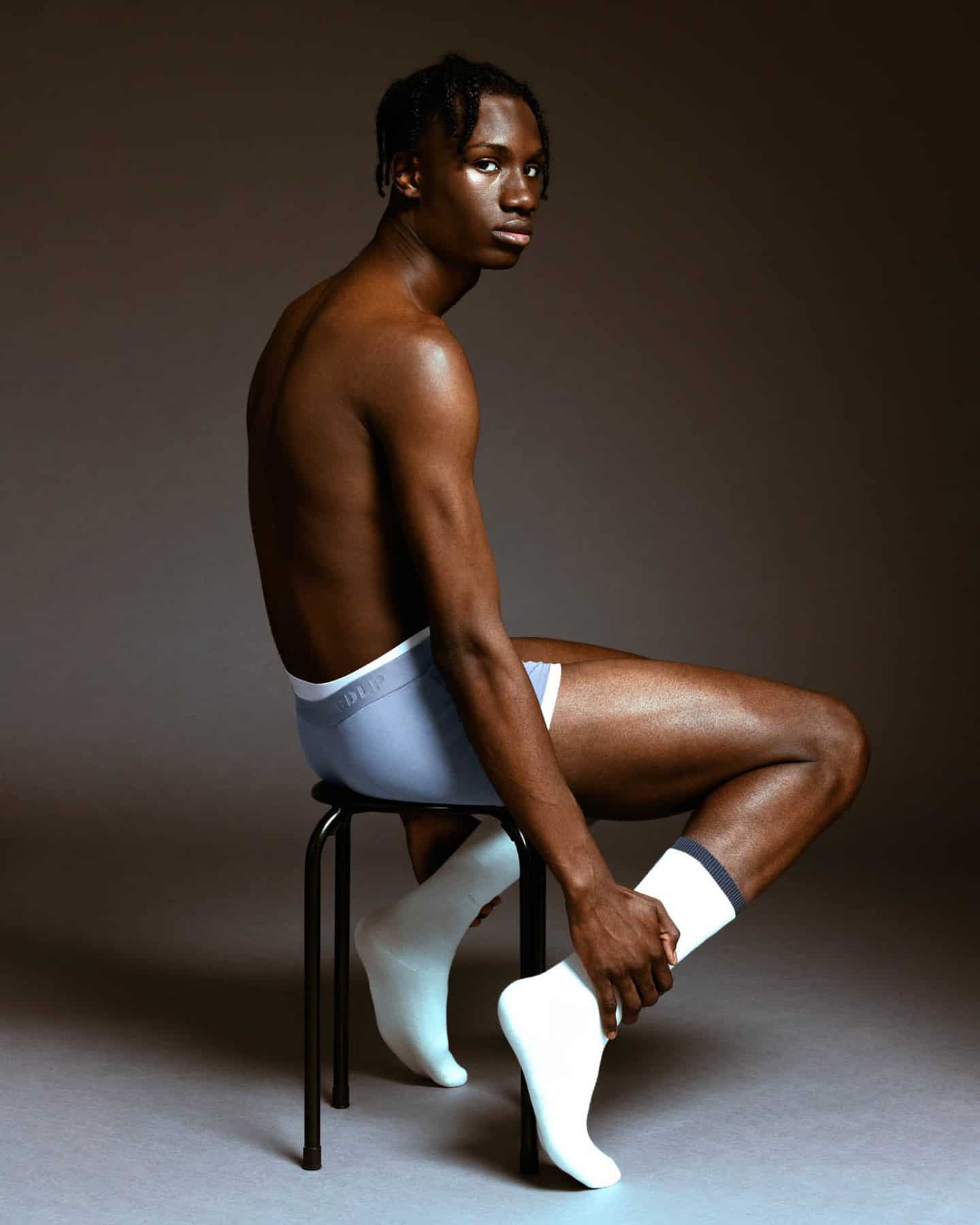
View More On CDLP
Why it’s great: This pair of boxers is a Reddit favorite. The brand’s unique modal-elastane fabric is anti-odor, sweat-wicking, and has a four-way stretch. Modal is an eco-conscious wood pulp that has been compressed into super silky, breathable and durable fibers. Only the best breathable underwear for men is constructed from modal.
These shorts are available in both 5” and 7” inseams, a gargantuan range of sizes, and enough color choices for you to find “the one.”
Who is this for? Whether it’s for yoga or a sightseeing tour of ancient European ruins in the summertime, this pair of Lululemon boxer shorts has it all. It is tactile, breathable, and hardy. It is, quite simply, superior.
Flaws but not deal-breakers: It needs to be machine-washed cold. That’s it!
Why it’s great: At the time of writing, these Hanes boxer shorts on Amazon have a whopping 141,436 reviews to their name. And to achieve 4.6 out of 5 on this scale suggests they really are that good.
Other than being well-received, they are affordable at just $3.30 per boxer short (time of writing) and made of cotton, which is very durable, easily washable, and relatively breathable. A lot of people end their search here, and I don’t blame them. These are the all-round package.
Who is this for? Do you prefer a little side-opening for your manhood to escape through to relieve yourself at the urinal? Or do you prefer to pop it over the top? There’s no right answer, of course, but this pair of Hanes opts for the side-window.
Flaws but not deal-breakers: Although cotton provides longevity, it lacks breathability when compared to other fabrics.
Why it’s great: The dual pouch system on these David Archy boxers is a fascinating feature. Separating the goods is meant to cool your testes and be more comfortable. Plus, there’s a wild lift-up pouch with a hole in it for easy toilet access. It is thrilling.
David Archy has redesigned the whole boxer short setup, and one Amazon review reads, “The ingenuity of the concept alone is enough to buy a pack, just to see/feel in action.”
Who is this for? If you’re open to a new way of genital operation, this is totally for you. But also, if you’re in the market for silken-soft micro-modal fabric with a lot of stretch, breathability, and durability, complete with a supportive fit, then look no further.
Flaws but not deal-breakers: Does it fix a problem that was never there? Maybe. Would they be worth trying out? Almost certainly.
Why it’s great: Boxer shorts as a luxury lifestyle item? The pure silky soft (not actually silk, though) feel of the Tencel™ Lyocell will elevate the somewhat necessary, somewhat barbarian act of keeping your junk secure into an item of decadence.
This is some of the best breathable underwear for men. It has natural moisture-wicking and high breathability ratings. The fit is a majestic blend of tight and loose, for that snug but breathable security.
Who is this for? If you want to feel sensual, sexy, and hot, even if you’re binge-eating and watching on the couch all day. I do recommend these for date night, though.
Having these on during intimate moments signals you as a well-kept man who can file his taxes and bring someone to orgasm with ease. Now, whether that’s true or not is entirely down to the pants-wearer.
Flaws but not deal-breakers: No flaws in the product other than its heightened price tag.
Why it’s great: Being breathable isn’t all about intense, innovative fabrics. How about nature-friendly, high-quality organic cotton designed in a loose, old-school boxer short style? If you want to let air through, give your downstairs mix-up some space, goddamnit!
This pair of Brava Fabric boxer shorts are constructed with organic cotton, meaning no pesticides, no herbicides, and a greater respect for the natural world.
Who is this for? For those who like to let it all hang out. Think of it like a holiday for your nuts. But also, its more generous volume makes it ideal for the larger man.
Flaws but not deal-breakers: Not the sexiest breathable underwear for men, but they get the job done.
Why it’s great: There’s an untold secret in fashion journalism. I am about to tell you. Ready? It’s to just shop at Uniqlo forever. It is quality, affordable, chic, simple, versatile, innovative and timeless. If that’s not enough adjectives to reach for your wallet, then I’m out of a job, I suppose.
This particularly innovative, seamless design is something I’ve never seen before and has a very aesthetically pleasing finish. Finally, the AIRism mesh stretch fabric receives a lot of love online for its breathability, comfort, lightweight feel, and affordability.
Who is this for? Ideal for those who don’t want another dude’s name bannered above their privates (see: Calvin Klein, David Archy, Tommy Hilfiger, etc.).
Flaws but not deal-breakers: This is some of the best breathable underwear for men. However, the style and slightly cool-to-the-touch feel of the sheened fabric might not be to everyone’s flavor.
Why it’s great: What has intense micropower? JAW, of course. AKA, The Small King. AKA Jeremy Allen-White. AKA, the internet-breaking star of the latest Calvin Klein campaign. But, also, these “Intense Power Micro Boxer Briefs” by Calvin Klein.
The synergy of product and star is perfected here. Although I don’t own this particular style of CKs, I am a proud owner of Calvin Klein boxer shorts and have been for years. In my opinion, they are the best.
I wear them almost every day, they wash well, the elastic stays strong, the color doesn’t fade, there’s no pilling, and inevitably, the branding has weight. The brand couldn’t survive solely on its famous sexualized billboards, as I and many others can attest, there is substance.
Who is this for? This is for those who want to embody the bold new graphics of new-era CK, support eco-conscious materials (88% reprocessed polyester), and be swaddled by a super relaxing microfibre.
Flaws but not deal-breakers: The bold branding might turn some away, but it could be the move.
Why it’s great: The Internet speaks, and we listen. Although I was unfamiliar with this pair of boxers, it kept cropping up on Reddit threads like r/onebag and r/askmen. So much so I couldn’t ignore it anymore. The boxers are moisture-wicking, stretchy, anti-stench, and easy to wash. The ideal all-rounder?
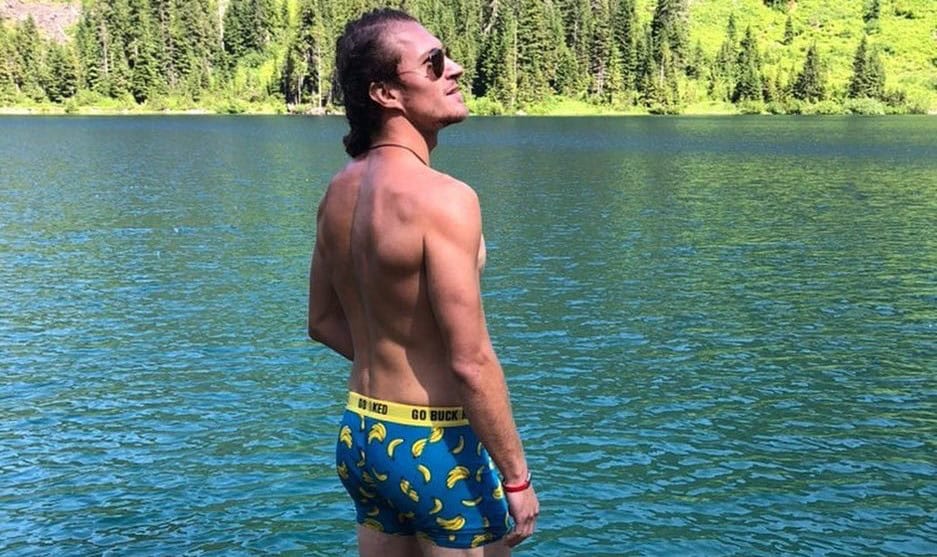
Who is this for? The choice of patterning from golf tees, all the way up to the heady cultural heights of garden gnomes, means that even teenagers now have access to high-quality boxer shorts. Hurray for them! The generous size range of these boxers makes them a great choice for larger men, too.
Flaws but not deal-breakers: From the images online, they look too tight. But, the swathe of positive reviews suggests that the fit is just right.
Buying Considerations for the Best Breathable Underwear for Men
Material
Cotton and merino wool fall under natural fibers. Lyocell, rayon, Tencel, and micro-modal are all synthetically achieved natural fibers. Polyester, nylon, spandex and elastane are all synthetic.
Natural fibers are better for the skin and don’t release microplastics. Synthetics offer stretch and innovative breathability functions.
Each brand uses a blend to achieve breathability, durability, washability, sweat-wicking, odor-prevention, and affordability. Creating the best breathable underwear for men is an artistic alchemy of fabric.
Color
Please, for the love of God, do not buy childish, cartoon-printed boxer shorts. The thought of wearing something too extravagant in a region barely seen just seems baffling to me. And I am someone who was a teenager who wore that type of boxer shorts.
I wore it because I had a strict school uniform and that was my only form of expression. I hope that you are less repressed and can-wear plain colors and simple check or stripe patterns. If in doubt, stick to white, gray, black, and navy. Your boxers aren’t the domain to be making colorful statements.
Size & Fit
Boxers should be snug but not uncomfortable. When you sit down for long periods, it’s natural that some readjustments be made, but if they’re painful or you’re readjusting every five minutes, then you have an issue. Essentially, if it registers with you, then you’ve got a problem.
As a skinny, 31” waist, 6 ft 2” guy, I tend to go for a large. I think maybe I’m naturally between a medium and a large, but I prefer the extra fabric and extra breeze, and this ensures that I never go too tight.
It’s important, too, to distinguish between boxer briefs and boxer shorts. Shorts, typically, are free-flowing and baggy, like… boxer shorts. Briefs are generally skintight, like tighty-whiteys.
However, the modern boxer short is a hybrid, somewhere in-between, a best of both worlds. The brief will refer to a tighter boxer short. And, if it looks like a baggy loose boxer short, then it is. Simple. Right?
There are infinite variations of shapes, fabric blends, styles, brands, sustainability ratings, and colors to choose from. This makes finding the best products an arduous task. For this reason, I factored in the top three considerations for the best breathable underwear for men out there.
Testicular Health: Surprisingly, this isn’t higher up on people’s search. We are in a male fertility crisis, and this is one easy solution to keeping sperm motility and sperm population high.
Boxers that value testicular health will be supportive to prevent needless knocks throughout the day but won’t be constrictive, allowing for blood flow and cool temperature.
Online Reputation: This was key to the search. With a treasure trove of information inside the murky depths of Reddit, we focused on reliable threads that have an ethos of providing genuine and honest feedback on consumer products for men.
Price/Fabric: The price generally fluctuates with the fabric. However, if the fabric used didn’t match the market value, then we didn’t consider it.
A brand is not worth more than a comfortable and affordable pair of boxer shorts. Calvin Klein is somewhat of an anomaly since the product is so good and the brand name is so unimpeachable for underwear.
Why Trust Us?
Harvey James is a journalist committed to the health and wealth of men’s testicles. In early 2023, he wrote a seminal (excuse the pun) article for British GQ titled “How to shave your balls”. Although that piece focussed on the aesthetics of the nether region, this article, best breathable underwear for men, tackles (excuse the pun) gonad health.
Harvey understands the medical importance of keeping your balls at a cool temperature and the impact that underwear can have on that. It was integral in this piece that each pair of boxer shorts supported the underlying health of a man’s testicles. Amid a “spermageddon,” this is more pressing than ever, and Harvey is the man to help.
Final Verdict
Overall, the best breathable underwear for men is the Lululemon Always in Motion pair of boxer briefs. There are three reasons for this. Number 1 is the super breathable, durable, soft, and stretchy modal-elastane fabric blend. Number 2 is the simplistic shape and relaxed/supportive fit. Number 3 is the fact that everyone really loves it online.
FAQ
A classic pair of boxer shorts is the most breathable type of underwear for men. This is because it has an elasticated waist but isn’t tight to the legs. This allows a lot of airflow up through the legs and into the genital region.
First of all, natural fibers are better for the skin. In the context of this article, that would be organic cotton since it isn’t blended with other fabrics to achieve a stretch. Plus, boxer shorts that are matched to the environment to achieve a cool but not freezing temperature for the testes for sperm production. Also, boxers that don’t constrict blood flow.
The best fabric for sweaty balls is something breathable. I suggest modal or lyocell, both of which are artificially constructed from wood pulp. It brings sweat-wicking properties alongside breathability. If that fails, try loose-fitting cotton boxer shorts for maximum airflow. Failing that, try talcum powder, shaving your pubes, and analyzing your shorts/trousers.
Improving the patient pre-registration process continues to present a challenge on both sides of the front desk. For patients, dealing with paperwork, struggling to provide the right information, and worrying about payment and insurance coverage make in-person registration feel fraught. Meanwhile, providers are searching for digital solutions to make the patient registration process simpler, more accurate, and more efficient.
How are providers tackling these patient registration challenges? Barb Terry, Product Manager at Experian Health, who oversees Registration Accelerator, a digital pre-registration solution, shares her perspective on the state of the industry and insights from Experian Health’s State of Patient Access 2024, a survey of 200 healthcare executives and more than 1,000 consumers conducted in February, 2024.
Q1: Why is patient registration still so challenging for providers?
“It continues to present challenges for both providers and patients,” says Terry. Despite the growing availability of patient registration software, many providers and their patients still contend with outmoded manual processes and confusion over insurance and the cost of care.
For providers still coping with staffing shortages, manual registration can be time-consuming and error prone. According to the State of Patient Access 2024 survey, 82% of providers who say access is a challenge cite staffing as a reason. Meanwhile, Terry estimates a typical registration process consumes 15 minutes of staff time and 10 minutes for patients: “It’s time that neither the provider nor the patient has,” she points out.
“The manual registration process for most offices requires printing, scanning, faxing, calling the patient a few times, and then manual data entry into the office systems,” Terry explains. “The provider is also under pressure to obtain financial clearance before the appointment. In many cases the provider team is working with reduced or new staff, managing repetitive and manual tasks for registration, all while striving to maintain a positive patient experience.”
Q2: Why is creating a positive registration experience important for patients?
“Patients are evolving into consumers of healthcare, meaning they’re more active in their healthcare decisions,” says Terry. “They have growing expectations of their healthcare experience and expect the same convenience and modernization they find with other industries like retail and financial services.”
To keep up, healthcare providers need to meet patients where they’re used to completing tasks and communicating—namely, on their smartphones. “Patients use their smartphones to complete many everyday tasks at their convenience. Many prefer to be contacted via text rather than with a phone call, since text allows them to answer when they have time.” Terry says.
Helping patients complete registration on their time increasingly means providing mobile solutions. As an example, Registration Accelerator sends patients a pre-registration link they can use to scan in their identity and insurance cards. Patients can locate their cards and scan them in wherever and whenever they prefer. Data is captured accurately and sent automatically to the eCare NEXT platform, where it can be verified and used for billing.
“Compare this process to time-consuming phone calls that must be made and re-made until contact happens,” Terry says, “or trying to collect information at the time of the appointment. Simply put, patients do not want to spend time in a waiting room completing paper forms that could have been completed digitally.”
Q3: How is patient pre-registration important to the revenue cycle?
“The traditional registration process isn’t very efficient,” says Terry. “Manual processes can easily lead to inaccurate patient information. If the registration process does not include real-time insurance verification, there will likely be more denials and a slower revenue cycle process.”
“Waiting until the patient’s appointment to collect insurance information doesn’t give providers much time to verify insurance, or to determine the patient’s financial responsibility for copays, deductibles, and out-of-pocket expenses,” Terry continues. “At the same time, patients don’t have time to prepare for their out-of-pocket costs. In the 2024 survey, 94% of providers said they felt a sense of urgency to implement a faster, more comprehensive review of insurance coverage.”
“We know from past surveys that 40% of providers say registration errors are a primary cause of denied claims,” Terry concludes. “When the provider has patient information early, they can start facilitating an estimate and confirm insurance coverage before the appointment. Obtaining patient registration data before the appointment helps to ensure revenue cycle processes flow efficiently to reduce denials and financial risks.”
Q4: Greater efficiency is better for providers, but how does it help patients?
“The State of Patient Access 2024 survey found that patients expect efficiency as well as convenience,” Terry says. “Here’s an example: 85% of the patients surveyed think they shouldn’t have to fill out paperwork if their information hasn’t changed.” Digital pre-registration solutions that allow providers to re-use valid patient information on file simplify registration all around.
“For the patient, spending less time filling out paperwork in the waiting room contributes to a positive experience and improves their overall satisfaction with their provider, in turn leading to increased consumer loyalty,” says Terry. “Instead of managing forms at the appointment, the staff can focus on addressing any questions or discrepancies, and getting the patient settled in for their appointment. For many reasons, going to the doctor can be stressful for patients. Minimizing the forms they need to complete in the waiting room can alleviate some of that pressure.”
Q5: How are providers improving the patient pre-registration process?
“Providers are presenting additional registration options to their patients, including a modernized and digital process,” says Terry. “In the 2024 survey, 65% of providers agreed that patients prefer digital and self-service pre-registration,” so patient-facing mobile solutions like Registration Accelerator are a clear option for providers to explore. “Patients expect an easy digital experience,” Terry continues, “and, in response, providers should make registration as simple and straightforward as possible.”
Yet, the same tools that make pre-registration better for patients can improve the process for providers as well. “Optical character recognition (OCR) is a great example of a feature that creates mutual benefits,” says Terry. “OCR can be leveraged to read insurance cards and pull out relevant and correct information. Staff members are under less pressure to avoid manual errors, and so are patients, who are relieved of the pressure of having to decipher their own insurance cards.
“A registration solution should streamline the workflow, reuse patient information, keep data private and secure, and reduce manual entry,” Terry concludes. “By putting the registration process in the patient’s hands, the provider is gathering information directly from the source while reducing their operational costs. Once registration data is obtained, it should flow into the front-end revenue cycle processes, so that eligibility is validated and errors are highlighted. This helps the provider ensure they have up-to-date insurance information for billing, leading to faster claims processing and reimbursement.”
Q6: What does the future of pre-registration look like?
“As patient expectations and provider demands grow, providers will increasingly turn to digital solutions,” says Terry. “Our survey found that 42% of providers have already expanded digital/mobile patient communications to reduce intake friction, and that trend is likely to continue.”
“Digital solutions like Registration Accelerator give patients the ability to complete the registration process at their convenience and give providers more consistency in gathering information, less manual data entry errors, and opportunities to integrate with other patient access processes. All these benefits provide much-appreciated efficiencies for providers, and can lead to a better healthcare experience for the patient, so they can focus on their appointment and time with their provider.”
Learn more about Registration Accelerator, a patient-facing mobile solution that lets patients scan in their own insurance and identity cards, captures data accurately, and uploads it automatically into Experian Health’s eCare NEXT® platform, simplifying registration for patients and providers.