Blog

  • 9 Best Temporary Tattoos – Long Lasting Options for 2024

    9 Best Temporary Tattoos – Long Lasting Options for 2024

    The best temporary tattoos are like a fling. They’re fun, fleeting, and over before anybody gets hurt. A temporary tattoo gives you a taste without the lifelong commitment and pain it takes (sometimes even with numbing cream or spray) to get the real thing. But if you’re debating something more permanent, a temporary tattoo is the perfect test run. Fake tattoos that look real let you play with various placements and designs and fade away within days.

    Temporary tattoos of today are nothing like the lick-and-stick versions from childhood. They’re intricate, modern, and look startlingly realistic. With the proper care, some semi-permanent tattoos can last up to two weeks. My parents would’ve flipped.

    From small, delicate designs to large, full-sleeve designs, there is a lot to choose from in terms of the best temporary tattoos. Luckily, all the searching has been done for you. The top 7 temporary tattoos are just a scroll away.

    Key Takeaways 

    Like the best temporary tattoos, Inkbox has beautiful, detailed designs made by real artists that can last up to two full weeks on the skin.

    For thousands of design options to choose from, Momentary Ink is another great option. If a sleeve is what you’re after, Pinone makes awesome designs for arms and legs.

    arms with temporary tattoos
    inkbox / Instagram

    Inkbox Human Atlas Temporary Tattoos

    When I first saw an Inkbox tattoo, I was blown away. It was so intricate and beautiful, which made sense once I learned they’re designed by real artists. You can expect classic designs typically chosen by men, like swords, roses, and animals, but they all have an extra artistic flair. I love that they also have lots of smaller tattoos that are perfect for hands. Custom options are available, too.

    And it’s not just looks that make them the best. Inkbox has the most long-lasting temporary tattoos. Unlike other brands that apply in seconds, you have to leave this one on for an hour. Over the next 24-36 hours, the ink penetrates the collagen and protein in your skin and darkens to really set in (the ink is vegan and cruelty-free). Each tattoo comes with a chart to describe how long it will last. Many stick around for up to two weeks.

    Simply exfoliate for easy removal, but the tattoo will fade as your skin naturally regenerates.

    Tip: Avoid showering or sweating six hours after applying, and wear loose clothing to bed on the first night to prevent the tattoo from imprinting on another part of your body or your bedsheets.

    Lasts: Up to 2 Weeks | Custom Design Options: Yes | Water Resistance: Yes

    bottles of freehand temporary ink

    As someone who loves to express my unique style and personality, turning to Inkbox’s Freehand Ink Temporary Tattoo kit was a no-brainer when looking for a way to experiment before committing to a tattoo (much more affordable too). 

    With a variety of black ink pens and stencils included in the full kit (this option is only the pen’s – perfect for the confident free-spirit), I was able to let my creativity shine and design my own tattoo. 

    To my surprise, the application was easy, and the quality of the final product was impressive. The ink is waterproof, boasting 1-2 weeks of wear but isn’t safe for your face, neck or intimate areas, so get wild but not too wild.

    Lasts: 1-2 Weeks | Custom Design Options: Yes | Water Resistance: Yes | Cruelty-FreeYes

    box of henna

    Henna has long been a staple in the world of men’s grooming and body art. It’s a natural dye, made from the leaves of the henna plant, and can be used to create intricate and beautiful designs on the skin. Unlike other temporary tattoo options, henna is a paste that you pipe onto the skin and leave to dry (tip: the longer you leave it to dry the darker it becomes), it will also darken over the first 24 hours. While this option is not completely mess-free it is the best organic option. 

    Not only does henna provide a temporary tattoo experience that is both painless and non-permanent, but it is also a safe and natural alternative to chemical-based dyes and inks.

    Lasts: 1-2 Weeks | Custom Design Options: Yes | Water Resistance: Yes | Cruelty-FreeYes

    Cargen Classic Temporary Tattoos

    The best temporary tattoos don’t have to be thin-lined modern designs. What drew me to Cargen was the nostalgia aspect. In terms of style, this 9-sheet tattoo set is giving old-school vintage vibes with hearts, swords, and roses. It definitely has a beatnik flair but also works for a pirate or sailor Halloween costume like a charm. The thick, dark lines are very realistic-looking.

    A typical temporary tattoo from this collection should last anywhere from 3-5 days with proper care. However, some reviewers say they can last up to two weeks on legs, which is pretty sweet. A frequently used and touched area like your hands and neck usually fades faster.

    Lasts: 3-5 Days | Custom Design Options: Yes | Water Resistance: Yes

    Zomme Temporary Tattoo Stickers

    Next to a full sleeve, Zomme temporary tattoos are probably the most badass. It comes with a whopping 62 sheets, but many of the tattoos are big. They look awesome on the chest, arms, and shoulders. While the style doesn’t feel very original, and I’m not crazy about the design aesthetic, they are well done and highly detailed. Expect lots of wolves, skulls, symbols, and even some florals.

    For the tattoo to last, it’s best if you don’t place them in an area where the skin creases. They work best on clean skin, but make sure the area is totally dry before applying. Give it a good 10 minutes to soak in, then lather with moisturizer to help it set in.

    Lasts: 5-7 Days | Custom Design Options: No | Water Resistance: Yes

    Pinone Full Arm Temporary Tattoo

    There’s something about a full sleeve that I love. A little punk, a little rock, and a whole lot of edgy, Pinone temporary tattoos let you embrace what it would be like to have a full sleeve—without the full commitment. And it comes with 12 pieces to experiment with.

    Reviewers can’t seem to get over how surprisingly real they look. That’s saying a lot for an extra-large tattoo covering a lot of surface area. Just don’t forget to shave the area before applying.

    Lasts: 3-7 Days | Custom Design Options: No | Water Resistance: Yes

    Sovereign Gear Temporary Tattoos

    Cool, big temporary tattoos are hard to come by. While the designs aren’t revolutionary, Sovereign Gear tattoos are pretty damn solid overall. My eye keeps drawing to a snake, skull, and sword design that has a lot of character.

    The great part about a large temporary tattoo is that it really helps you envision what it would be like to cover a large part of your body in a tattoo, like your legs, back, stomach, or bicep. This non-toxic set comes with eight large tattoos, so you can have fun playing around.

    Lasts: 3-5 Days  | Custom Design Options: Yes | Water Resistance: Yes

    Hotoyannia Mountain Temporary

    Get in touch with the natural world with Hotoyannia temporary tattoos. This set is all things Earth and universe, from planets and animals to beautiful natural mountains scenes. All in modern circular, triangular, or diamond shapes. I could see the hiker, surfer, or any outdoorsy spiritual dude being drawn to these temporary tattoos.

    I do wish they lasted longer, but with proper care, you should be able to get a week out of it. As a fun bonus, these tattoos can also be applied to smooth surfaces like glasses and stationary for a quick craft that would make a unique gift.

    Lasts: 5-7 Days | Custom Design Options: Yes | Water Resistance: Yes

    Momentary Ink Raging Beast Semi Permanent Tattoo

    Momentary Ink is similar to Inkbox in terms of intricacy. What sets it apart is the ability to choose from temporary tattoos that last 3-7 days and semi-permanent tattoos that last up to two weeks.

    They have birds, flowers, and zodiac, but they also have quotes, such as a simple “Believe” and even Arabic letters (not translated, so proceed with caution). Naturally, a high level of detail comes at a price, and some single tattoos exceed $20.

    However, with free reign in custom design and over 3,000 existing styles to choose from, they’ll probably have just the tattoo you’re looking for. This makes it perfect for trying out a tat before you get the real thing. And it’s safe, too. Momentary Ink uses only cosmetic-grade inks and FDA-certified colorants.

    Lasts: 2-14 Days | Custom Design Options: Yes | Water Resistance: Yes

    henna tattoo on left chest and arm
    nshennaco / Instagram

    What To Look For In The Best Temporary Tattoos 

    Design options 

    In my opinion, design is the most important decision to make when considering the best temporary tattoos. Do you think it’s cool? It’s going on your body, so you’d better. If you’re purchasing a tattoo set, you’ll need to like a few to make it worth it. Because some temporary tattoo brands like Inkbox and Momentary Ink offer mostly single designs, you’ve got to really love it before you buy.

    How long it lasts

    Typically, you’re not going to get more than a week out of your average temporary tattoo. You can get up to two weeks with Inkbox and Momentary Ink, however. But not everyone wants a temporary tattoo to last. Perhaps you’ve got work or a wedding, and you need it to fade faster. Gentle exfoliation with a washcloth should remove a tattoo like that in a flash.

    Size 

    Size matters when it comes to temporary tattoos. Several brands offer tiny, delicate tattoos that are less noticeable at first glance. Some are much larger, which is something to consider if your workplace is a factor, for instance. Sets are great for variety and sharing with friends.

    How To Care For Your Temporary Tattoo

    You likely won’t get more than two weeks out of the best temporary tattoos, but aftercare is a big determining factor in how long your tattoo is going to last. Moisturizing daily is probably the best thing you can do to keep the tattoo from cracking, drying, and fading. A simple lotion will suffice.

    As for showering, avoid exfoliating the tattoo and surrounding skin. Once you get out of the shower, pat the tattoo dry with a towel, don’t rub. You want to keep the tattoo in as pristine condition as possible.

    If possible, avoid direct sunlight to prevent fading. This is likely impossible if you’re enjoying a temporary tat for a summer festival or concert, but it’s something to keep in mind if you want your tattoo to last.

    small temporary dragon wings tattoo on the back
    inkbox / Instagram

    Final Verdict 

    The best temporary tattoo will have a beautiful design and last for at least a week, like those offered by Inkbox. Ideally, you should be able to choose from a range of sizes for different placement areas. Of course, the ink should be safe, non-toxic, and easily come off with exfoliation, if need be.

    FAQ

      • You can use rubbing alcohol and hydrogen peroxide to remove a temporary tattoo, though some work best with baby oil. Gently exfoliating the skin also works.

        • None of the temporary tattoos on this list will last longer than two weeks, but there are quite a few parlors that offer semi-permanent tattoos that fade after a year. A simple Google search will help you locate one in your area.

          • At most, temporary tattoos last up to two weeks. Typically, though, a temporary tattoo will last anywhere from 3-7 days, depending on how you care for it.

  • The Best Men’s Wavy Hairstyles For 2024

    The Best Men’s Wavy Hairstyles For 2024

    Why do we always want what we don’t have? Those with limp, straight hair would often kill for a bit of volume that doesn’t require styling tools or bucket-loads of product. And those with tight spiral curls eye the straight-haired with envy.

    But between the two, there’s natural waves. And while those with wavy hair will still gripe about its annoying tendencies (there are one or two), there’s much to appreciate in this wash-and-go hair type. You can chemically straighten or perm hair, but there’s no magic in a bottle for those in-between waves.

    Wavy hair tends to be thicker, denser and less prone to thinning and there are plenty of icons including Timothée Chalamet and Harry Styles to look up to. So, what more do we need to convince you that you lucked out in the follicle department? Experiment with the best wavy hairstyles below, along with some expert barbershop styling advice, and you can thank us later.

    How To Manage Wavy Hair

    Ok, so humidity might not be your friend, and there’s always that one little bit that refuses to behave. But these are glitches that can be fixed with the right hair products (think best hair mousse, men’s hair gel or pomade) and styling techniques. Tim Pateman, the director of Clerkenwell salon, The Lion and The Fox and a session stylist (who’s worked with George Ezra, Russell Kane and Jake Bugg) gives us the lowdown on how to manage waves.

    Men's wavy hairstyles

    Let’s start with the basics. Pateman favours co-washing with wavy hair (co-washing is short for ‘conditioner washing’). “This method should still involve two steps as if you were using shampoo,” says Pateman. “Skip the shampoo, take a dose of conditioner to emulsify the hair all over to clean it, rinse and then repeat.” He likes Redken Curvaceous Conditioner and Kiehl’s Hair Conditioner and Grooming Aid. We’re also fans of Davines Love Curl Cleansing Cream.

    “If you’re co-washing you should lay off heavy styling products,” advises Pateman. “With the build-up of natural oils hair becomes impenetrable and learns to regulate itself, so you’ll find you need less styling aids as part of the process,” he explains. “It’s also essential to find a barbershop or stylist who knows how to cut curly hair.” Because, weirdly, a lot of hairdressers just don’t have the knack or the knowledge.

    “Also concentrate on finding the right products,” he says. “As a general guide, curls and waves love a cream: something that absorbs easily and gives a natural finish. Avoid anything that is sticky – or risk a wet poodle curl.”

    Note: There are more permanent fixes for frizzier hair types in the form of keratin ‘Brazilian’ chemical relaxers than can be used sparingly around the hairline or other problem areas.

    The Best Hairstyles for Wavy Hair

    There are plenty of famous wavy hair wearers out there but if you want to rock a look that’s more your own, here’s five cuts to inspire you.

    Mid Length, Grown Out

    “This is a soft, grown-out look that has a 1990s feel about it,” says Pateman. ‘Curtains’ was the defining hairstyle of the era, where the hair is worn medium-length with a side parting forming a wedge shape with shorter layers underneath and at the back. As hair grows out of a quiff style it can easily be manipulated into this.

    “You need to be able to run hands through this look. Take a little hair oil, apply it to wet hair and allow to dry naturally,” advises Pateman. “Or, when heat styling, I use a tiny bit of Original & Mineral Project Sukuroi Gold Smoothing Balm. I like this product because it actually makes hair easier to style over time.”

    Men's wavy hairstyles

    Key Products

    Best Products For Medium Length Wavy Hair

    DAVINES Oil Non Oil - click to buy OriginalMineral Project Sukuroi - click to buy Redken Curvaceous Curl Refiner Cream - click to buy Love Curl Enhancing by Davines Cleansing Cream - click to buy

    Textured Fade

    For this style ask for “a barbershop fade with short back and sides, left longer on top,” says Pateman. “Keeping a heavy visible line at fade point and going from approximately grade one to three – keeping the beard same length. Use a strong matt wax to style, such as Bumble and Bumble Sumotech or Davines Strong Dry Wax, to define the texture.”

    Men's wavy fade hairstyle

    Key Products

    Bumble and Bumble Sumotech - click to buy Davines This Is A Medium Hold Finishing Gum - click to buy Kiehl's Amino Acid Conditioner - click to buy TIGI Bed Head for Men Matte Separation Workable Wax - click to buy

    Long & Natural

    This look is basically a longer version of ‘curtains’, where the model has curlier hair. “This needs layers and more length at the back,” says Pateman. “It’s basically a grown-out version of the first look. The length will vary depending on how tight the curl is, but it should sit at cheek bone level at the front. Make sure it’s point cut to soften the ends of the curls. If hair is very thick, slide cutting should take some of the weight out for a better shape.”

    For a Chalamet-grade finish, “Take sections of damp hair and work through, twisting each curl with a product like Davines Curl Building Serum, or Redken Curvaceous Ringlet Perfecting Lotion. To speed up the process and control the curls, use a diffuser.”

    Men's Long Wavy Hairstyles

    Key Products

    The Best Products For Long Wavy Hair

    Davines More Inside This is a Curl Building Serum - click to buy Redken curvaceous ringlet - click to buy Conair Volumizing Hair Diffuser - click to buy MOROCCANOIL CURL DEFINING CREAM - click to buy

    Undercut With Fringe

    Really thick hair can become manageable overnight with this style, making it a good option for men who don’t style their hair so much as wrestle with it. It’s also a touch more corporate-friendly than the beachier looks on this list.

    “Just ask for an undercut but maintain the length on top for emphasis,” says Pateman. “Style to preference. I’d use a salt spray like Bumble and Bumble Surf Spray and finish with a shine wax, such as Bumble and Bumble Sumowax. It’s easy to maintain but it does need to be cut about every three weeks to keep it sharp.”

    Men's short wavy hairstyles

    Key Products

    The Best Products For Short Wavy Hair

    BB Surf Spray - click to buy EVO SALTY DOG BEACH COCKTAIL SPRAY - click to buy Bumble and Bumble Semi Sumo Pomade - click to buy TIGI BED HEAD FOR MEN MATTE SEPARATION WORKABLE WAX - click to buy

    Mid Length Smart Sweep

    Aka, the McConaughey. “Starting with a quiff and a side parting, let the back grow out for more texture,” says Pateman. “Use a salt spray for hold and then a styling cream like Kiehl’s Creme with Silk Groom to give that kind of finger mark movement through the top. Use a hair dryer to style stubborn hair in the direction you want it to go – it should take about two weeks to train it into place.” Awright, awright, awright.

    Men's wavy hairstyles

    Key Products

    The Best Products For Medium Length Wavy Hair

    kiehl's Creme with Silk Groom - click to buy EIMI Ocean Spritz Salt Spray - click to buy BaBylissPRO Ceramix Xtreme Hair Dryer - click to buy Tea Tree Shaping Cream - click to buy

  • The best kind of multi-brand shop – Permanent Style

    The best kind of multi-brand shop – Permanent Style

    A lot of music fans don’t see the point of covers albums. They want the originals, not a bunch of copies. But I’ve always liked them, whether it’s Johnny Cash’s American IV or Rage Against The Machine’s Renegades, because they’re original and reveal things about the artist.

    The songs they decide to cover, the way they sequence them on the album, and how they cover them – how faithfully or originally – says a lot about their influences and why they make the music they do. 

    Take Kicking Against The Pricks by Nick Cave. The appeal is not just that the Bad Seeds make every song sound more dangerous and ominous – more Bad Seeds – it’s the way it reveals how sincerely Cave loves a crooner, even if it is Tom Jones. And how much they’re all influenced by the dark side of country music. 

    I mention this because I liked the point, and I never really talk about music. But also because I think it’s one way to think about the value of multi-brand shops, of which Beige in Paris is one of the best. 

    A multi-brand shop – or select store – should have just as much personality as a brand’s shop. It’s just that the personality comes from the combination of the brands they select, the clothes from the brands, and the way those clothes are put together in original, distinct ways.

    We all do this – pick clothes from brands and combine them in ways that we think reflects our style – and a multibrand store is no different. Just bigger and often better. 

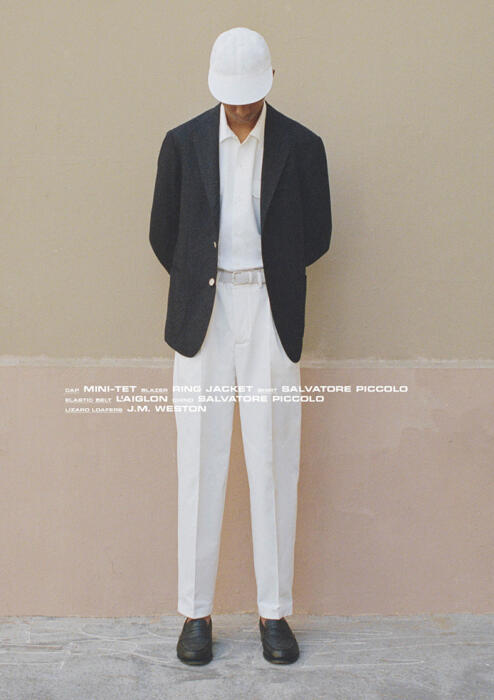
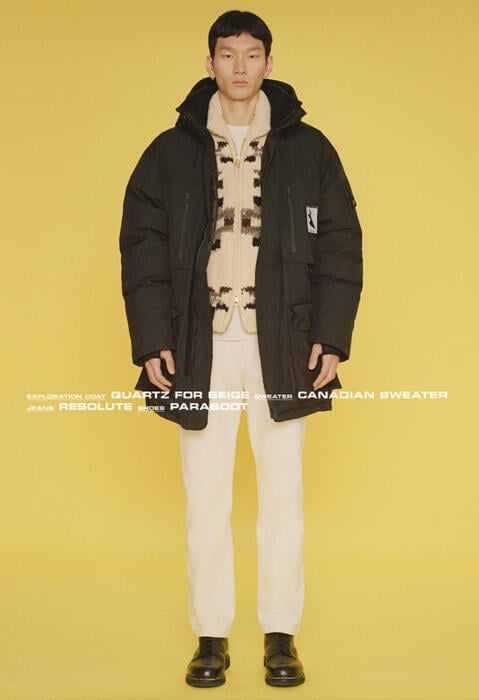
    This is communicated in many ways, but often most effectively in the shop’s imagery. The looks below, from Beige lookbooks in 2019 and 2023, could be from no one else. There is a unique mixing of smart and casual and street, refined yet playful.

    And if you like that look, it’s why you’re interested every time somewhere like Beige starts stocking a new brand. It’s why they’ve been so influential in recent years in bringing brands like Doek and Coherence to wider attention. 

    There’s nothing to stop other shops then stocking them, but their angle would be only one of convenience – the local place to get the cool thing Beige has – and that’s not much of a foundation for a business (particularly given how important e-commerce is to all these shops).

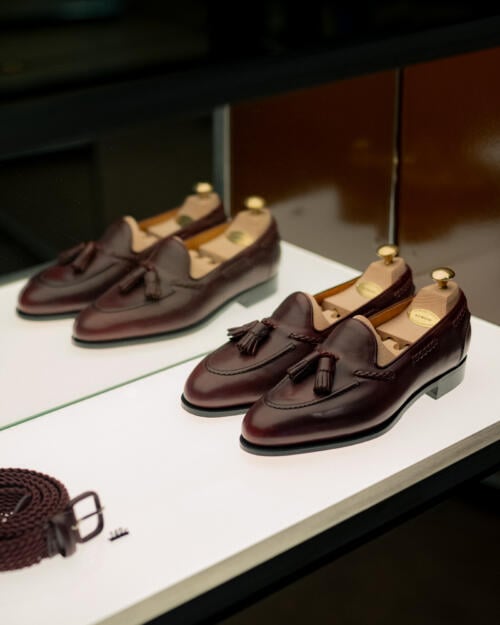
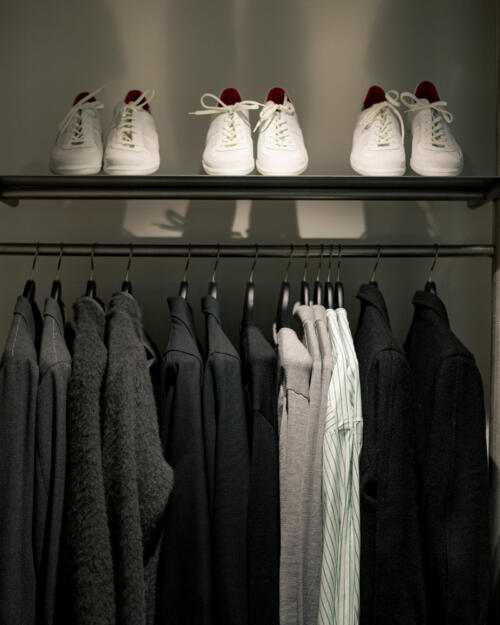
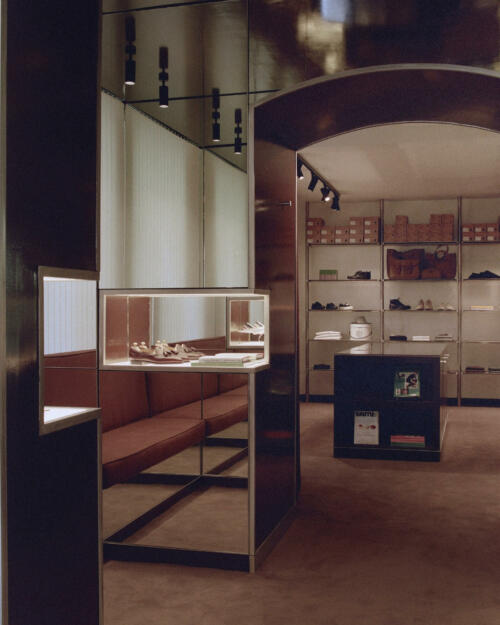
    Then there’s the third part of that trifecta – the clothes picked from the brands. If you walk round the new Beige shop in St Germain, it’s not the brands that stick out but they way they all work together. It’s the particular check on a Justo Gimeno teba, and how well that goes with the black Brady tote and black Quoddy deck shoes

    It feels like a brand much more than a department store. 

    I visited the (relatively new) Beige shop in January, and again in March. This unusual frequency made the experience feel more like that of a local, attracted by a few things on the first visit, then seeing and trying more on the next. Going deeper, understanding more of the style each time and looking forward to what’s next. 

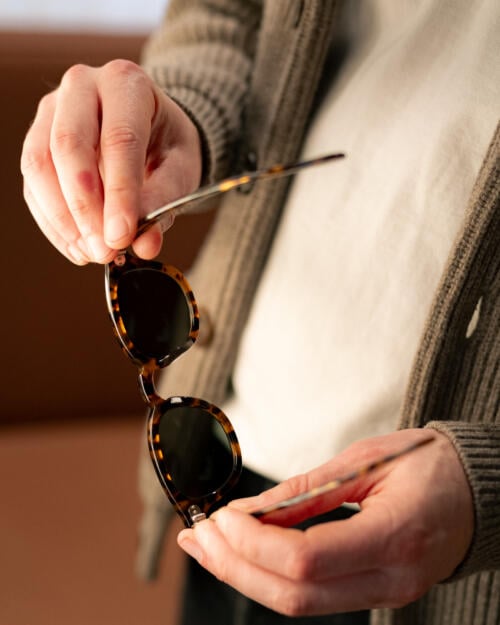
    I was interested in the Heimat merino thermals the first time, and the Quartz parkas, as neither was a product I’d seen before. The second time it was the sunglasses from Max Pitton and Jacques Marie Marge that caught my eye, and the Quoddy canoe shoes. They were products I already knew, but I started to appreciate Beige’s selection and tweaks to the design (eg the sole and stitching on the Quoddys). 

    Jacques Marie Marge, by the way, is another of those brands that Beige has been working with for a while but is now everywhere. 

    A shop itself should also, ideally, be a reflection of a multi-brand operation’s personality, and the new Beige shop feels like it more than their previous location.

    The new one is on the corner of a very Parisian mansion block, in the quiet area of Saint Sulpice. This is the rich part of the Left Bank: liberal but moneyed. The book shops are rare book shops; there’s a good smattering of embassies around the pretty Luxembourg Garden.

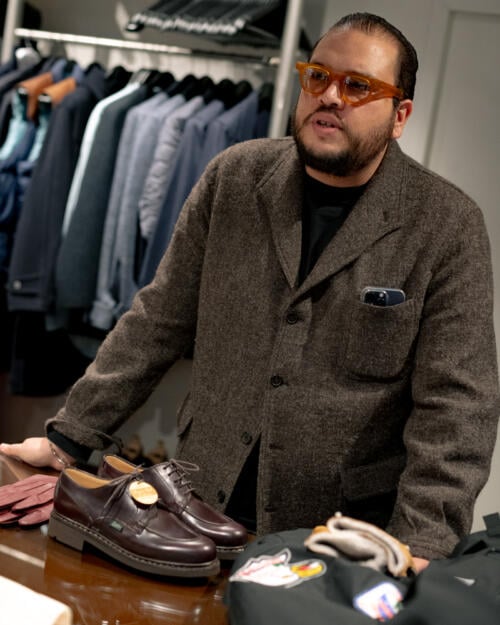
    “People in this area understand the product,” says Basile (below). “Tebas do well here – it’s the kind of customer that might have gone to Arnys in the past perhaps. 

    “Where we were in the 16th, it was a little different. Someone might complain that a Shetland sweater was scratchy because they didn’t know what it was.”

    That experiment in the 16th arrondissement, far outside of the centre of Paris, was an influential experiment, but everyone has now left (Holiday, Le Vif). “The 16th was fun, and a good place to start,” says Basile. “It was originally just a showroom, though we had so many appointments that we ended up opening every day.”

    Interestingly, looking back on those early days shows how much Beige has changed – a shop has to evolve with its customers, just like an individual. “Originally the selection was very based around tailoring – Ring Jacket suits, Drake’s ties – and that was quite rebellious in Paris at the time,” says Basile.

    “Now we’re more casual, comfy, practical – but there’s always the same approach to the brands.”

    A good example is those Quartz parkas, which originated with a chance meeting between Basile and the Montreal-based maker. “We changed a few things to make them more us, and to make them more practical for city wear. We added contrast panels and changed the fill power from 800 to 650, says Basile.” The former was designed to withstand temperatures of -50C, so probably overkill for Paris. 

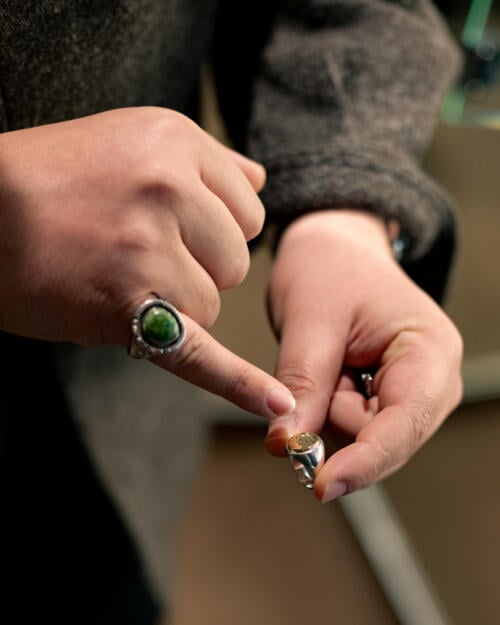
    Other brands it’s worth looking at are Rier, whose pieces are quite modern-looking sportswear but made in 100% wool where most are synthetic. And Bunney, an English jewellery maker that is only sold at Beige in France.

    Hopefully, I’ll be back in Paris before the end of the year and be able to see how various projects Basile mentioned have come to fruition: new brands, new products, new styles. 

    This is the pleasure of a multi-brand shop, and as we’ve written before, there are fewer and fewer good ones around. 

    The Paris Shopping Guide is in the process of being updated, and will be republished in the next week or two. 

    All the historical Beige Lookbooks are available online, which is nice. See them here

    www.beige-habilleur.com

  • The Best Clean Drugstore Makeup Brands (EWG score of 3 and below)

    The Best Clean Drugstore Makeup Brands (EWG score of 3 and below)

    Sharing is caring!

    If you are looking to clean up your makeup products but would like to stick to the convenience and affordability of finding makeup at your local drugstore, I’ve got you covered! After finding natural beauty brands and products in stores like Target and Walmart, I bought them and used them. I’m sharing the best products that I’ll definitely repurchase with the peace of mind knowing they are safe as well as affordable. Read on to find the best clean drugstore makeup!

    In the past, I’ve focused on using makeup from clean beauty companies like 100 Percent Pure, Hynt Beauty, Kosas and Lily Lolo. Since my oldest daughter has been wearing makeup, I find it hard on my bank account to buy her more expensive products! I don’t want to buy her expensive products from luxury brands but she needs clean, more affordable and accessible options. Plus, she runs out of various products more often than I’d like so I wanted to see if it was possible to find clean makeup products with a much smaller price tag that were available to pick up in stores like Amazon, Target, Walmart or Walgreens. 

    I bought quite a few products mostly from Target and Amazon that had more natural ingredients and used them personally for 2 months. I’m very happy to say that I found some really great products I will not only buy again for my daughter but I will use them as well!

    I also found drugstore makeup brands that I thought would be cleaner than they were and found a few drugstore brands that I had no idea had so many different products that contained cleaner ingredients and were overall safer products. And the best part is that all these products are much more affordable than typical clean makeup brands. 

    What Determines A Clean Product?

    For this post, I used the EWG (Environmental Working Group) Skin Deep database as well as the Think Dirty App. I wanted all the products I chose to have a score of 3 and below. If you are unfamiliar with EWG scoring, they give products a score from 0-10. 10 being an extremely toxic product. EWG bases the score on the ingredients in a product as well as the product’s use, demographic and brand and company information. They also consider whether a brand is cruelty free. 

    They also hand pick products and label them EWG VERIFIED®  A verified product is the safest, cleanest product you can find. 

    “When a product is EWG VERIFIED®, it means it meets EWG’s strict, scientific standards for transparency and health. Our team of toxicologists, chemists and epidemiologists scrutinizes every product, empowering you to purchase safer products.”

    E.L.F Cosmetics-Clean & Cheap:

    The cruelty-free brand, E.L.F. ended up being such a pleasant surprise. They offer quite a few clean beauty products that perform well. You could achieve a full makeup look using only e.l.f. cosmetics. This cruelty-free makeup and skin care brand is a winner in the clean beauty world. You can’t beat how low their prices are but be sure to check on the each individual product. Just because they have quite a few clean items does not mean the entire product line is safe. However, they are 100% vegan and all products are free from phthalates, parabens, nonylphenol ethoxylates, triclosan, triclocarban and hydroquinone. All skin care  is also free from sulfates.

    Related Post: DIY Makeup Setting Spray

    Clean Drugstore Makeup Selfie
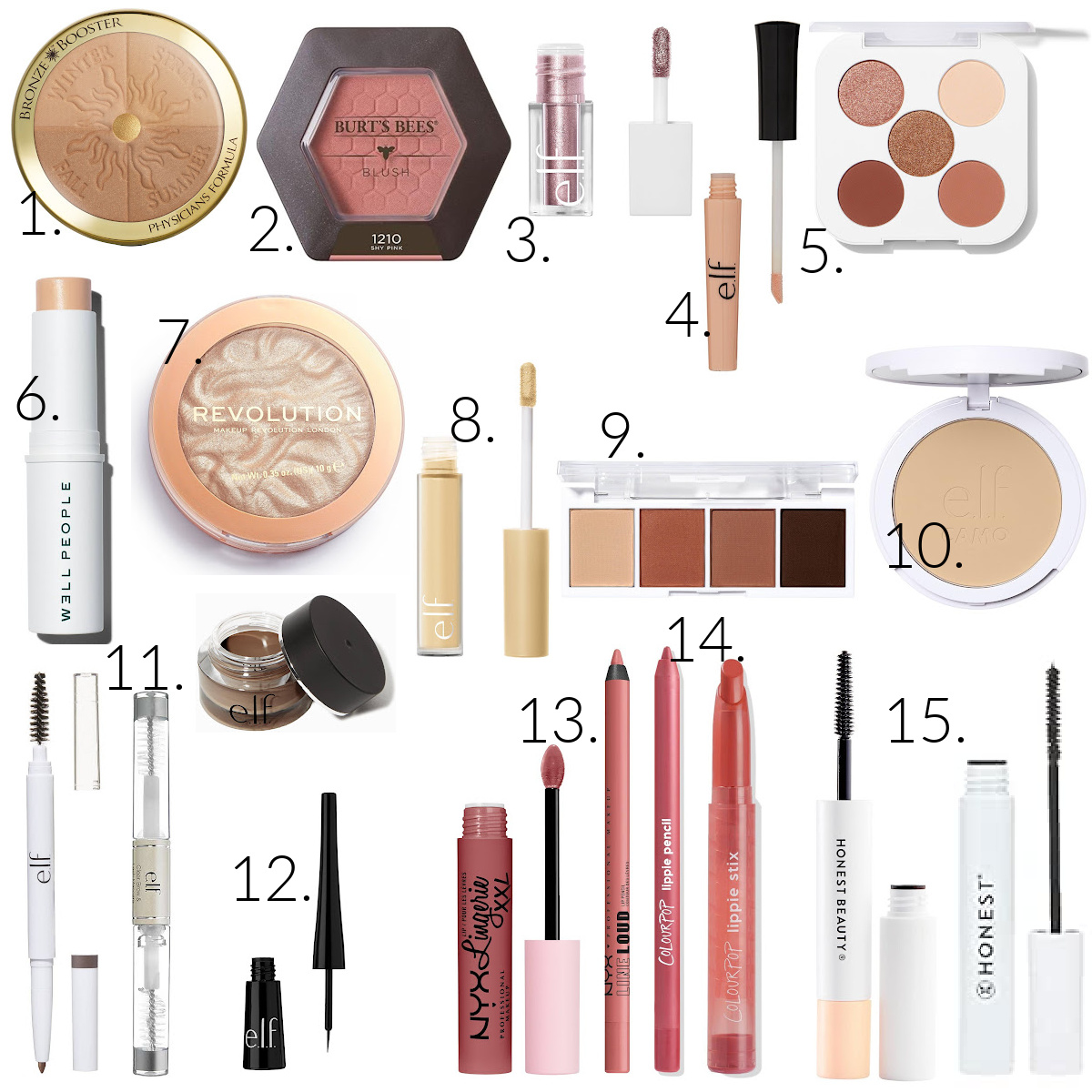
    Full Drugstore Beauty Face! Well People Foundation, Physicians Formula Bronzer, Revolution Highlighter, Bert’s Bees Blush, Morphe 2 Eye Shadow, E.L.F. Brow Pencil, Honest Mascara, NYX Lip Liner

    Clean Drugstore Makeup Products:

    When it comes to makeup companies it can be tricky avoiding toxic chemicals detrimental to your health. I’ve found that some makeup brands have a few promising products but also have quite a few extremely dirty products as well. I’ve rounded up a bunch of drugstore makeup products that are safe, affordable and wear well!

    Keep in mind that a product’s score can vary from color to color. Below are mainly products I bought and have been using. You can see the products in action in the picture above. I also threw in a few more makeup products on my wish list that are also safe. 

    Related Post: How to Clean Makeup Brushes + DIY Makeup Brush Cleaner

    1. Physicians Formula Bronzer Booster Air Brush: I’m loving this bronzer for a subtle tan. I’m even using the brush it comes with and using this product not only to give a natural glow but also to contour. There is a light shimmer that is minimal enough to be very natural. Many Physicians Formula products rate high on the EWG scale but this bronzer rates a 2.
    2. Burt’s Bees 100% Natural Origin Blush w/ Vitamin E in Shy Pink: This is my favorite blush I’ve used in a long time. The color is a perfect balance between pink and peach and the blush is highly pigmented. A little bit goes a long way. EWG rating is a 2. 
    3. E.L.F. Liquid Metallic Eye Shadow: This is not a product I bought but I plan to. I wanted to include it because I couldn’t get over the beautiful colors and great reviews. Plus, most of the colors scored a 2 on the EWG scale. 
    4. E.L.F. Shadow Lock Eyelid Primer: I tend to have oily lids and grabbed this a while ago when I was preparing to update my hooded eye makeup tutorial. I needed something that would keep my eye makeup from creasing. This product did the trick and ended up being clean as well!
    5. Morphe 2 Ready in 5 Eye Shadow Palette in Malibu: This is one of my favorite eye shadow palettes of all time and it’s only $7! In fact, I don’t even need to use the primer with these shadows. They go on smooth, blend well and are bold hues. I can’t seem to find this palette on EWG again so I looked it up on Think Dirty and it scored a 4. I could’ve sworn it scored lower but I’ll continue to research. 
    6. Well People Bio Stick Foundation: This was the most expensive product I bought but I was in need of a foundation and prefer a creamier, lightweight formula that gives a dewy finish. I love how this product evens my skin tone out without feeling heavy, cakey or dry looking. It is great for sensitive skin and contains vitamin E to help with fine lines. This foundation stick is EWG verified which means it is approved as a clean product. Well People is a natural brand sold at Target with it’s most toxic product being only a 3. 
    7. Makeup Revolution Highlight Reloaded Highlighter in Just My Type: This is an easy to use highlighter that gives a beautiful glow without looking garrish. I use it as an eye shadow as well. These highlighters score a 3. 
    8. E.L.F Camo Concealer Corrector in Yellow: This color correcting concealer works really well on blemishes and dark circles under the eye. It’s not thick and cakey and is long lasting. It comes in several other color correcting shades. Many E.L.F. concealers rate a 2 however, it varies from color to color. 
    9. E.L.F. Bite Sized Shadow in I Love You A Latte: I did not buy this product but it scores a 2 on the EWG scale and has great reviews. It would be a great alternative to the Morphe 2 palette if you are looking for a lower score and a cheaper product.
    10. E.L.F. Camo Powder Foundation: Another product I did not personally try but it also scores a 2 on the EWG scale and is much more affordable ($5) than the Well People Foundation Stick. It is a buildable coverage foundation that is said to be light weight. 
    11. E.L.F Brow Products: I will admit, I’ve had better brow pencils but this Instant Lift Brow Pencil is great in a pinch and has a convenient brow brush. Also, it scores a 2 on the EWG scale. I love the double sided brow and lash mascara and have yet to try the Lock on Liner and Brow Cream which is also on my list to try and also scores a 2.
    12. E.L.F. Expert Eye Liner: I bought 2 liquid eye liners and found that both were comfortable to wear and just as easy to apply as any other more expensive brand I’ve tried. However, after I bought them, I realized the Expert Eye Liner scored a 4. E.L.F. Waterproof Eye Liner Pen scores a 3.
    13. NYX Professional Makeup Lip Lingerie XXL Matte scores a 2 on the EWG scale which is unheard of for lip color. I found this out after purchasing all the products for this post. I’m excited to try it. I did purchase the NYX Line Loud Vegan Lip Liner in Born To Hustle. I love it and can attest that it lasts quite a long time. It scores a 3. 
    14. ColourPop Lippie Liner and Lippie Stix: I ordered the wrong colors so I did not love these 2 products but the line would’ve been fine if I had got the right color. The Lippie Stix in Oh Snap was a subtle lipstick that was unflattering.  I also bought E.L.F. Lip Plumping Gloss in Sparkling Rosé and fell in love. However, it scores a 4 on the EWG scale which isn’t bad but I like to stay below a 3 on products used daily. 
    15. Honest Mascara: I have bought the Honest Extreme Length 2 in 1 Primer and Mascara many times. It’s a great natural mascara and tends to work well for sensitive eyes. It is at a higher price point. I also tried the Honest Healthy Serum Infused Lash Tint which is also at a higher price point. I tend to wear this one on a daily basis for conditioning. It contains castor oil and other natural ingredients to help thicken and lengthen lashes. I find the brush makes it tricky to apply and it can be difficult to remove but I feel like it does my lashes some good. I also bought E.L.F Big Moods Volumizing Mascara. I wasn’t impressed but it is very affordable and scores a 3. I can make it work as long as I do 2-3 coats. My daughter confirmed it was hard to work with and seemed like the mascara wasn’t transferring from the brush onto our lashes. 

    SHOP CLEAN DRUGSTORE BEAUTY:


    If you’re looking for a clean lip balm, Dr. Bronner’s lip balms are all EWG verified and available at Target. Also, the super popular NYX Fat Lip Oil in clear rates a 3 on the EWG scale. The colored lip oils are not scoring as low. 

    After this post, you should be able to fill your entire makeup bag with affordable, clean products easily found at a drugstore near you! And I don’t have to shutter every week when my daughter tells me she’s out of something new! 

    xx, Jenni

    PIN IT!!!

    A collage of clean drugstore beauty and a makeup bag with makeup

    Sharing is caring!

  • I ordered cheap Retin-A from India, so you don’t have to (but you may want to!)

    I ordered cheap Retin-A from India, so you don’t have to (but you may want to!)

    I ordered Tretinoin from an Indian online pharmacy- let me tell you about my experience! 

    1 tube was $10 but if you order 3 tubes they were $26 plus $18 shipping- the total sum was $44. Not bad!

    The system wants you to put in your doctors information and to upload a prescription. I filled out the information with a random doctor in my area, however, I did not upload a prescription and it still worked. 😉

    You can pay with Bitcoin, bank transfer, echeck, or money order. I did a bank transfer, so you will need your account number and routing number for that.

    I put my order in on February 12th and my order arrived on February 28! 16 days- not bad at all. 🎉 Throughout I felt well informed about the shipping progress.

    To the product: I received Tretinoin by H&H Hedge & Hedge Pharmaceutica LLP (301, om Chambers, 123 August Kranti Marfg, Kemps Corner, Mumbai- 400 036.) and I have to say: I am very pleased with the quality, though it looks different than other Tretinoin creams I have tried. Usually they (the ones I have tried) have a yellow color and are more difficult to spread. This one is white, almost shiny like mother of pearl and it spreads so easy – like a dream honestly! I am using this Tretinoin now since March and I am very happy with the quality! My skin is loving it and I have had no issues (I am tolerating 0.05% very well and can apply it daily and only occasionally flake a little around my mouth. I will probably go for 0.1% when these tubes are empty).

    H&H Tretinoin

    Overall I can honestly say that I can recommend buying from Reliable RX Pharmacy. This was a very pleasant transaction and I have absolutely no complaints. I give it a big thumbs up! 👍

    Did you order from Reliable RX Pharmacy? Leave your experience below, so we all know if you were happy too! 


    Disclaimer: This post is NOT sponsored, however, I am using an Affiliate link since I am very happy with Reliable RX Pharmacy. Read my full disclosure.
  • Research Shows Generative AI In The EHR Can Work Well, But Only With Human Oversight

    Research Shows Generative AI In The EHR Can Work Well, But Only With Human Oversight

    As the burden of documentation and various other administrative duties has increased, physician burnout has reached historical levels. In response, EHR vendors are embedding generative AI tools to aid physicians by drafting their responses to patient messages. However, there is a lot that we don’t yet know about these tools’ accuracy and effectiveness.

    Researchers at Mass General Brigham recently conducted research to learn more about how these generative AI solutions are performing. They published a study last week in The Lancet Digital Health showing that these AI tools can be effective at reducing physicians’ workloads and improving patient education — but also that these tools have limitations that require human oversight.

    For the study, the researchers used OpenAI’s GPT-4 large language model to produce 100 different hypothetical questions from patients with cancer.

    The researchers had GPT-4 answer these questions, as well as six radiation oncologists who responded manually. Then, the research team provided those same six physicians with the GPT-4-generated responses, which they were asked to review and edit.

    The oncologists could not tell whether GPT-4 or a human physician had written the responses — and in nearly a third of cases, they believed that a GPT-4-generated response had been written by a physician.

    The study showed that physicians usually wrote shorter responses than GPT-4. The large language model’s responses were longer because they usually included more educational information for patients — but at the same time, these responses were also less direct and instructional, the researchers noted.

    Overall, the physicians reported that using a large language model to help draft their patient message responses was helpful in reducing their workload and associated burnout. They deemed GPT-4-generated responses to be safe in 82% of cases and acceptable to send with no further editing in 58% of cases.

    But it’s important to remember that large language models can be dangerous without a human in the loop. The study also found that 7% of GPT-4-produced responses could pose a risk to the patient if left unedited. Most of the time, this is because the GPT-4-generated response has an “inaccurate conveyance of the urgency with which the patient should come into clinic or be seen by a doctor,” said Dr. Danielle Bitterman, who is an author of the study and Mass General Brigham radiation oncologist.

    “These models go through a reinforcement learning process where they are kind of trained to be polite and give responses in a way that a person might want to hear. I think occasionally, they almost become too polite, where they don’t appropriately convey urgency when it is there,” she explained in an interview.

    Moving forward, there needs to be more research about how patients feel about large language models being used to interact with them in this way, Dr. Bitterman noted.

    Photo: Halfpoint, Getty Images

  • Biden’s Executive Order for Studying Women’s Health: How to Not Squander This Opportunity

    Biden’s Executive Order for Studying Women’s Health: How to Not Squander This Opportunity

    There are innumerable examples of when we have been faced with moments of great opportunity to make progress and failed to meet the moment. Just a few years after the global Covid-19 pandemic, the fast development of life-saving vaccines was juxtaposed against several unsolved problems, such as a growing shortage of healthcare providers, a mental health epidemic, hospital closures and overflowing emergency departments

    We now find ourselves at one of those same crossroads. Last month, President Biden signed an executive order aimed at advancing the study of women’s health. This is an initiative largely considered to be long overdue. But, given our questionable track record of driving consistent progress, it’s important that – as a nation and an industry – we create a roadmap to optimize the success for this exciting moment.

    Inclusion is paramount 

    When it comes to research into the issues affecting women, we must look comprehensively across all demographics. Historically, certain groups have been left out of research, which means we do not always have enough data to give us an accurate picture. For example, when it comes to clinical trials, nearly 75% of participants are white. With nearly 40% of the U.S. population belonging to a racial or ethnic minority, that statistic shows clinical trial participation – one small piece of the system-wide problem – is not at all representative. 

    But it’s not just participants, or patients. The people delivering care, running clinical trial sites and making the decisions are not representative either. Research shows that physician race influences the race of the clinical trial participants, and trial leadership by minority physicians is well below that observed among white physicians, especially in FDA-regulated clinical trials funded by industry. It is nearly impossible to ensure all clinical research is diverse, equitable, and inclusive, if those characteristics aren’t prioritized in the leadership roles conducting the studies themselves. 

    To address racial disparities among clinical investigators, major changes must be both implemented and monitored. This is not limited to strategies, policies, incentives, and reforms. We know that trust is essential to the success of population health, and minority patients benefit from being cared for by minority doctors. 

    As we look to this exciting opportunity in front of us, we have to ensure that future research considers all impacted groups so that we can determine needs accordingly. 

    Intentional design should be prioritized 

    Healthcare is complex. So many times, we have seen the development of a new, exciting tool aimed at solving one of the many problems facing the larger system, only to watch it fail. This results in a waste of time, money, resources and productivity. That’s why it is so important to build solutions around clearly-identified needs, audiences and where there is a system in place to support them. 

    We don’t need to start from scratch; there are already outstanding examples of companies questioning whose voices are missing from the design process, and demonstrating how to be more intentionally inclusive. For example, in 2021, a global medical technology company launched a first-of-its-kind project aimed at capturing more insights about the experiences of people of color in order to identify ways the company can better support communities that aren’t getting relevant care due to mistrust, social determinants of care, inconsistent access to health insurance, biases, lower income and other factors. They will use those insights to design tools that support Philips’ goal of improving access to care for 400 million people per year in underserved communities by 2030.

    A strong foundation supporting strategic innovation needs to be in place now 

    The President’s executive order promises billions of dollars in new funding for women’s health research. The findings of that research will help identify needs and gaps in women’s healthcare, and solutions to address those gaps will inevitably emerge. But without a solid foundation that ensures those solutions are adopted across the system – e.g., by physicians – they will fail to drive change. We must start fortifying that foundation now to ensure inclusion and intentional design are a natural part of any future development, and that there is a clear pathway to get those developments into the hands of the women who need them. 

    First, we need to ensure that we have a way to support female innovators. It’s well-documented that much of the innovation in women’s healthcare has been spearheaded by women founders, yet these entrepreneurs face significant hurdles — from obtaining venture capital to navigating a predominantly male-driven business ecosystem.

    Second, companies that are focused on designing solutions must prioritize the infrastructure needed to get those solutions into the hands of the people who need them. More than 30% of all drugs launched in recent years have failed to meet market expectations. That staggering data point demonstrates just how important it is for companies and organizations that set out to address a healthcare problem to have a solid plan in place to get that solution into the hands of the people who need it. 

    For example, a focused and inclusive approach to market research can significantly enhance the effectiveness of marketing strategies, ensuring a successful launch and long-term success of a drug, digital tool or therapy in a competitive market. If companies simply look to their own networks to gather insights about a perceived problem and neglect to collect feedback from a broader community of healthcare professionals, when it comes time for those professionals to prescribe that new therapy, you may learn – too late – that they already have an effective solution. Building a strong foundation begins long before any solution is designed, yet it is critical to its future success. 

    Third, we need to redefine the patient experience and address access and diversity challenges in healthcare. Innovations – e.g., drugs, digital health solutions – can have varied responses across ethnic groups, so it’s critical to put structures in place to ensure the right people are part of the design and trial processes. Without the collection of this data and input from all populations, that innovation may not even make it through regulations.  

    Looking ahead, there are many reasons to be optimistic and hopeful about our ability to start closing the healthcare gaps; President Biden’s executive order is one of them. The real evidence will be in our ability to take the right steps – and include all the right stakeholders – along the way.

    Photo: Malte Mueller, Getty Images


    Shelli Pavone is President and Co-founder of Inlightened. She has more than 20 years of commercial experience in healthcare and is dedicated to partnering with clinicians and innovators alike to help shape the future of the industry. Shelli was named a Forbes‘ Next 1000 and is a graduate of The Ohio State University, with a BS in Psychology.

  • EVERYDAY CARRY: Farer

    EVERYDAY CARRY: Farer

    Farer The Hailey | $1925 Farer The Bailey | $1725 Farer The Burbidge | $1725 Farer The Eddington | $1725

  • Men Are Still Dressing Like Slobs

    Men Are Still Dressing Like Slobs

    Oh, the sartorial saga continues! It seems like just yesterday when a crisply tailored suit was the armor of the modern gentleman, a beacon of sharp aesthetics and ambitious intentions. But lo and behold, as I strut down the bustling streets of our urban jungles, I’m met not by the debonair echoes of Cary Grant or the rakish charm of Marcello Mastroianni. Instead, I’m besieged by a parade of oversized hoodies, saggy jeans, and—dare I say—flip-flops that echo the call of the wild rather than the call of the boardroom.

    Where has the finesse gone? Where is the charm that once danced through the halls of fashion and commanded the world’s gaze? My dear gentlemen, it appears we’re in a bit of a pickle, and not the chic, artisan kind served alongside a craft cocktail.

    Let me paint you a picture: imagine a world where our streets are the runway, each corner a spotlight, each sidewalk a catwalk where every man is a king, his wardrobe a dazzling court of style and substance. But instead, what do we see? It’s as if the mantra has become, “When in doubt, dress down.”

    Now, I understand comfort is king in our fast-paced, tech-driven world. But must comfort always mean a total abandonment of style? Have we swapped the velvet ropes for a velvet couch and a pair of stained sweatpants?

    Daniel-Craig-No-Time-To-Die-2021 Sean Connery

    The King Is Dancing

    Let’s consider the cinema, the theatre of life. Remember “The King Is Dancing,” where the grandeur of Louis XIV’s court brought the arts to the forefront, making the very act of dressing an art in itself? Men were peacocks, proud and resplendent in their attire. What a stark contrast to today’s often dreary dress codes!

    But it’s not just about looking back; it’s about moving forward. In a world teeming with influencers, where every moment is a potential Instagram hit, why settle for mediocrity? Gentlemen, every day should be your red carpet moment. Why wait for a special occasion to pull out the three-piece suit, when every dawn offers a fresh runway?

    I dream of a renaissance, a revival of care in male fashion. Let’s dust off the dinner jackets, polish those Oxfords, and tie those silk cravats with a flourish! Fashion is a language, my friends, and what we wear speaks volumes before we even whisper a word. It’s about self-respect, a visual sonnet of our own narrative.

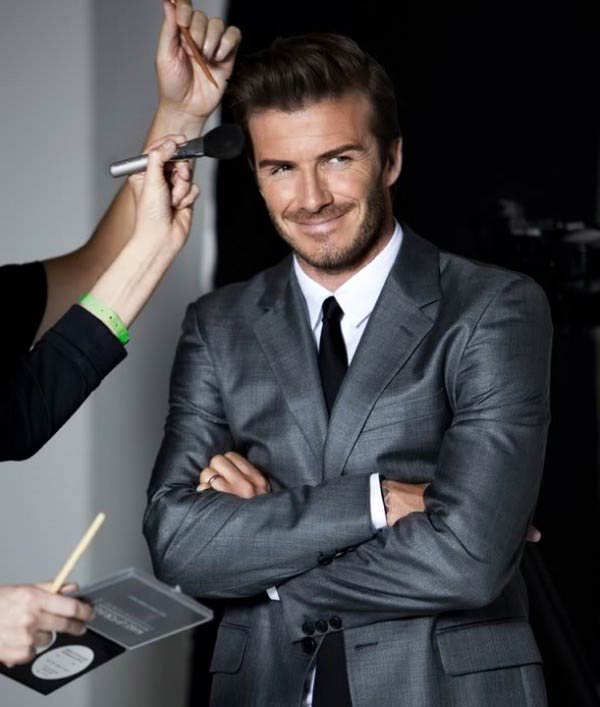
    VDavid Beckham loves Male grooming

    David Gandy

    And let’s not forget, the effort you put into your appearance reverberates through your entire life. It’s about setting a tone, crafting an image that says, “I value myself, and so should you.” It’s about swagger; it’s about presence. It’s about walking into a room and the room taking notice without a single word uttered.

    So, to the men out there lounging in the sartorial shadows, hear my plea: rise up! Embrace the cufflinks, the pocket squares, the crisp lines of a well-fitted blazer. Be the kings of your own stories, not mere footnotes in sweatpants.

    Let’s set a new trend, one that combines comfort with class. Let’s innovate with materials that breathe and designs that dazzle. The world is your stage, and every day is an opening night. What role will you play? Will you be the unforgettable lead, or the understudy that never steps into the light?

    In conclusion, my dear sartorial soldiers, the kingdom of fashion is wide and varied. There’s room for all to forge their path in golden threads or minimalist chic. But let it be a conscious choice, a deliberate act of fashion, not an accidental slip into the commonplace.

    Here’s to the reclamation of glory, to the men who dare to dress as though the world is watching. Because, gentlemen, in case you haven’t noticed, it is.

  • Opinion: Why PHTI’s Recent Assessment of Digital Diabetes Management Tools is Inadequate

    Opinion: Why PHTI’s Recent Assessment of Digital Diabetes Management Tools is Inadequate

    In late March, PHTI (Peterson Health Technology Institute) raised the bar for all of us working to digitize healthcare when they issued their first evidence assessment reporting the evaluation of digital diabetes management tools that support improved glycemic control in people with type 2 diabetes—or claiming to. 

    The head-scratcher here is that despite claiming to assess a technology – and despite using an assessment framework purpose-built to evaluate digital health technologies – the report did not evaluate any technology products. Rather, it evaluated eight companies providing well-established care pathways virtually (i.e. healthcare services). 

    Now, all these companies met the inclusion criteria of “connecting to a noncontinuous glucose monitor.” However, these tools – some connected to EHR and some not – are also pervasive as part of routine diabetes care provided in the clinic. As far back as 2006, 87% of adults with diabetes treated with insulin checked their blood glucose at least daily, and 63% of all adults with diabetes did the same. 

    So, what exactly was being evaluated?

    Honestly, I’m not sure. Except I’m certain it was not a digital technology.  

    The decision to apply a product evaluation framework to digitally enabled healthcare services represents a larger issue plaguing the digitization of healthcare that must be addressed as a priority because quality patient care is at stake. 

    Critical considerations for evidence evaluation in the digital era of healthcare:

    1. We must distinguish between digital health products and digitally enabled care services

    As Steve Steinhubl and Eric Topol said, digital medicine is on its way to being just plain medicine. And just like every other big industry that has gone before us, every aspect of healthcare will be digitized: From back office administration to direct patient care, quality improvement to clinical research, and population health to precision medicine. 

    In the same way that we don’t apply the evaluation frameworks for the ROI of diagnostic assays, molecular products, or traditional medical devices to one another *or* to healthcare services, we must take a more nuanced and fit-for-purpose approach to the evaluation of digital health products as distinct from digitally enabled healthcare services. 

    The PHTI assessment concluded that most of the services they evaluated are bad technologies, akin to saying an apple is a bad-tasting orange. However, this mischaracterization of digital products and services in healthcare is not a problem unique to PHTI’s assessment framework but an industry-wide issue. 

    I cannot tell you how many times I’ve been asked about how the FDA regulates virtual-fist care; they don’t. The FDA regulates medical products, not healthcare. I’ve also watched digitally enabled care providers get passed around payer organizations, pushed towards reimbursement pathways for vendors with software-as-a-service models when they are, in fact, using providers, as defined in federal law, to provide healthcare as defined in federal regulations.

    Until well-intended work such as PHTI’s rectifies this mischaracterization of digitally enabled services, its output will only add to confusion and friction in the progress we’ve seen from digitally enabled patient care.

    2. Value and the patient must be our North Star

    It is not by accident that the digitization of healthcare – characterized by high-resolution, liquid data and rapidly advancing computing capabilities – is being accompanied by a resurgence of value-based care initiatives. We need flows of high-quality data to support the evaluation of care outcomes and insights into the processes of care that drive those outcomes (and those that do not) to make the business case for assuming risk. 

    To successfully advance value-based care in an increasingly digitized industry, we must develop appropriate evaluation frameworks for digital health products and digitally enabled healthcare services. 

    This requires that we differentiate between the evaluation of whether a digital health product or a digital component of a digitally enabled care service is fit for purpose – an evaluation that should include evidence that supports any performance claim it may make as well as consideration of privacy, security, accessibility, usability, and equity – and whether this solution is delivering value. 

    This also requires that we define value more holistically than in the recent PHTI assessment, in which short-term clinical effectiveness and cost-effectiveness were the primary drivers. 

    Let’s start with the patient. While PHTI did engage patient users of the digitally enabled services in their report, their perspectives were not systematically included in the value or throughout the evaluation process. This feels rather performative and consistent with ongoing critiques of product evaluation frameworks issued by the Institute of Clinical and Economic Research (ICER), PHTI’s partners in developing the ICER-PHTI Assessment Framework for Digital Health Technologies.

    We should also include equity and access as essential measures of value alongside effectiveness and cost-effectiveness. , as our team did when we partnered with the Veteran’s Health Administration to develop a value-based innovation framework that applies to all digital health innovations, whether products or digitally enabled services. 

    I was alarmed by PHTI’s conclusion that there was no evidence that diabetes management programs evaluated advanced health equity. Their study design—particularly the selection of companies whose business models are contingent on serving patients covered by self-insured employers—rendered a data set that could never be used to answer the question, “Is it used in diverse settings and by groups that need it most?” 

    Their evidence assessment also failed to recognize that a comparator arm of ‘usual care’ absent considerations of access to this care is a flawed framework. For example, Omada Health –  one of the eight companies evaluated in the PHTI report – provides diabetes management solutions to tens of thousands of rural Alaskans who otherwise would not have access to any support to manage their condition. To every one of those patients accessing care previously out of reach, achieving statistically equivalent clinical outcomes is not a failure of the digitally enabled program. It is an enormous success. 

    3. Altitude is everything

    The PHTI assessment reports ROI at the ‘category level’, breaking digital diabetes management solutions (ahem, services) into three different categories: Remote patient monitoring, behavioral and lifestyle modification, and nutritional ketosis. 

    Setting a discussion of these categories aside, if we want to evaluate ROI at the ‘category level’ – and we should – we need a more inclusive approach to solutions in scope.

    PHTI evaluated eight different start-ups providing three different categories of digitally enabled diabetes management solutions (not technologies) and conducted a systematic review of the scientific literature to draw ‘category level’ conclusions about the digitization of a $23Bn (2022) market. And they did so without contemplating all of the other digital solution providers in this space, the patient perspective, or equity and access to care. 

    In addition, this assessment—summarized by a dashboard of big red dots and warnings not to adopt—uncovered critically important findings that digitally enabled behavioral and lifestyle modifications can have outsized positive impacts on particular subpopulations, particularly individuals with high HbA1c – a measure from a blood test of how much sugar is in your blood and used to diagnose diabetes – starting insulin for the first time. But it buried them in a roll-up of the findings to the ‘category level.’ 

    These issues highlight the risks of extrapolating and translating findings – either from the scientific literature to a single solution or a small handful of solutions to a ‘category level’ in our complex, $4.3Tn industry – without sufficient contextual information. 

    In the digital era of healthcare, we have the ability to interrogate comprehensive datasets when we want to draw industry-wide ‘category level’ conclusions. We also have the capacity to conduct targeted subanalysis to identify the greatest opportunities to benefit every one of the patients our industry exists to serve. Methodological mashups that jump altitudes between ‘category level’ and solution studies and report population-level conclusions without championing sub-population variance are simply not appropriate, given the proliferation of data available. 

    New eras are characterized by reinvention

    PHTI is truly a pioneer in digital health, holding us accountable for delivering value in this digital era of healthcare. Their first assessment has started conversations across the field about our responsibility to evaluate the return on the substantial investment required to digitize our enormous and complex domestic healthcare industry. That is an impressive achievement.  

    Their report’s intent to deliver data supporting an evidence-based approach to investing in healthcare innovation in our resource-constrained environment is spot on. But first, we must establish a shared and fundamental understanding of the different components of digital health.

    And this is a need that stretches far beyond the impact of the PHTIs assessment framework.

    When most people in our industry cannot differentiate between traditional and generative AI, how can we appropriately evaluate these models and maintain their security?

    When accreditation bodies are actively building certifications for virtual care, how will they recognize that it’s all just healthcare in the digital era and reflect these updates in their certification programs for traditional care?

    When the failure of a single digitally enabled provider results in cries of the ‘collapse of telehealth’ but the closure of dozens of rural hospitals is ignored, how on earth do we plan to care for every person our industry exists to serve?

    Definitions are important. A common unifying language is important. And fit-for-purpose evidence-based evaluation frameworks are important. 

    As Taylor Swift taught all of us, a new era is characterized by successful reinvention. As we enter the digital era of healthcare at scale, we must redefine how we care for people… and how we evaluate that care. And this begins with a deep understanding of the new products, care pathways, and the difference between the two.

    Photo credit: Venimo, Getty Images


    Jennifer C. Goldsack founded and serves as the CEO of the Digital Medicine Society (DiMe), a 501(c)(3) non-profit organization dedicated to advancing digital medicine to optimize human health.

    Previously, Jennifer spent several years at the Clinical Trials Transformation Initiative (CTTI), a public-private partnership co-founded by Duke University and the FDA. Jennifer spent five years working in research at the Hospital of the University of Pennsylvania, first in Outcomes Research in the Department of Surgery and later in the Department of Medicine. More recently, she helped launch the Value Institute, a pragmatic research and innovation center embedded in a large academic medical center in Delaware.

    Jennifer earned her master’s degree in chemistry from the University of Oxford, England, her masters in the history and sociology of medicine from the University of Pennsylvania, and her MBA from the George Washington University.