The world of online gambling is continuously evolving, with no-registration casinos emerging as a groundbreaking trend. These platforms revolutionize the traditional online gambling experience, particularly in the realm of making deposits. This article aims to demystify the process of casino deposits without registration, highlighting their ease, benefits, and the critical considerations to keep in mind. As you read on, you’ll discover why many enthusiasts are turning to sources like the “pay and play casino list” for streamlined, hassle-free gaming experiences.
Understanding No-Registration Casinos
No-registration casinos, as the name suggests, allow players to engage in casino games without the traditional account setup process. These platforms operate using advanced technologies like Pay N Play, which not only facilitate a seamless gaming experience but also simplify the deposit process. This model is a game-changer in the online gambling world, offering a range of games and services similar to those found in traditional online casinos, but with an added layer of convenience.
The Deposit Process in No-Registration Casinos
Depositing money in a no-registration casino is a straightforward process. Here’s a step-by-step guide:
Select a Casino: Refer to resources like the “pay and play casino list” or “OnlineCasinoProfy casino list” to find a reputable no-registration casino.
Choose Your Deposit Method: Pick from available payment methods such as credit/debit cards, e-wallets, or cryptocurrencies.
Make the Deposit: Enter the amount you wish to deposit. The system will prompt you to authenticate your identity, usually via your banking details, instead of a traditional account setup.
Start Playing: Once your deposit is successful, you can immediately start playing your favourite games.
Benefits of Depositing in No-Registration Casinos
The advantages of making deposits in no-registration casinos are numerous:
Speed and Convenience: The process is much faster compared to traditional casinos, as it skips the lengthy registration and verification procedures.
Enhanced Privacy and Anonymity: These platforms require minimal personal information, offering a degree of privacy and anonymity rarely found in traditional online casinos.
Reduced Hassle: By eliminating the registration process, players can enjoy a more straightforward and hassle-free experience.
Considerations and Risks
Despite the benefits, there are important considerations and risks:
Security Concerns: The lack of traditional accounts might raise concerns about security and the safety of funds.
Limitations on Bonuses and Rewards: Players might miss out on bonuses and rewards typically linked to account registration and verification.
Regulatory and Compliance Issues: It’s crucial to understand the legal standing of no-registration casinos in your jurisdiction to avoid any legal complications.
Choosing the Right No-Registration Casino
Selecting the ideal no-registration casino necessitates careful consideration. Prioritize finding a casino with a legitimate license, as this ensures adherence to gambling regulations and standards. Equally important is the reputation of the casino, best gauged through user reviews and feedback. This can offer insights into the reliability and quality of the gaming experience. Additionally, the calibre of software providers associated with the casino is a key indicator of game diversity and fairness. Remember, responsible gambling is paramount. Choose a casino that advocates for and supports responsible gaming practices, including setting limits and providing resources for help if gambling becomes a concern. This holistic approach ensures a safer and more enjoyable gaming experience.
Conclusion
Casino deposits without registration offer a unique blend of convenience and efficiency, appealing to the modern online gambler. While they present certain benefits, it’s essential to approach them with an awareness of the potential risks and legal considerations. As this sector of online gambling continues to grow, it will be interesting to see how these platforms evolve to meet the needs of players while ensuring safety and compliance.
Striking the perfect balance between work, school, and family time can feel like a constant challenge. It’s crucial to prioritize all of these facets of life effectively to ensure a healthy, happy family environment. This blog post explores various strategies and tips to help you maintain that essential equilibrium.
Setting Realistic Goals
Begin by establishing reasonable expectations for your work, schooling, and family life. This may involve reconsidering your commitments or setting boundaries to avoid overbooking yourself and your family members. Remember to stay flexible and adjust your goals as necessary.
Long-Term Planning
Planning for the long haul makes it easier to prioritize activities and events. Use a monthly or yearly calendar to mark important dates such as school vacations, work deadlines, or family celebrations. This will give you a clear, visual representation of how your weeks and months will unfold, helping you to make effective decisions about scheduling.
Establishing Routines
Developing consistent routines for work, school, and family time can provide stability in your daily life. For example, establish a routine for weekday mornings that includes getting ready for school, eating breakfast, and preparing for the workday. Then, designate specific times for family fun, exercise, and relaxation on weekends.
Make Special Occasions Memorable
When it comes to organizing unique family events, take the time to create memorable experiences. For instance, if you’re planning a child’s first birthday party, consider a creative theme like a winter Onederland birthday. Ensuring that special occasions are extra special can strengthen the bond among family members and create long-lasting memories.
Prioritize and Delegate
Learn to prioritize tasks and responsibilities by determining what truly demands your time and attention. This includes recognizing when to ask for help and delegating tasks to other family members. By doing so, you can ensure that everyone shares the workload and that stress is minimized.
Work-Life Integration
Incorporating your work life into your family life is essential for creating a balanced schedule. This could involve allocating designated work-from-home hours or setting aside a specific time for email and administrative tasks each day. This will ensure that work obligations don’t encroach upon much-needed family time.
Make Time for Self-Care
It’s essential to dedicate some time to self-care to maintain your physical and emotional well-being. Whether it’s a relaxing bath, a workout, or simply reading a book, be sure to create opportunities to recharge your batteries.
Encourage Open Communication
Encourage open discussions about scheduling and priorities within your family. Regular family meetings can be an effective way to keep everyone informed about upcoming events or changes to the family schedule. This also provides an opportunity for family members to voice their concerns, preferences, and needs.
Celebrate Successes
Be sure to celebrate both large and small victories along the way. Recognizing your achievements in balancing work, school, and family life will help you stay motivated and committed to maintaining a healthy balance in the future.
Embrace Technology to Simplify Life
Utilize technology to streamline your scheduling and daily tasks. Smartphone applications and online tools can help manage family calendars, track chores, and make grocery lists. By introducing these methods, you can create more efficient ways to balance daily responsibilities while allowing for more quality time with your loved ones.
Create a Support System
Building a strong support system is essential in maintaining a balanced family schedule. Reach out to friends, neighbours, and fellow parents to establish a network of individuals who can share responsibilities such as carpooling, playdates, and even meal preparation. This collaborative approach can alleviate pressure and promote an overall sense of well-being within your family.
Know When to Say No
Recognizing when to decline invitations or responsibilities is an important skill to develop to maintain balance in your family’s life. Assess each opportunity and consider whether it aligns with your family’s priorities and goals. Being selective with your commitments will result in a more manageable schedule and encourage a focus on quality time together.
Final Thoughts
Creating a balanced family schedule requires careful planning, open communication, and plenty of flexibility. By prioritizing work, school, and quality time, you can foster a healthy and happy family environment that allows everyone to thrive. Remember, finding your perfect balance is a continuous journey—so stay adaptable and enjoy the ride!
Your bags are packed, your ticket’s booked… All that’s left is what to wear. The best travel pants for men take the guesswork out of getting ready on the go. Designed for functionality and style, they’re an unbeatable travel essential for every kind of voyage.
The pants on this list have been tried and tested from the backcountry of New Zealand to the slick streets of Paris. Each pick is made to move with you, featuring innovative materials, wrinkle free designs, and breathable constructions. And, of course, plenty of pockets.
Whether you’re wearing them on the airplane or for the entire trip, these are the best travel pants for men, no matter where the winds take you.
Key Takeaways
After testing dozens of pairs of travel pants, the best overall choice is the Tropicfeel Chino Pant. These eco-friendly trousers have the look of classic slacks but are outfitted with highly tactical qualities that make them ideal for long travel days and wearing on any adventure. They also pack into a back pocket pouch, making them super practical for stashing in a daypack or already overstuffed luggage.
If you’re shopping on a budget and like to travel in activewear, we’re also huge fans of the Jockey Active Joggers, which are simple, comfortable, and have zippered pockets.
Keep reading to discover all of the best travel pants for men.
View More on Tropicfeel
Why They’re Great: As far as the travel pants go, this pair from Tropicfeel is unmatched. This brand is dedicated to upgrading modern travel gear, and these pants ensure guys stay comfortable wherever life takes them. Thanks to the chino design, they’re easy to dress up or keep casual, making them a highly versatile choice for any kind of trip.
Featuring a packable design – they fold up into a pouch attached to the back pocket – and water-repellent material, they look like classic slacks but have all the qualities of tactical pants. They’re breathable with stretch, have zippered back pockets, and even use a little reflective strip on the cuffs to keep you visible at night. Not to mention, they’re a carbon neutral product. This is the definition of pulling out all the stops to create the best, most comfortable travel pants for men.
How They Feel: Crafted from a cotton, TENCEL lyocell, and spandex blend, these pants are supremely lightweight and ultra-breathable. The cotton ensures softness, while the TENCEL lyocell, made from biodegradable wood pulp, contributes to the breathable, wrinkle-resistant traits. Finished with a touch of spandex for extra stretch, they’re designed to move with you wherever your adventures lead.
Flaws But Not Dealbreakers: Due to the lightweight construction of these travel pants, they’re best for warmer months. You may find them a bit thin for winter wear.
Why They’re Great: If you’re a sweatpants on travel days kind of guy, these are a top choice. A great budget friendly option, these have a classic jogger style made from a polyester blend for comfort and stretch. You won’t find yourself constantly readjusting thanks to the sturdy elastic waist and ribbed cuffs that keep these travel pants in place, even while on the move. And the best part? Zippered pockets – a rarity when it comes to men’s joggers. Since they have a pared-back black design, they’re easy to wear every day of your trip.
How They Feel: Lined with fleece, these sweats will keep you toasty on chilly airplanes and make them awesome for lounging when you’re not using them as travel pants. Rather than open ankles, they have ribbed cuffs that trap heat and prevent them from riding up.
Flaws But Not Dealbreakers: Despite the fleecy lining, these are lightweight travel pants for men, which can throw off guys who are expecting a heavier pair of trousers.
Why They’re Great: If comfort is a top priority, these joggers take the cake. Made from the finest Italian cashmere, these upscale sweats are supreme for long travel days and exploring new cities. Designed with a tapered fit, drawstring waistband, and side pockets, these travel pants are flattering and by far the coziest on this list, ideal for ski trips and cold weather destinations. Dress them up with a crisp button down and a pair of Chelsea boots.
How They Feel: These pants feel like crawling into a warm bed after a long day. The cashmere is extremely soft against the skin while being breathable enough to keep you from sweating. They have plenty of stretch, and the elastic cuffs around the ankles ensure they stay in place throughout any voyage.
Flaws But Not Dealbreakers: It’s tricky to find flaws with pants this nice. However, the only negative aspects about these men’s joggers are the pockets don’t zip, and they’re pretty pricey. But hey, cashmere never comes cheap.
Material: 100% two ply pure cashmere | Sizes Available: XS – 2XL | Colors Available: 6 | Fit: Slim Tapered
Why They’re Great: Denim brand powerhouse Lee knows a thing or two about men’s pants. These chino-cargo hybrids embody the top qualities of both styles. They’re sophisticated enough to wear out to that fancy dinner you have planned, while packed with practical features so you can explore during the day in comfort.
In addition to the side and back pockets, these pants have dual zippered cargo pockets on each leg (perfect for valuables) and seven neutral colorways to choose from. To ensure the perfect fit, there are also four different lengths.
How They Feel: These pants have the appearance of men’s chinos with the stretch of joggers. The elastic waist consists of active stretch fabric with a button fly closure, while the pants themselves have enough flexibility to curl up in a window seat or run to catch a train. The straight leg is slimmer than traditional cargos without sacrificing breathing room.
Flaws But Not Dealbreakers: The only downside of these men’s travel pants is the main pockets are pretty shallow and may not fit newer phones. Good thing there are deep cargo pockets on the side of each leg.
Why They’re Great: For streetwear-inspired travel pants for men, we’re huge fans of the Nanaimo Pants by Closed. While the brand normally specializes in denim, they’ve created the ideal cotton travel pants with exposed seams, a contrasting drawstring waist, and a relaxed fit.
Stash your passport in the deep front pocket and pair them with solid colored shirts or hoodies. When you get where you’re going, these travel pants double as everyday trousers to explore in style.
How They Feel: Made from durable Italian cotton, these pants are soft with plenty of structure. Since they’re woven with a twisted yarn, they have a solid mid-weight making them stellar for four-season wear. We also always love an elastic waist, especially on long travel days and for indulging in hearty local cuisines.
Flaws But Not Dealbreakers: The relaxed fit of these pants may be a bit baggy for some men’s tastes, especially if you prefer a more polished look.
Why They’re Great: Thanks to strict course dress codes, golfers know a thing or two about performance trousers that look good. Whether you wear them at the club or on the concourse, these are among the best casual pants for men if you’re looking for a more sophisticated style of travel pants.
Featuring a flattering slim fit, they have everything we love about men’s travel pants: a stretchy design, moisture and wrinkle-wicking fabric, an elastic waist, and multiple deep zippered pockets. They’re flattering, versatile, and perfect for wearing on any voyage. Crumple them in the bottom of your bag and they’ll still look good as new when it’s time to get dressed.
How They Feel: These lightweight travel pants for men are made from an active, waterproof material that feels soft against the skin. The fabric is super stretchy and suitable for casual or dynamic movement, which is why we love wearing them on trips.
Flaws But Not Dealbreakers: Studded with rave reviews, these pants don’t have many faults. Though you may want to consult the sizing chart before ordering to ensure you have the right length.
Why They’re Great: With a distinct khaki-like appearance, these tech trousers are filled with four-way stretch, allowing you a full range of motion, unlike traditional rigid slacks. Due to their flexibility, they make wonderful travel pants for men on business or guys who simply like to look good on the go.
The straight leg makes them easy to pair with wardrobe staples, whether you style them with a simple white tee or a button down and sweater. Plus, we always love the addition of a hidden security pocket.
How They Feel: Crafted from a blend of cotton, polyester, and a generous amount of elastane, these men’s travel pants are breathable and supremely comfortable. Due to the mix of materials, they stay wrinkle-free and wick moisture to keep you looking and feeling your very best.
Flaws But Not Dealbreakers: These pants’ polyester fabric makes them less sturdy and durable than your average chinos. That said, fabric also makes them some of the most lightweight and comfortable trousers. They can also pass as dress pants for men in a pinch while traveling.
Why They’re Great: Well revered as some of the most comfortable travel pants for men, Lululemon created this garment with all day comfort in mind. They have four way stretch and plenty of breathing room, despite the flattering straight leg fit.
But what we really love is the durability of these modern trousers. Lululemon uses abrasion-resistant fabric that won’t snag or tear even if it takes a beating. Wear them for business travel, throughout the backcountry, or atop a bike – there’s even reflective tape on the cuffs. You no longer have to sacrifice your look for a full range of motion.
How They Feel: Like most travel pants, these appear to be your run of the mill slacks, but feel like your favorite athletic gear. The four-way stretch ensures they’ll never restrict your movement, and the five pockets (four classic and one hidden) are a nice addition to ensure there’s room for all your essentials while on the go. After all, ABC stands for “Always Be Comfortable.”
Flaws But Not Dealbreakers: Definitely consult the sizing chart before ordering to ensure the pants don’t end up too baggy.
Buying Considerations for the Best Travel Pants for Men
Fit
The best travel pants for men come in all shapes, sizes, and styles. When choosing a pair, it’s important to consider how they fit, as this majorly impacts how they’ll look and feel when you’re wearing them.
In general, travel pants come in a few main fits. Here’s what to expect from each:
Straight Leg: This fit has straight legs from the waist to the ankle, resulting in a slightly relaxed look. It’s worth consulting the sizing chart before buying straight leg travel pants to ensure they aren’t too baggy on your frame.
Slim: Slim travel pants are some of the most flattering, with a tapered leg that narrows as it reaches the ankle. Slim travel pants are a solid choice for business travel or looking good on the go because they result in a more polished appearance, especially when styled with a smart top.
Jogger: The jogger fit is also slim, however, it tapers more than the previous style and often has ribbed cuffs around the ankles. The jogger fit is best for casual travel, especially if they’re paired with a men’s sweatpants material.
Functionality
Functionality is everything when it comes to men’s travel pants because you want a pair that works with you instead of against you.
Travel pants should have the look of classic trousers with the functionality of the best tactical pants. This means they should have some stretch for an increased range of motion and (hopefully) zippered pockets to keep your belongings secure.
Some travel pants go further with a packable design, hidden security pockets, and reflective tape on the cuffs, which makes them even better for wearing on the move. Functionality also plays out in qualities like quick drying and wrinkle resistance, which will keep them looking fresh until the end of your trip.
Material
Finally, the material of the best travel pants for men impacts the fit, functionality, and overall look and feel of the trousers.
Most travel pants are made from some sort of blend, combining cotton or polyester for softness and elastane or spandex for stretch. These blends are often lightweight and super comfortable, with useful moisture- and wrinkle-wicking properties.
However, you’ll also find travel pants in luxurious materials like cashmere or fleece, which are great for winter wear and keep you warm during cold weather travel.
I’ve been traveling full time for the past five years, and over this period, I’ve been consistently hunting for the best travel pants. To date, I’ve tested more than twenty-five pairs of pants. What can I say? I’m a sucker for comfort and versatility.
Each time I come across a new pair of travel pants, I wear them on my adventures, rigorously testing them for durability, functionality, and overall feel. I’ve shared my findings in the product choices above to make someone’s trip a bit more enjoyable. Whether you’re a seasoned traveler or setting off on your very first journey, these men’s travel pants will get you there in comfort and style.
Final Verdict
While there are dozens of pairs to choose from, the ultimate best travel pants for men are the Tropicfeel Chino Pant. They embody everything we love about men’s travel pants: breathable material, innovative design, and plenty of functionality. They also look sharp, making them a versatile piece that you’ll wear for years to come.
If you’re looking for a less expensive alternative, the Jockey Active Joggers are budget friendly and have zippered pockets, which are extra handy for travel.
FAQ
The most durable travel pants are Lululemon ABC Pants, which are crafted from an abrasion-resistant material that prevents them from snagging or ripping.
The Tropicfeel Chino Pant is among the most lightweight travel pants for men and is especially practical if you’re looking for tactical pants that look like classic slacks.
Timeshares, once synonymous with vacation ownership, have evolved over the years, adapting to changing consumer preferences and economic landscapes. The question of their popularity among millennials, a generation known for prioritizing experiences and financial prudence, is an intriguing one.
Shifting Perspectives on Ownership
Millennials, born between the early 1980s and mid-1990s, have exhibited a distinctive shift in attitudes towards ownership. Unlike their predecessors, this generation tends to value experiences over possessions. This shift has influenced various aspects of their lives, including how they approach vacationing and the concept of timeshare ownership. Those who do purchase a timeshare and want to sell it may want to contact ACA Group, Located in Florida, to learn how to get out of it.
Economic Considerations
Financial considerations play a pivotal role in millennials’ decisions, and many came of age during economic uncertainties such as the 2008 financial crisis. The commitment associated with timeshare ownership, including upfront costs and ongoing maintenance fees, may be perceived as less appealing in a generation that values financial flexibility and experiences without long-term financial ties.
Preference for Flexibility
Millennials are known for their desire for flexibility in various aspects of life, including travel. The rigid structure of timeshare ownership, with fixed weeks and locations, may not align with the spontaneous and flexible travel preferences of this generation. The rise of alternative accommodation options, such as vacation rentals and online booking platforms, has provided millennials with greater flexibility and variety in their travel choices.
Rise of the Sharing Economy
The sharing economy, exemplified by platforms like Airbnb and Vrbo, has gained immense popularity among millennials. The ability to access a wide range of accommodations on a short-term basis aligns with their preference for variety and experience-driven choices. This trend has made the traditional model of timeshare ownership seem less attractive to a generation that values options and the ability to tailor their travel experiences.
Awareness and Perception
Millennials, being digitally connected and information-savvy, are likely to be aware of both the benefits and potential drawbacks of timeshare ownership. Negative stories or experiences shared online can impact the perception of timeshares among millennials, influencing their decisions to explore alternative travel arrangements.
Sustainable and Ethical Considerations
Millennials are often characterized by a heightened awareness of environmental and ethical issues. Some may view the concept of timeshare ownership, with its potential for overdevelopment and concerns about environmental sustainability, as less aligned with their values. This consideration can influence their choice of vacation accommodations and experiences.
Innovation in Travel Platforms
The travel industry has witnessed significant innovation with the advent of technology. Travel platforms offering last-minute deals, loyalty programs, and diverse accommodation options have become increasingly popular. Millennials, being early adopters of technology, may be more inclined to explore these modern alternatives rather than committing to a traditional timeshare model.
Financial Investment Preferences
Millennials, who came of age during a time of economic uncertainty, may have different perspectives on financial investments. The perceived lack of liquidity and potential difficulty in reselling timeshares could be a deterrent for a generation that values investment options with greater flexibility and potential for returns.
While there may be exceptions, timeshares may not be as popular among millennials compared to previous generations. As millennials continue to shape the travel industry, it will be interesting to see how the concept of timeshare ownership evolves to meet their changing needs and preferences.
Champagne flutes. Supermodels. Bright lights. Fashion. The world of top designer brands conjures up a swirling chaos of exclusivity, luxury, and style. But where does one turn in the midst of the maelstrom of top designer brands? Each brand competes to prove to you in subtle ways that it’s the best and that it deserves your money the most. Thankfully, we can’t take our fingers off the pulse at Fashion Beans, so we’re here to guide you.
But why bother with top designer brands? Is it all just fluffed-up BS? Or are there legitimate benefits that befit the high price tag?
Firstly, originality. Top designer brands are attempting to create something never seen before, even just subtle tweaks to what the fashion house is famous for. Secondly, during fashion week, certain themes and clusters form to represent trends. This is an indication of where our high street style is heading; buying from top designer brands puts you ahead.
Thirdly, you are paying for high-quality clothing. A luxury brand’s reputation is on the line, so they only source the best fabrics, often employ highly skilled workers, and therefore make products with real longevity. Lastly is the clout. A designer logo represents prestige, a high-quality product, and hints at a certain lifestyle or social status. There’s no denying this.
Now, how do top designer brands compete within this market? Each brand has its own approach, which is what makes following it interesting. They might focus on artisanal hand-made leather goods, be big on TikTok, double down on its heritage, venture (bravely) into the Metaverse, champion sustainability, rely on the designers’ creativity, or employ global influencers and ingenious billboard marketing strategies.
The way brands achieve status is constantly changing and is somewhat dictated by the society it is trying to impress. With this top designer brands list, we’ll give you a sense of what the fashion world looks like and which designer names fare better in which department.
Key Takeaways
When shopping around for your favorite top designer brands, there are a few things to bear in mind. Does the brand use high-quality fabrics? Employ innovative or labor-intense manufacturing techniques? Is it doggedly committed to creativity? What does the marketing suggest? Are the clothes suited to your style? Most important: it is totally okay to think designer names are overrated, over-hyped, and not for you.
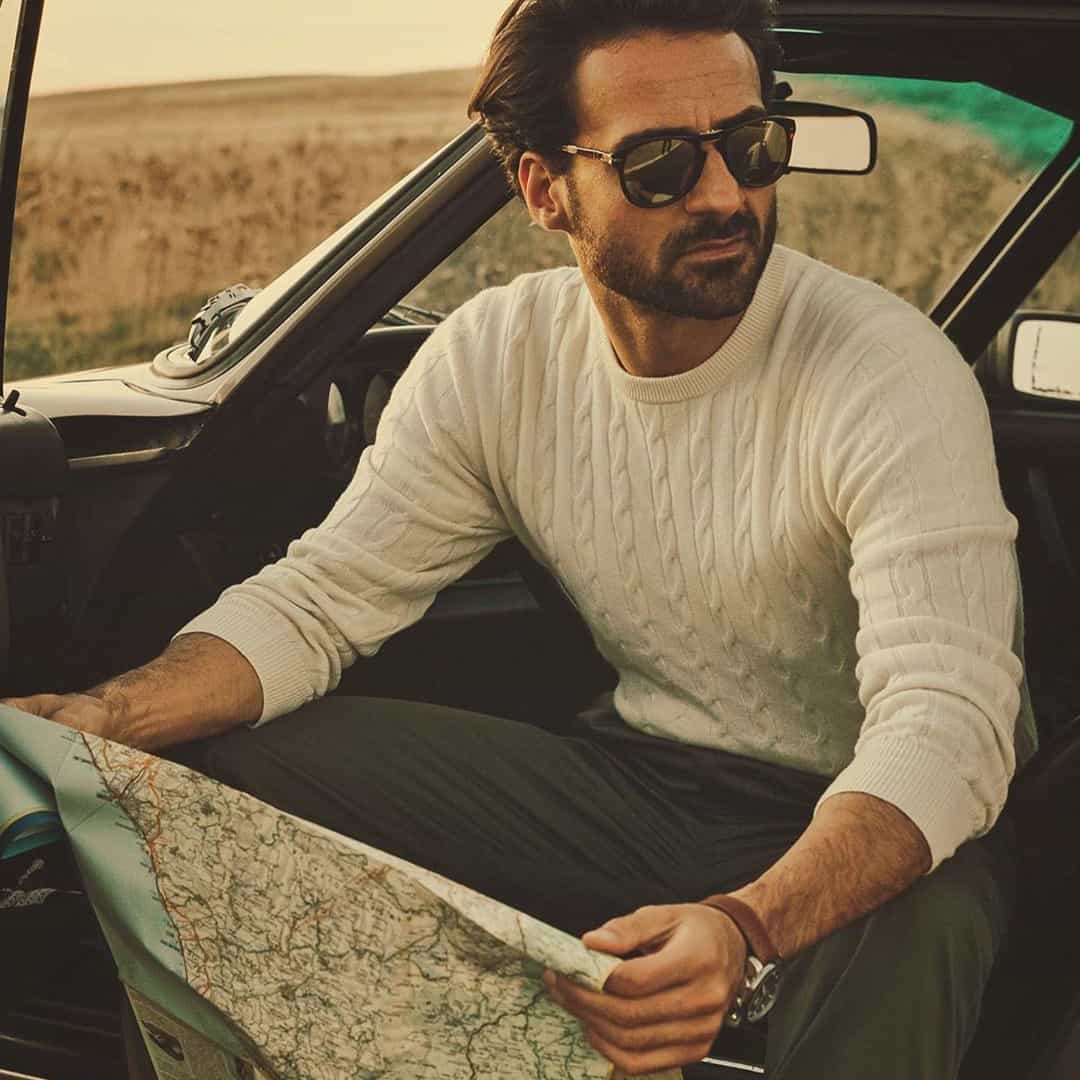
Luca Faloni first and foremost is a designer name that focuses on the quality and longevity of a garment. This brand is unlike many of the high-fashion runway brands you may be thinking of but is no less deserving of a space on this list with designer names.
What Luca Faloni brings to the table is a divine focus on Italian tradition and materials (there’s no cashmere polyblend here). The big focus here is slow fashion, while other brands, which I undoubtedly love the same, will pump out six seasons of clothing, Luca Faloni strolls along providing you with those quality staples only those who really appreciate craftsmanship will know and love. While this brand may not be the bread and butter of NYFW, it’s one that deserves a place in your closet.
Axel Arigato
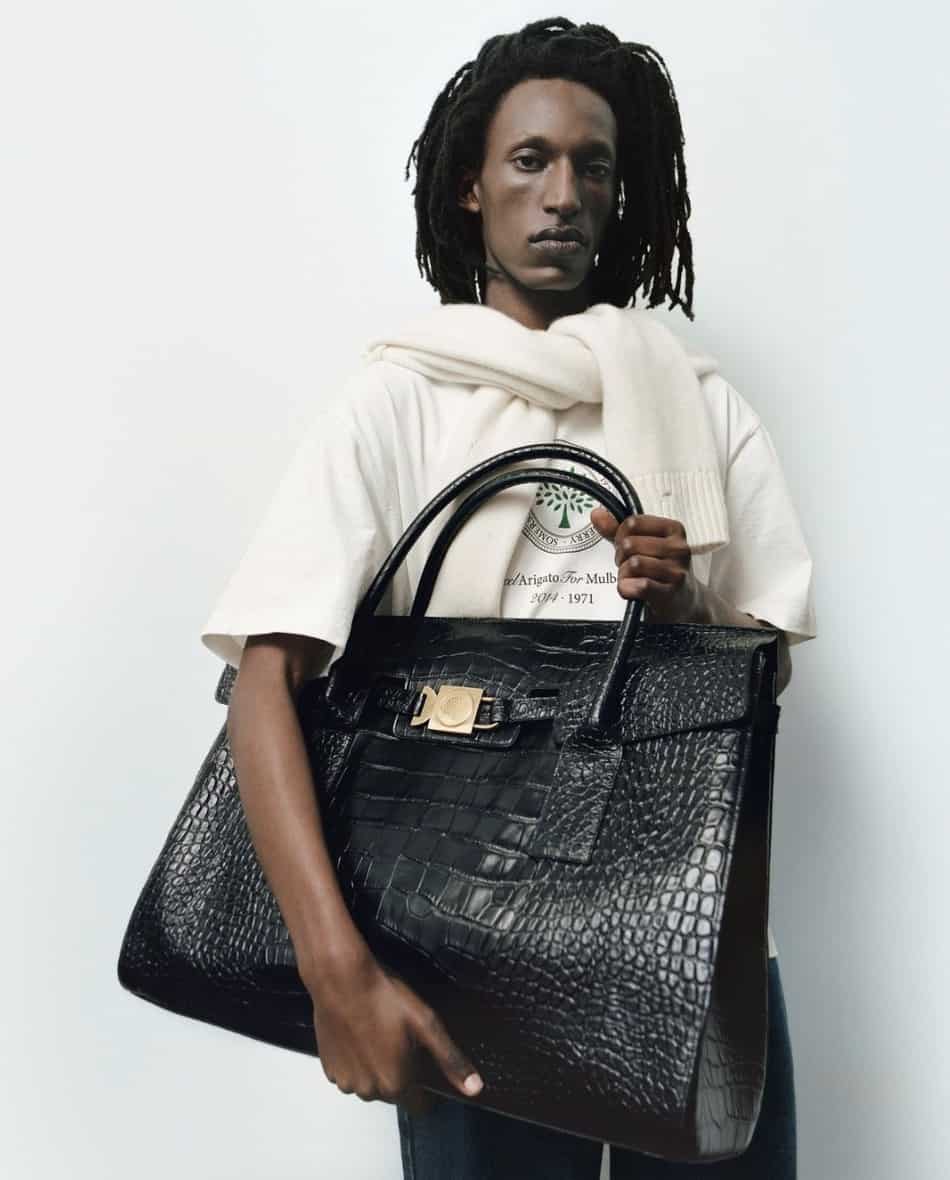
An evolving brand is one you want to get behind, and sometimes there’s nothing cooler than knowing you’re looking to the future. With one foot firmly planted in the present here and now, and the other in the future Axel Arigato is one of those designer names here to steal all the money from your wallet (or at least mine).
Founded in 2014, this is one of the babies on this list of best designer brands, but the brand speaks for itself. Specializing in footwear, over the past two years I’ve been pleasantly surprised with the additional wears they’ve dropped, including menswear staples and accessories. Watch out because you’re absolutely going to see more of Axel Arigato in the future.
Gucci was founded in 1921 in Florence by Guccio Gucci, beginning (like many of the top luxury brands) as a luggage maker for the upper classes. When Guccio passed away, the company shifted into the hands of his three sons, Aldo, Rudolfo, and Vasco. Aldo designed the “GG” logo in tribute to his father, still prominent on Gucci products to this day.
House of Gucci, starring Lady Gaga and Adam Driver, depicts the company’s economic troubles in the eighties but ends with Gucci appointing a new designer. His name was Tom Ford, and he helped save the iconic house from the brink. Alessandro Michele is the Creative Director now who has adopted a younger audience by bringing elements of retro, kitsch, and gender fluidity.
Gucci is now the number one of all men’s top designer brands for online sales, and the word itself is a term rappers use to describe something successful. Talk about the zeitgeist…
Of all the men’s top designer brands, some say there is only one fashion show worth watching each season. Prada. In 1978 with only a PhD in Political Science from the University of Milan, Miuccia Prada took over her family’s luggage business, turning to fashion shortly after in 1985.
Miuccia has built the brand into a billion-dollar empire of influence, pared-back style, and clothes of the highest quality. In terms of contemporary reputation, this is one of those designer names that’s almost untouchable. And with the incredible designer Raf Simons on menswear, Prada shows no signs of changing course.
Christian Dior became famous through his “New Look” collection. It featured the “little black dress,” a symbol of Parisian style and a vehicle by which women could reclaim expression in the post-WW-II era. These traits have stayed close to the brand since. Menswear direction by Kim Jones has tilted towards streetwear since 2018. His clothes are stylish, luxurious, and with a modern bent. Dior recently designed a racing kit for the game Gran Turismo and has taken on M’Bappé as a global ambassador. This suggests a more youth-led, digital direction for Dior.
The man once desired to be an actor, but life had other plans. The Texan worked as the creative director for Yves Saint Laurent and Gucci. He received the award for Best International Designer in 2000 and set up Tom Ford in 2005. Now, Tom Ford is one of the most well-known designer names. The brand has achieved its status as one of the suavest top designer brands for men by using high-quality fabrics, impeccable tailoring, and sophisticated outerwear. Known for their wide almost visor and retro sunglasses, his clothes blend formality and sexuality in a desirable way.
This designer brand was launched in 1910 by Coco Chanel, and the famous interlocking “CC” logo still dominates their pieces today. Initially, Coco made her name by breaking the mold of haute couture, her dresses tapping into the post-war “Flapper” style, using frills and masculine colors. The perfume No. 5 was released in 1921 and is still an iconic fragrance even today.
To give a better understanding of the aesthetic philosophy, Chanel once told Harper’s Bazaar, “simplicity is the keynote of all true elegance.” Post-WW-II, Chanel was endorsed by the Hollywood set, including Marilyn Monroe. In recent years Chanel has entered the male beauty space, bringing the first line of well-marketed and desirable men’s make-up and skincare.
Aged 17, Paul Smith was hospitalized after a crash destroyed all hopes of becoming a professional cyclist. In the hospital, he started talking to a local art student and decided to pursue a creative life. He is now a mainstay of the Paris Fashion Week but still keeps offices and studios in his hometown of Nottingham. Paul Smith is also one of the few remaining independent designer brand names on the circuit.
The brand is famed for its tailoring that embraces clean lines and quality fabric in a playful manner. His collections use slogans, figurines, and wild patterns married alongside more traditional designs. Paul Smith oozes taste and personality, making it one of the top designer brands for men. The man himself also scrubs up nicely.
Alexander McQueen was renowned for being a highly conceptual and theatrical designer. So, his beginnings in fashion are slightly unsuspected. He built his tailoring skills through Anderson & Shepard, Gieves & Hawkes, and Barmans & Nathans. He then assisted Romeo Giglio in Milan and got his MA from Central St Martin’s in 1992. Four years after graduating, he was named chief designer of Givenchy.
Collections under his own name had the unerring craftsmanship of a tailor, the flair of a costume designer, and a fearless conceptual vision. He was a genius. Hence why it was such a shock when McQueen took his own life in 2010. The brand continues to produce incredible, chic, and boundary-pushing clothing.
Established in 1908 by Hans Wilsdorf, Rolex was put on the map in 1926. The Oyster was the world’s first waterproof wristwatch. The brand has taken this spirit of innovation and expanded across the globe. The timepieces are a testament to resilience. They are adept in the extremes, producing watches for deep-sea divers, pilots, and racing drivers alike.
Since then, the brand’s innovation, style, and timelessness kept it at the very top of the horological food chain. The second-hand Rolex market doesn’t hurt either. A Rolex is guaranteed to immediately rise in value after purchase (if you can get your hands on one, that is). Limited supply combined with needing a dealer to buy one creates legitimate exclusivity. For these reasons, Rolex is one of the most sought-after luxury watch brands in the world.
In 1856, Thomas Burberry opened an outdoor-wear store in Basingstoke, outside London. Many tartan patterns populate the British Isles, but Burberry’s adopted check is now in the fashion history books. This is all thanks to Jacqueline Dillemman. Originally used on the inner lining of the raincoats from the 1920s onwards, in 1967, Dillemman removed the lining and covered luggage in it. Everyone loved what she’d done, and the Burberry check was born, dominating the brand’s aesthetic. For quintessentially British luxury fashion, Burberry is still top.
Valentino is the red heart of Italian designer brand names. Valentino Garavani took the traditional route through fashion design. He apprenticed at labels before launching his own line in 1962 in Florence. His first collection was a rapturous success and red became the color of Valentino. Look out for the enclosed “V” symbol found on jewelry, belts, and loafers. Not to mention the classic Valentino Art Deco patterns too. In recent years, the brand has become synonymous with luxury hoodies, tracksuits, and garish sneakers.
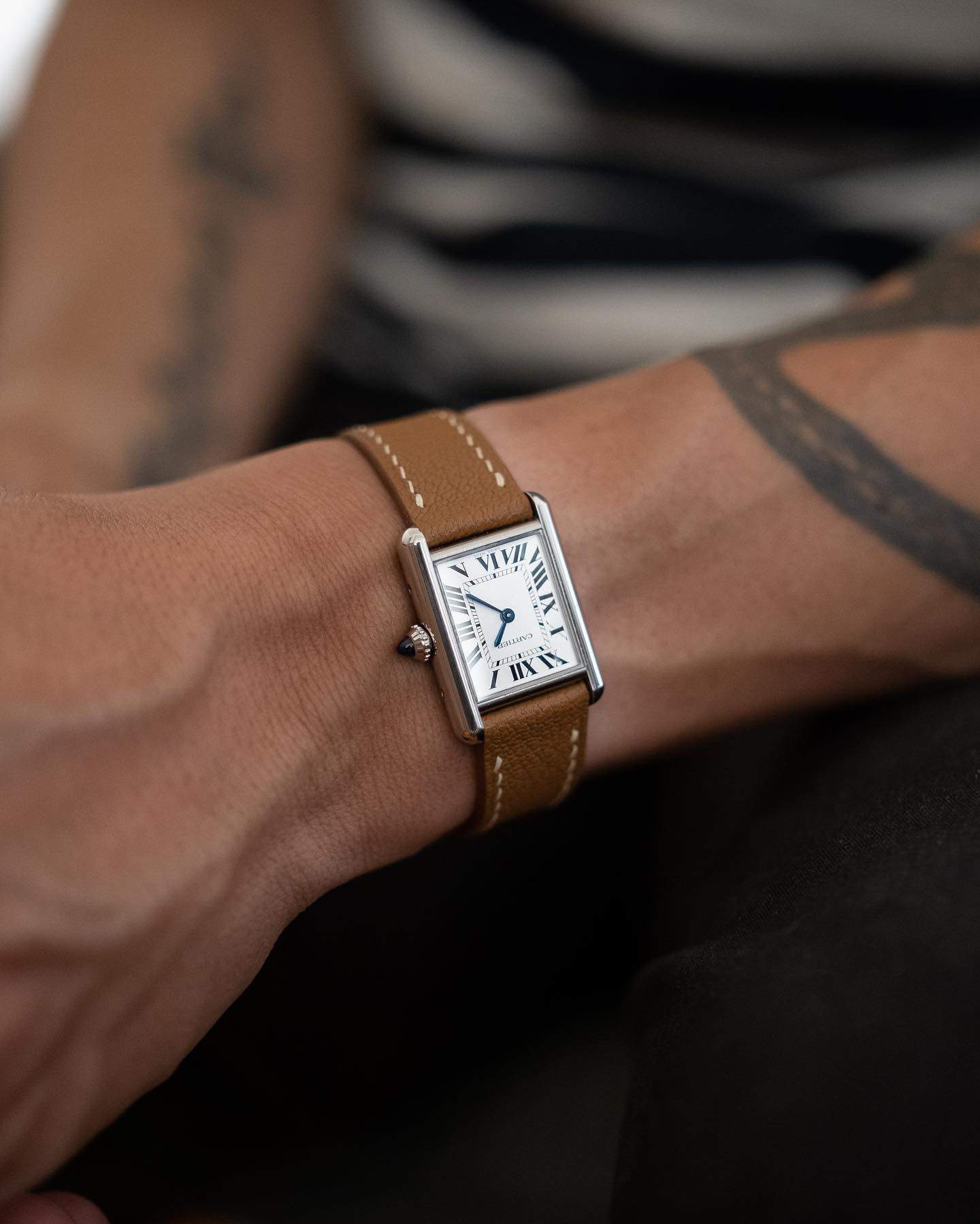
In typical 19th Century fashion, Louis-François Cartier assumed the jewelry workshop of his master. In 1847, he set up Maison Cartier in Paris. French royalty began to take notes and make orders. Plus, the ornate designs were vaunted by high society. Since then, the brand has expanded its prestigious Parisian reputation throughout the globe.
These days, the jewelry is decadent, laden with rare gemstones, and secured by fine metals. But it’s also tasteful and well-designed, like the three-band Cartier ring. Wristwatches are also an important aspect of the brand, which Cartier has been producing since 1904. The “Tank” is elegant, simple, and stylish, and the “Crash” (released in 1967) is a symbol of the brand’s creative daring. Cartier produces some of the finest jewelry in the world.
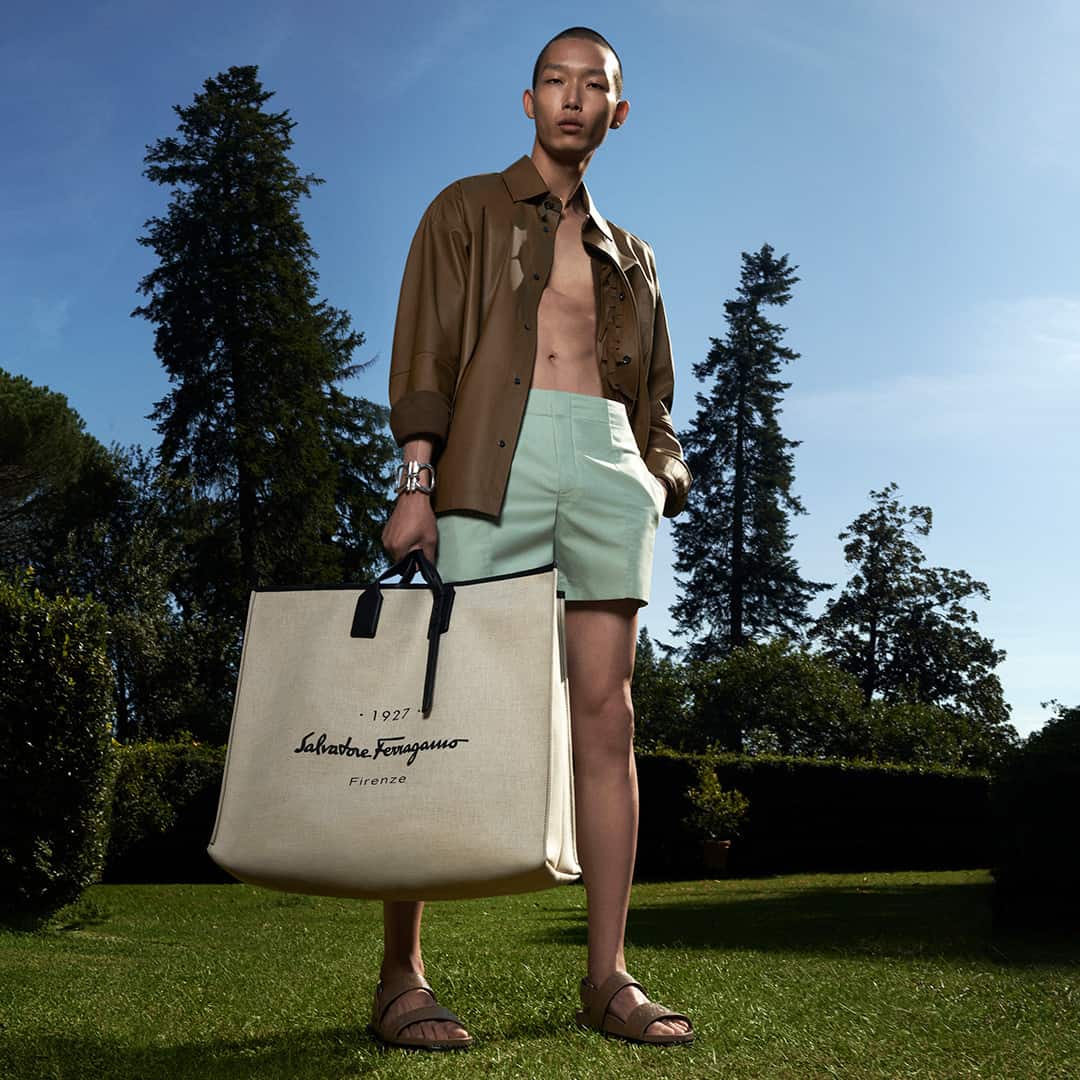
In the 1920s, the Italian shoe designer worked with celebrities and Hollywood stars. In 1927, he set up a brand under his own name and was responsible for the innovation of the wedge heel and cage heel. Ferragamo’s products are of supremely good quality. Unsurprisingly, the leather goods—bags, belts, and wallets—ooze finesse. The current creative director, Paul Andrew, is keeping the brand classic, elegant, and desirable. Basically, not streetwear.
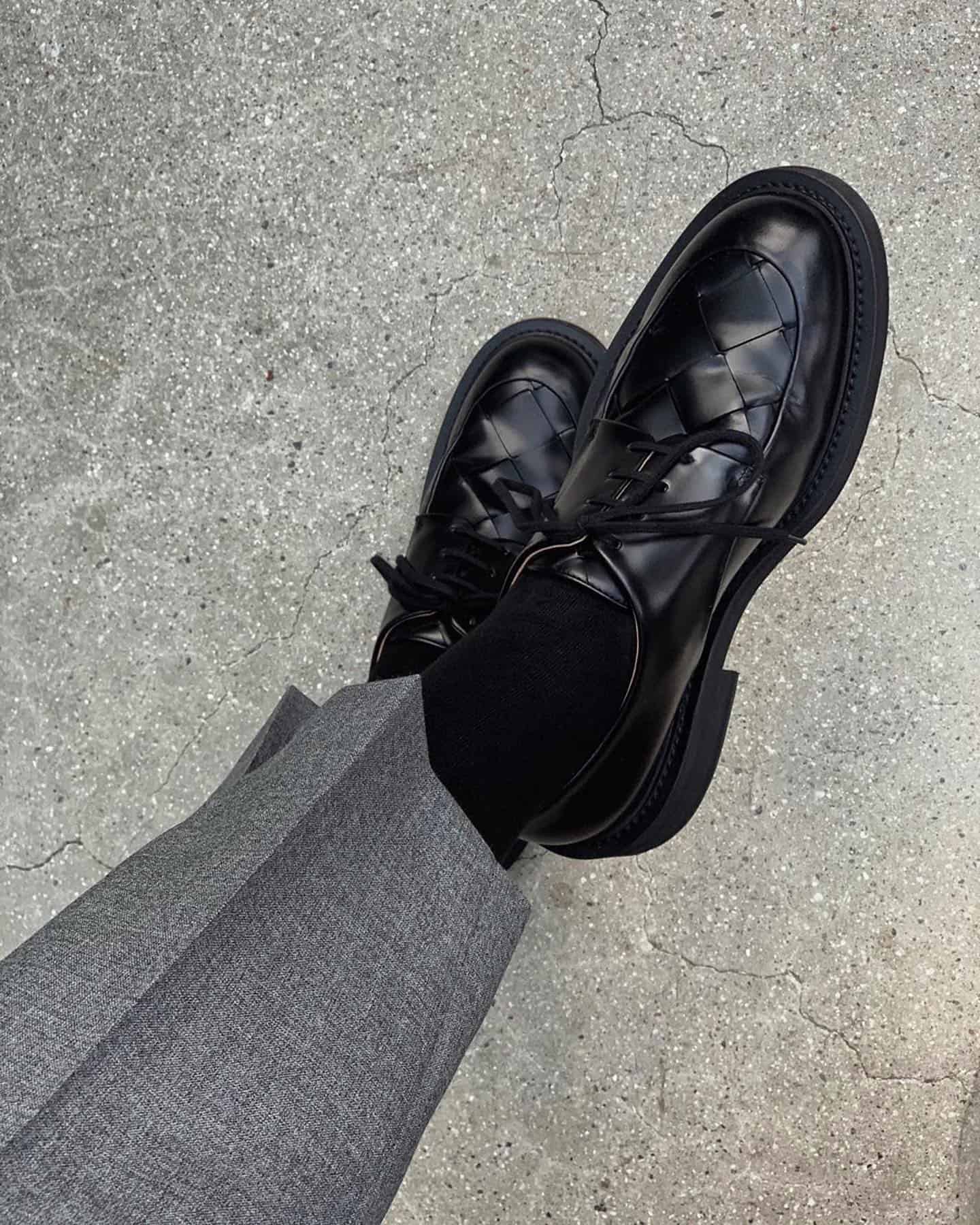
Bottega Veneta was launched in 1966 in Milan. It was created in opposition to the entrenched fashion houses. Its tagline? “When your initials are enough.” Veneta is the rebellious yet still related cousin to the heritage fashion houses. Under British designer Daniel Lee since 2018, this disruptive nature continues.
Lee eschews social media and relies on the clothes themselves to create an air of mystique. In 2021, the brand itself also deleted its whole social media output. Lee employs the brand’s iconic intrecciato patterning (a square weave) with panache, threading it through fine fabrics and quilted puffers. Veneta creates a chic, innovative path for the native digital and non-digital alike. Veneta is easily one of the best designer brands for satisfying your rebellious side.
Pierre Balmain was the understudy of Hubert de Givenchy and Christian Dior. He then set up on his own and became famous in the 1950s for his Hollywood ballgowns. In 2011, 24-year-old Olivier Rousteing changed the game. He brought Balmain into the 21st Century by leaning into influencer culture. He built a “Balmain Army” including Kendall Jenner, Gigi Hadid, Kim K, plus AI models, Shudu, and Zhi. For the digitally connected, Rousteing’s Balmain is a cornerstone of the modern fashion landscape.
Giorgio Armani became renowned for his powerful tailoring in the eighties. Set up in 1975, Armani began designing flowing, yet elegant suits which became the envy of Wall Street. By the turn of the millennium, he was Italy’s most successful designer. Still to this day, the runway collections are brooding, dark, and inimitably Armani. Under the Armani monicker, there are a few brands. Armani Exchange is a streetwear, everyday/casual wear, EA7 is sportswear, and Emporio Armani is the chic, fashion-forward, but more affordable brother to the original Giorgio Armani. Armani still retains its status as a wonderful tailoring house.
P.S. Armani was the first designer to ban models with a BMI under 18.
It took Karl Lagerfeld just three seconds to design the now globally famous Fendi “FF” Zucca logo. This was an attempt to make the brand seem younger, which can be difficult for a brand that dates back to 1925. The brand’s modern reputation is dominated by Lagerfeld’s creative direction from 1965 until his death in 2019. He split his duties between Chanel, Fendi, and his own label. While Kim Jones has now taken over, the brand is widely known for its bold and dramatic use of furs and leather.
Givenchy
Hubert de Givenchy was one of the largest fashion designers. No, really, he measured up at 1.98m. But his large physical stature will always be eclipsed by his historic brand. The brand was established in 1952 and focused on perfume. However, it became renowned for its work with Audrey Hepburn, especially that black dress in Breakfast at Tiffany’s. In the modern age, Riccardo Tisci brought drama, elegance, and a moody black Parisian chic. Since 2020, the brand has appointed Matthew M. Williams of Haute streetwear brand 1017 ALYX 9SM as creative director.
Lanvin
Jeanne Lanvin set up her fashion house in the early 20th Century and made her daughter her muse. She was one of the first designer names to set up a children’s range. She was inspired by the painters and artists of the time and used colorful geometric patterns against black and white. She also coined a certain “Lanvin blue.” Lanvin is a staple of Paris fashion week.
D&G gets its name from its two founders, Domenico Dolce and Steffano Gabbana. Two names worthy of their own fashion brands, let alone combining to form one black and gold super-brand. The pair debuted in Milan in 1985 to rapturous acclaim. Since then, they have been famed for their excess, flamboyance, and boldness. They are not afraid to dabble with powerful black tailoring, “D&G” branding, gold, silvers, glitter, crystals, and diamonds.
There’s more to this brand than just cool boxer shorts. Calvin Klein apprenticed as a suit/coat designer in New York before setting up his own label in 1968. In 1978, thanks to some infamous saucy advertising, the CK jeans sold 200,000 pairs in the first week. The brand has gone on to utilize its sexy imagery to sell its clothing. But this has been done alongside producing fine American high-fashion designs. According to their website, the brand reached Global retail sales exceeding “$9 billion in 2017, distributed in over 110 countries.
Jil Sander
Sander hails from Germany, first releasing a collection in 1975. It was her sophisticated, tailored workwear in desirable fabrics that piqued the fashion world initially. It was a minimalist style, done elegantly. In 1999, the Prada group bought 75% of the brand, allowing further global expansion of its iconic style.
The brand then went through a few owners, and Sander left, beginning a collaboration with Uniqlo called +J, which was extremely successful. In 2012, Sander returned to the brand replacing Raf Simons. Again, she left just three seasons later. Despite the brand suffering from a lack of consistency behind the scenes, it retains a place as somewhat of a master of minimalism.
In 1988, Martin Margiela set up his Maison in the image of non-conformity. The original style was raw, grungy, and visceral. Since John Galliano took over in 2014, the brand has pushed the boundaries of fashion. Their all-gender website section points to its history of gender fluidity and androgyny.
Look out for the chic labels too. They’re pinned by four stitches in each corner and have an ascending list of numbers, which are circled to signify the collection that item of clothing belongs to. The clothing at its heart is austere, billowy, and almost rag-tag in places; still retains a sense of unwavering verve.
Ralph Lifshitz’s sales job at Brooks Brothers inspired the creation of his own brand in 1967. But it wasn’t until 1970 that the famous Polo range dropped. That iconic logo has punctuated polo shirts, t-shirts, cable-knit sweaters, and gilets. While Ralph Lauren has become a bastion of Ivy-League style, the Purple Label is a runway-ready collection that uses fine fabrics and unique designs to lure in wealthier clientele. On the whole, though, the clothes are smart, reasonably priced, and of great quality. Ralph Lauren’s clothes are good investments.
Comme Des Garcons was set up by Rei Kawakubo. She uttered my favorite fashion quote: “I work in three shades of black.” These words unlock the aesthetic of Comme Des Garçons. For a long time, it seemed the point of the brand was to be as non-commercial as possible.
In the modern era, the focus has shifted. The brand launched an iconic “CDG Play” range featuring a smirking love heart. The collaboration with Converse, which began in 2009, is one of the Play’s most notable designs. CDG collaborated with Nike in 2016 at the SS17 “Invisible Clothing” Comme Des Garçons show. This was the first launch of the revolutionary Vapormax shoe. Kawakubo is also known for founding the successful retail space Dover Street Market. The store takes an experiential approach and supports new fashion designers.
Moncler is named after a mountain village in France. This gives you a nice metaphor for how the brand blends the mountain with the street. Founded in 1952 by René Ramillon and Andrè Vincent, Moncler is a shortened version of Monestier-de-Clermont, near Grenoble. As the wealthy began holidaying in the mountains, the pair designed quilted items to cater to them. This included sleeping bags, jackets, and tents. If it’s hiking boots, beanie hats, or puffer jackets made by top designer brands, look no further than Moncler.
From casuals to tailoring, BOSS ticks all the boxes in a minimalist style. Call it German Engineering, or call it a sense of panache. Its history, however, isn’t so auspicious. Founded in 1924 in Metzingen, Germany, by Hugo Ferdinand Boss, he was responsible for producing SS uniforms in factories using forced labor during the Second World War. But these days, the company is associated in name only.
Boss has begun its flirtation with Gen-Z influencers with The Hugo House at Coachella in 2022 for influencers to TikTok their days away and promote the brand. But Hugo Boss is still renowned and committed to its chic tailoring. And unlike other top designer brands, their suits sit in the mid to affordable bracket.
In 1837, Louis Vuitton arrived in Paris at just 16 years old and began apprenticing as a trunk maker. After 17 years, he set up his own brand, and the company expanded through its reputation as a trunk maker. The famous “LV” monogram came about in 1896 as a response to the flood of fake Louis Vuitton trunks in the market.
In the 20th Century, the brand’s reputation extended into leather bags, hence the cultural cachet of a Louis Vuitton bag. In 1997, LV started producing clothing under the illustrious Marc Jacobs. Then, in 2011 Kim Jones entered and began introducing streetwear elements. This ultimately culminated in one of the most hyped collaborations ever: LV x Supreme in FW17. Not long after that, the designer and founder of cult streetwear brand Off-White, Virgil Abloh, was named head of menswear but sadly passed away in November 2021.
In the modern era, the brand has skirted the new and the exciting alongside its heritage status as a fine bag and trunk maker. Louis Vuitton is first on this top designer brands list, in part due to its role in the huge luxury conglomerate LVMH luxury (Louis Vuitton Moët & Hennessy), valued at $329bn. This made it the most valuable company in Europe in 2021.
The Algerian-born, Yves Saint Laurent, began his career in fashion at Christian Dior and founded his namesake brand with the help of Pierre Bergé in 1961. Yves Saint Laurent, the brand, was perennially ahead of the times. It embraced androgynous fashion when it wasn’t mainstream. It was also the first brand to put women of color on the runway.
Yves Saint Laurent is famous for designing the smoking jacket (or “Le Smoking”) for women in 1966. The brand’s aesthetic commitment to smoke, rock ‘n’ roll, and gender subversion has continued. In the years of Hedi Slimane, the brand carried a distinct, edgy, indie rock ‘n’ roll feel. Think leather jackets and skinny black jeans. These days, creative director Anthony Vaccarello has brought some of the old-school “YSL” Parisian suave back into the roster, combining it with the edgier modern SL to make it one of the top designer brands for men.
Hermès began life making artisanal leather harnesses for horses in 1837, making it one of the oldest fashion houses in the world. This commitment to artisanal produce and craftspeople has continued into the 21st Century. Manufacturing takes place across 52 specialized workshops in 11 different regions in France. In 1925, the brand launched its menswear range aimed at Golfers. It later went on to include jewelry, watches, and sandals.
The brand is legendary for its silk scarves which arrived in 1937, plus silk ties which landed in 1949, and continues to produce artisanal products of the highest quality. The Hermès approach is to invest, elevate and nurture the craft of the produce. That’s why it remains one of the most respected men’s top designer brands.
Versace
Gianni Versace launched his first collection in 1978. The Medusa figure became synonymous with his designs and also his use of innovative materials like aluminum mesh and new techniques that fused leather and rubber. His designs clothed Princess Diana, Elton John, and Madonna.
When Gianni was murdered in 1997 in Florida, it was up to Donatella Versace, Gianni’s younger sister, to take over. She took the brand in a much louder, celebrity-driven, oily, sexy, almost renaissance, which catapulted the brand’s trajectory north. She focused the direction on New York and Milan as the fashion capitals of the world. The Medusa still remained prominent, and so did the square-maze glyph. The brand skirts the liminal boundary of brash, garish, and luxuriously chic.
The top 10 designer brands in the world are Louis Vuitton, Dior, Gucci, Prada, Rolex, Hermès, Tom Ford, Armani, Saint Laurent, and Burberry. Though to put this into any sort of objective measurement is impossible. So, we have amalgamated size, reputation, and heritage to come up with this list.
Jewelry brands and watch brands arguably are the most expensive. Just consider the rare metals, the incredible craft, and the use of rare gemstones. With that in mind, look to Cartier and Rolex. However, a Louis Vuitton x Supreme truck sold for $150,000 in 2017 and a Steiff Louis Vuitton teddy bear sold at auction in 2000 for $2.1m. This puts Louis Vuitton in good contention for the most expensive clothing designer.
Try Hugo Boss or Ralph Lauren for the most affordable designer pieces. This gray Boss suit is currently going for just under $600 on their website. Also, try Armani Exchange or EA7. These are subsidiary brands of the larger Armani brand but don’t expect the same quality, design, or feel of Giorgio Armani.
In the last decade, one designer would easily answer that question: Gucci. Alessandro Michele has created an absorbing universe of dandyism. However, other brands are worth noting. Bottega Veneta has a unique approach to design, and Louis Vuitton will always be in contention while Kim Jones is there too.
Winter is upon us, and as the temperature drops, it’s time to elevate your style game. While you might be bundling up in layers of clothing to keep warm, remember that jewelry is critical. It adds a touch of sophistication and personality to your winter outfits.
In this guide, we explore the art of layering jewelry to achieve a stylish and comfortable look. Whether you’re going for a casual or on-trend vibe, the perfect layering of your necklaces gives a bold and dynamic finishing touch. Your aim should be to layer your necklaces to achieve a chic and cohesive look. Let’s dive into the nitty-gritty of jewelry layering.
Choose a Focus Metal
First things first: Decide on a focus metal. This choice will set the tone for your overall look. Whether it’s the timeless elegance of silver, the warmth of yellow or rose gold, or the cool gleam of white gold, your metal choice should reflect your style. The focus metal is your focal point and the foundation upon which you layer by mixing and matching complementary pieces.
Source: Karloz Monsalve/Shutterstock.com
Choose a Focus Area to Layer Your Jewelry
To avoid overwhelming your outfit, select a specific area to layer your sterling silver or custom gold jewelry. This will help you maintain a balanced and put-together appearance. The four primary regions you can focus on are your ears, fingers, wrists, and neck.
Picking a single focal point ensures that your overall look won’t seem too busy. You can still add jewelry to other areas, but don’t overdo it. For example, if you choose a necklace, add some rings and bracelets for men that accent it.
Layering Necklaces
Choose Necklaces of Different Lengths
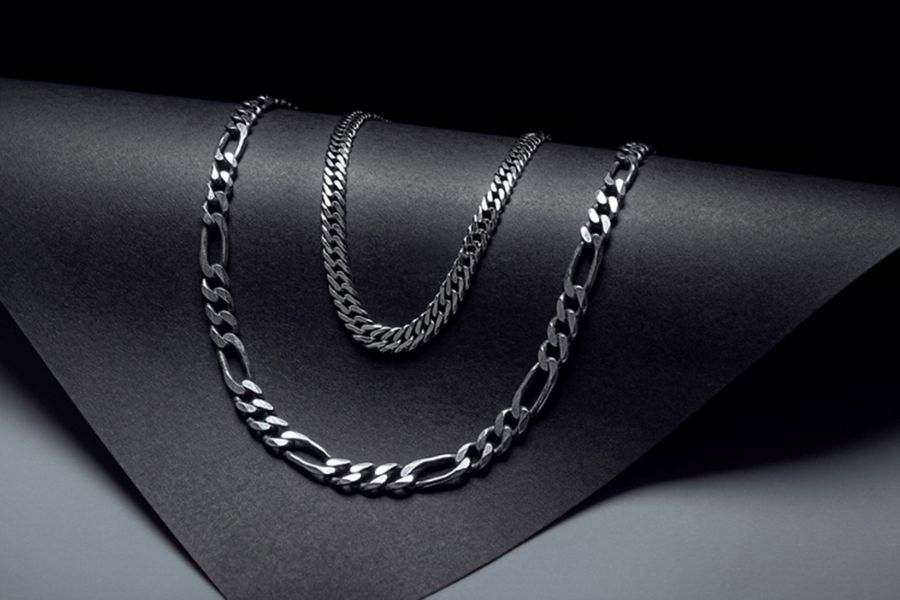
The key to successful necklace layering lies in diversity. Start with a short chain that sits close to your neck and work down to longer ones. That gives the chain a chance to stand on its own while creating a visually appealing cascade effect.
You can choose a subtle Cuban link chain or a simple pendant. The longer ones can be more elaborate or carry sentimental value. To give you a balanced look, put on jewelry closest to the neck first.
Experiment with Pendants
Pendants are a stylish way to personalize your outfit. Have fun mixing and matching them with other accessories. Whether it’s a tiny cross, a special symbol, or a mini family crest, these pieces not only enhance your look but also share a unique tale. Try different combinations to make your style truly your own.
Consider the Neckline of Your Outfit
The neckline of your outfit dramatically influences how your layered necklaces will look. For crew-neck sweaters or T-shirts, go for shorter chains above the fabric line. V-neck shirts, on the other hand, allow you to showcase longer necklaces.
The pendant’s shape creates a bold and seamless look. Remember to strike a balance and avoid overloading your neck with too much bling.
Layering Bracelets
Play with Different Textures
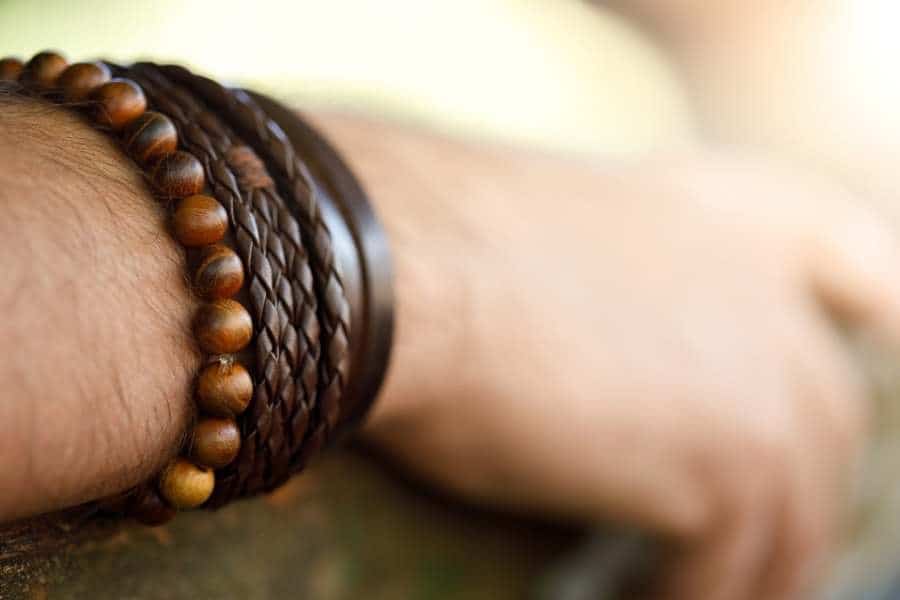
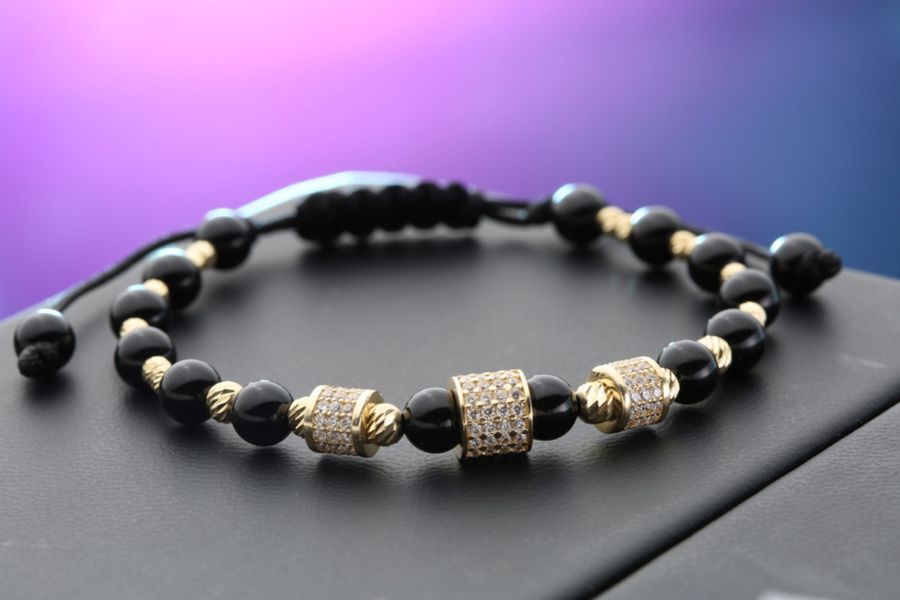
When it comes to bracelets, mixing different textures adds depth to your winter look. Pieces made from the same material give a coordinated look. Try combining a leather band with a metal cuff or beaded bracelet for a visually appealing contrast. The mix of materials makes your ensemble stand out.
Try Styling a Focal Piece
To make a statement, wear one eye-catching bracelet. Whether it’s a chunky chain or a bold leather wristband, let it take center stage. Pair it with some simpler bracelets for men to create a layered effect that highlights the focal piece.
When you wear one focal piece, let your other jewelry enhance the overall ensemble. If you want a simple look, your wristwatch can be the focal piece, then you can use bracelets to adorn each side.
Consider Your Sleeves
The length of your sleeves plays a crucial role in bracelet layering. Long sleeves give you room for multiple bracelets. This creates a layered look that peeks out from under your cuffs. Short sleeves provide an opportunity to showcase your wristwear. So, you have to choose your bracelets carefully.
Layering Rings
Keep It Classy
When it comes to layering your rings, simplicity often wins the day. It’s easy to go overboard with multiple rings. To avoid this, it’s essential to keep your look classy.
A simple band on your ring finger perfectly complements the statement ring on your index finger. This adds a touch of elegance without overwhelming your hand. You can also vary the sizes and the color of the rings to avoid a “copy and paste” look.
Mix Up Your Materials
To create an exciting and visually appealing ring stack, try out different materials and textures. Something like beaded thread or gemstones introduces texture while adding variety to the pieces’ appearance. Combine a metal ring with a wooden one or a signet ring with a simple band. The secret to a unique and stylish ring game is mixing texture.
Know When to Stop Adding Jewelry
While layering jewelry is a fantastic way to elevate your winter style, you need to know when to stop. Overdoing bling will lead to a cluttered and chaotic look. Keep it balanced, and make sure that each piece you wear contributes to your overall style. Sometimes, less is more.
Source: feedbackstudio/Shutterstock.com
Takeaway
Mastering the art of layering jewelry can transform your winter style into a statement of sophistication and individuality. Don’t let the cold weather dampen your fashion spirit. Embrace the layering techniques mentioned in this guide to elevate your winter look.
Taste that? That’s apple crumble and bourbon infused with winter spices.
See that? That’s a shitty Hallmark movie inexplicably soothing you into submission.
Feel that? No. No, you don’t. That’s because I’ve yet to introduce you to the best men’s slippers for wide feet.
What follows is a breakdown of the six most upsettingly comfortable, inappropriately soft, inexcusably breathable slippers that you could ever treat your wide feet to. Some are luxurious. Some are budget-friendly. Some have been flying under the radar for way too long now.
If you’re still reading this intro, I respect your dedication to extra-wide slippers for men. So much, in fact, that I’m going to see myself out and get to it already. For those about to leisure, I salute you.
Key Takeaways
To find the best men’s slippers for wide feet, I began by researching dozens of brands and their materials, durability, customer reviews, photos, and range of sizes. The resulting six are the best of the best based on factors that include but aren’t limited to comfort, style, price, and materials used. Edging out the competition is my top overall pick of Bombas’ Sherpa-Lined Gripper Slipper Bootie, followed by the budget-friendly, sneakily elevated LA Capsule Terry Cloth Slippers from Oliver Cabell.
Why they’re great: Whether you have Fuck-You Money or not, Oliver Cabell’s LA Capsule Terry Cloth Slippers will gladly step in to help you own or play the part. These handsome terry cloth loungers are no-brainers for at-home lounging. But what if you decided to—and hear me out now—rock these beauties to a beachfront cocktail party? For best results, slap on some linen trousers, a smart button-down, and these devil-may-care slippers. Intrigued compliments will ensue. Thank me later.
How they feel: Terry cloth. They feel like terry cloth. Which means they feel like your favorite towel has been wrapped around your feet. Which means they’re really, really comfortable.
Flaws but not dealbreakers: These slippers for wide-feet men are anything but expected. Only the sartorially experienced need apply.
Why they’re great: Amsterdam luxury brand Aurélien doesn’t miss, as further evidenced by its Beachside Slipper — a backless suede slipper in sizes suitable for thin feet, wide feet, and multiple sizes between. It’s a casually elevated pair that works as well on vacation as it does during summer brunch on the patio.
How they feel: The 100% calfskin uppers are as plush and cozy as it gets and will naturally conform to the unique contours of your feet over time. Further south, the jute soles are firm enough to add support and soft enough to add a little spring to your step.
Flaws but not dealbreakers: These are beauties, but they’re not as versatile as some of my other picks for the best men’s slippers for wide feet. You’ll want to keep them dry and keep them far away from any non-casual occasion.
Why they’re great: Ah yes, the ever-elusive velvet slipper. Finding the right specimen can be a slippery slope — after all, “formal” and “slippers” are two words you rarely find next to each other. But if any brand can nail it, it’s Velasca. Exhibit A: The Italian-made Piscinina. These dark green slippers are equal parts sexy, comfortable, and versatile. Dress them up for a holiday party, pop them on for a sunset cruise while on vacation, or just lounge around the house in them. The Piscinina will serve you well for any occasion.
How they feel: After a few wears, the velvet uppers will gently stretch to conform to the shape of your feet — yes, even if they’re wide.
Flaws but not dealbreakers: You’re not likely to put a lot of miles on these slippers due to their niche nature. But if you’re okay with breaking them out for random one-off occasions throughout the year and letting them otherwise ride the bench, I say go for it.
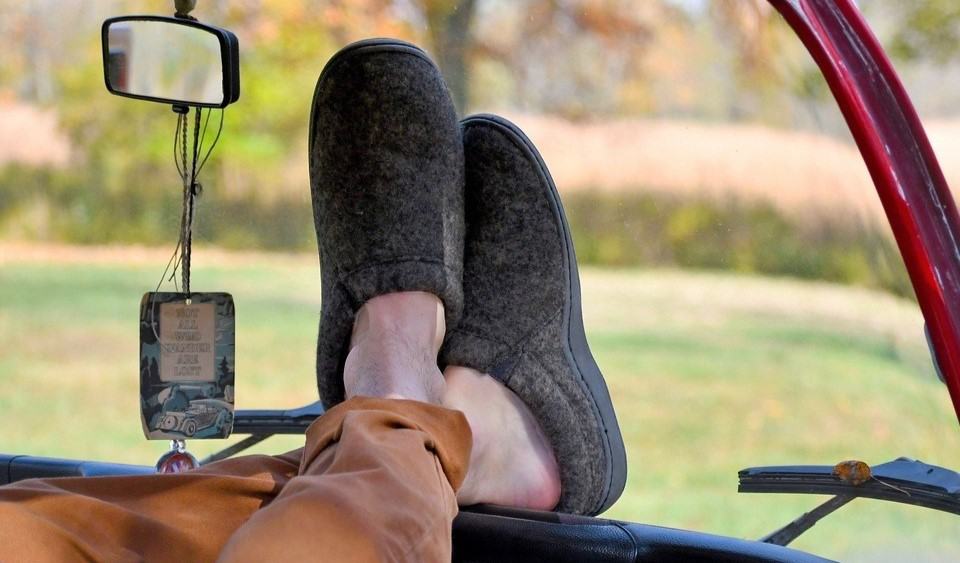
Why they’re great: Alright look. I know these are “slipper socks” and not technically “slipper-slippers,” but this isn’t the time to split hairs. I’ve been wearing O.G. Acorns on and off for years now, and they’ve always been consistently comfortable. Their majority-wool composition is super warm yet surprisingly breathable, and the unstructured uppers and leather soles (which are really more like pads) are great for wide feet.
How they feel: These cloudlike house slippers are the perfect accompaniment to a crackling fire, good company, and a finger of rare bourbon.
Flaws but not dealbreakers: Though Acorns’ supreme comfort far outweighs any drawback, I do find that their 85%-wool construction can get a bit itchy at times. Not enough to make me take them off, but a consideration nonetheless.
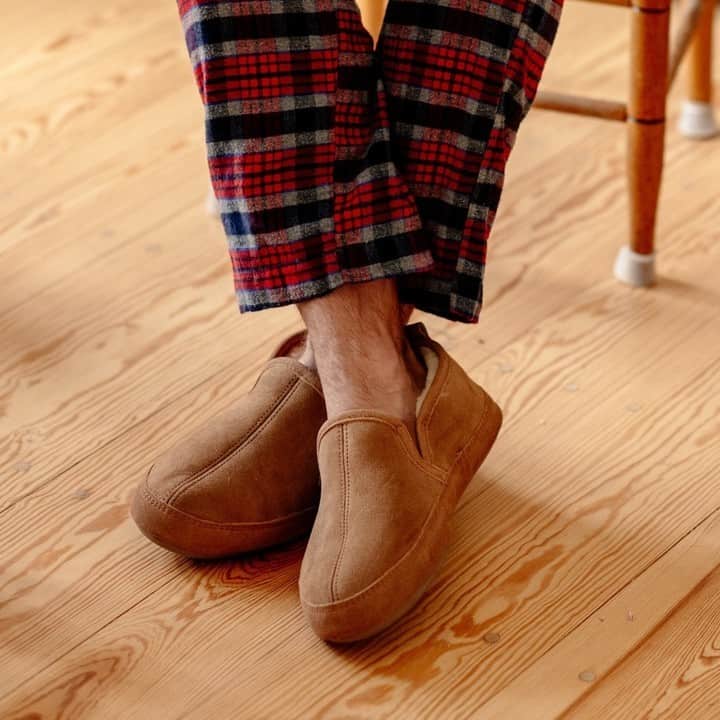
Why they’re great: Another longstanding tradition among leisure enthusiasts is the Minnetonka Pile Lined Hardsole Slipper. Its pillowy pile lining envelops your feet in plush warmth while the firm sole allows these slippers to pull double duty as both house slippers and casual outdoor slippers. Grabbing the mail. Walking the dog. That kind of thing.
How they feel: The combination of suede, pile lining, and firm, lightweight soles put these Minnetonka slips in a league of their own in terms of comfort.
Flaws but not dealbreakers: If you’re looking for slippers that you can stand in for long periods of time, you’ll be disappointed by Minnetonka’s lack of arch support. Also, why are you looking for those? Slippers, people. Slippers.
Why they’re great: In a stroke of leisuring genius, Bombas has taken the common house slipper and elevated it to the thing of beauty that is the sherpa-lined Gripper Slipper bootie. Said sherpa lining is about as cloud-like as you’ll find in the wide, wide world of house slippers. Meanwhile, full ankle coverage keeps things toasty, grippy soles help keep you on your feet, and cushioned footbeds provide a hint of spring as you traipse around your house like some sort of footwear god.
How they feel: I already stole most of my own thunder up there, but suffice it to say, these things were designed and produced with one thing in mind: comfort.
Flaws but not dealbreakers: Though the unstructured construction of Bombas’ Gripper Slippers is great for guys with wide feet, you’ll want to look elsewhere if you prefer more support—not to mention the presence of a sole.
Since many styles are designed with relaxation in mind and, as such, are unstructured, slippers are a bit of an outlier in terms of wide sizes. If you can find some extra wide slippers for men (designated by a “W” after the size), then that’s the route you should go. Otherwise, you’d be wise to size up and prioritize unstructured uppers.
Materials
When it comes to the best men’s slippers for wide feet, comfort is king. Suede is a super cozy material that’ll conform to the contours of your feet with time. Wool is warm, breathable, and offers a wide range of motion. You’ll even find plush velvet slippers like the Piscinina from Velasca. Pay attention to a slipper’s materials before deciding which pair is right for you.
Occasion and Use
From house slippers and slipper socks to formal slippers and hard-sole slippers, there’s no shortage of styles available to you. With that in mind, think about where you’ll wear them and what look you’re going for (if any) before making a decision.
As a fashion and grooming writer at FashionBeans, I compare, test, and research the products that make a gentleman a gentleman. If it can be worn, carried, or used in a way that elevates your look and feel, I’m into it. For this review, I pored over trusted sources, dozens of brands, materials, width ranges, and customer reviews to understand what makes the best men’s slippers for wide feet. After comparing over 40 products, I chose the resulting six based on considerations like comfort, style, materials used, value for money, and size availability. Ultimately, I want to see everyone find the right slippers for wide-feet men.
Final Verdict
Slippers are unique among footwear in that the niche contains seemingly endless styles. House slippers. Formal slippers. Hybrid slippers. Slipper socks. It goes on. But since you’re likely here for comfort and the perfect fit above all, I’ve chosen Bombas’ Sherpa-Lined Gripper Slipper Bootie as my top overall pick for guys with wide feet.
FAQ
Slippers are all about comfort. When in doubt, opt for a size up as opposed to a size down since you likely won’t be leisuring around anywhere other than your house.
The best slippers for wide-feet men should provide ample support, warmth, and above all, comfort. My top pick is the sherpa-lined Gripper Slipper Bootie from Bombas, followed by Oliver Cabell’s LA Capsule Terry Cloth Slippers.
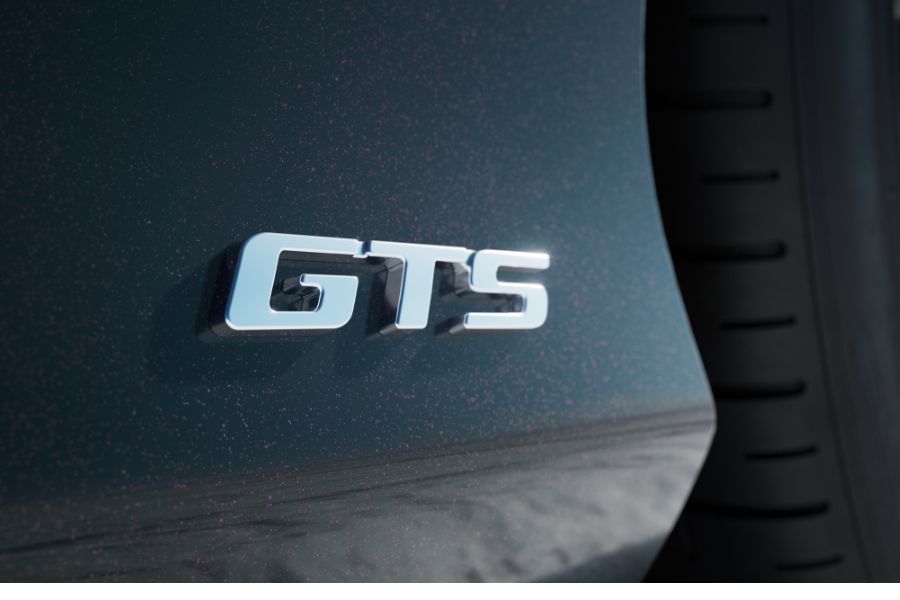
Let me take you on a journey, a ride into the future of supercars, aboard the new McLaren GTS. This isn’t just a car; it’s a revolution on wheels, a leap into what the future of high-speed luxury driving looks like. From the moment I laid eyes on it, I knew I was in for an extraordinary experience.
Redefining the Supercar Paradigm
When we talk about supercars, we often imagine them as wild, untamed beasts, reserved for weekend escapades or track days. Enter the McLaren GTS, a game-changer, a supercar that’s also your go-to daily-driver. This machine combines the thrill of high-speed driving with the comfort and practicality needed for everyday use. It’s like having your cake and eating it too.
Engineering Marvel: The Essence of Lightweight Design
The new McLaren is a marvel of engineering. Every inch, every curve of this super-lightweight machine speaks volumes about McLaren’s commitment to performance and agility. The extensive use of carbon fibre is not just for aesthetics; it’s the very soul of the car. The chassis, as light as a feather yet as strong as steel, provides a foundation for an unparalleled driving experience.
At the heart of the McLaren GT lies a powerhouse of performance. With 626 horsepower under the hood, this car doesn’t just drive; it soars. The power delivery is linear, immediate, and utterly breathtaking. It’s not just about the sheer force; it’s about how seamlessly this power translates into an engaging driving experience. Every throttle push is an adrenaline rush, a symphony of speed and sound.
Speed Symphony: The Art of Acceleration
The acceleration of the McLaren GTS is nothing short of a symphony. Hitting 0 to 200 km/h in under 9 seconds, it’s a masterclass in the art of speed. This isn’t just rapid; it’s meteoric. The sensation is akin to being catapulted into the stratosphere, yet there’s an elegance to it, a refinement that only McLaren can deliver.
Daily Driving Reimagined
The term ‘daily-driver’ takes on a new meaning with the McLaren GTS. It’s a car that fits into your everyday life as easily as it fits into a race track. The comfort and practicality are unprecedented for a vehicle of this calibre. It’s as if you’re driving on a cloud, yet with the knowledge that a thunderstorm of power is at your command.
Track Mode: From Gentleman to Gladiator
With the flick of a switch, the McLaren GTS transforms. Track mode is where this car sheds its gentlemanly demeanour and becomes a gladiator. Every aspect becomes more acute, and more focused. The suspension stiffens, the steering sharpens, and the car becomes an extension of your will. It’s like unleashing a controlled storm on the track – powerful, awe-inspiring, unstoppable.
The Aesthetic of Speed
The design of the McLaren GTS is a testament to the aesthetic of speed. Every line, every curve is sculpted not just for visual appeal but for aerodynamic perfection. The car looks like it’s moving even when it’s standing still. It’s a piece of kinetic art, a sculpture that captures the very essence of speed and motion.
A Symphony of Technology and Luxury
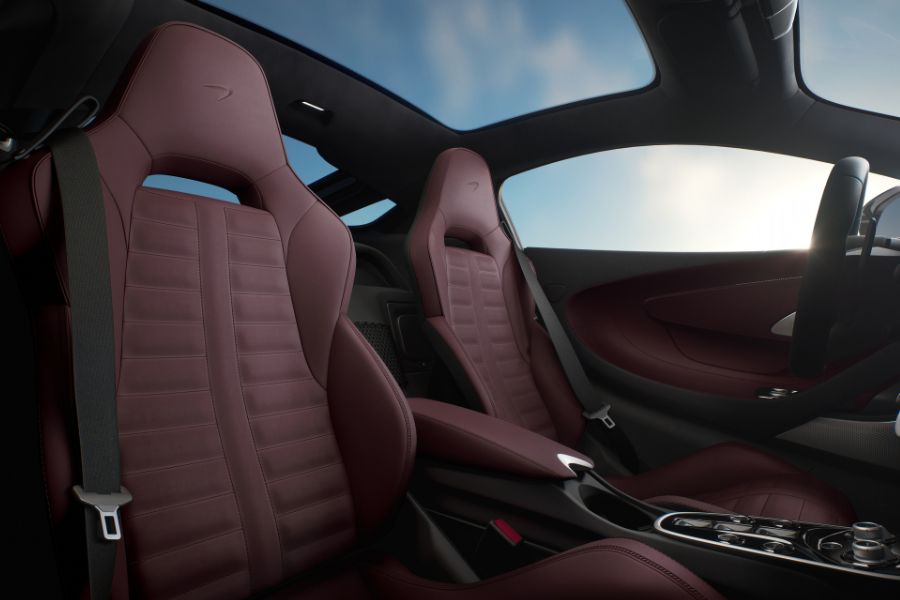
Inside, the McLaren GTS is a symphony of technology and luxury. The cockpit is a blend of futuristic design and classic comfort. The seats hug you, providing comfort and support whether you’re cruising down the highway or tearing up the track. The technology is intuitive, enhancing the driving experience without overwhelming it.
Conclusion: The Ultimate Driving Experience
Driving the McLaren GTS is an experience that’s hard to put into words. It’s exhilarating, it’s empowering, and it’s emotional. This car doesn’t just transport you from one place to another; it transports you to a new realm of driving pleasure. The new McLaren GTS is not just a supercar; it’s an excellent car – a pinnacle of performance, luxury, and driving enjoyment.
In conclusion, the McLaren GTS is a groundbreaking vehicle. It redefines what a supercar can be and opens up new possibilities for the future of high-performance, luxury driving. It’s a car that appeals to the racer in you and the pragmatist, the enthusiast, and the connoisseur. The McLaren GTS is not just a step forward in automotive design; it’s a giant leap. It’s a car that doesn’t just meet expectations; it surpasses them, turning every journey into an adventure and every drive into a memory. In the world of supercars, the McLaren GTS is a shining star, a beacon of what’s possible when passion, innovation, and excellence come together.
At first sight, the Free Will presents a chocolatey wrapper with a very slight sheen; naturally, there are some veins, but none are prominent enough to suggest there will be issues while smoking.
The roll is very straight and consistent. Pressing on the cigar at this point provides a bit of resistance without the usual springiness that one looks for. Furthermore, there does seem to be a bit of a hard spot towards the head, so I’ll have to see if it mars the experience after I’ve started smoking.
The foot of the Free Will greets the nose with an earthy barnyard base, rounded out by a gentle sweetness akin to chocolate that is further supported by a lush creaminess.
Free Will Review
After I received the box of 20 Corona Gorda cigars from CigarPage, and before trying out the Free Will, I stored them in my desktop humidor at around 74°F with 69% Boveda humidity packs for about four weeks.
Pre-Lighting Experience
Draw: Some Resistance
Aromas: Hay, Vanilla, Coffee
The hard rolling consistency mentioned above translated to the dry draw, which is proving to be difficult. It’s certainly not plugged, but the filler does seem tightly packed. Nevertheless, I’m not too concerned here, as there’ve been many times before where the a resistant dry draw resulted ina cigar that burned perfectly.
On the other hand, such resistance in the dry draw has muted the aromas I can detect. There are largely notes of hay and coffee with some sweet vanilla, but none are very strong. Additionally, I was surprised to find that the chocolate notes that were so notable in the foot aren’t present here, though they may be overlapping slightly with the vanilla notes.
1st Third Smoking Experience
Notes: Leather, Earth, Vanilla
In the first third, the Free Will has a medium smoke output, though the flavors are robust. Notably, there are notes of leather and earth that are smoothed out by sweet vanilla.
Despite a bold start, the nuances of these flavors are difficult to delineate and are slightly overshadowed by the strength of the cigar. Similarly, the retrohale does not reveal many hidden layers; it’s strikingly straightforward with spice notes.
At this point, I’m quite enjoying this strength as I lean towards more substantial smoking experiences. This also transfers to my preference for foods, where I prefer more flavorful and spicy meals as opposed to milder and more nuanced ones.
2nd Third Smoking Experience
Notes: Earth, Milk Chocolate, Brown Sugar
Transitioning into the second third of the Free Will, a subtle evolution in the flavor profile becomes discernible; the flavors have warmed up, becoming much more prominent and balanced with the strength as opposed to earlier in the cigar.
There are distinct sweet notes of sugar and chocolate that build upon an earthy base. There is a clear evolution from the first third that I find very pleasing and surprising.
Final Third Smoking Experience
Notes: Nuttiness, Leather, Coffee
Into the final third, the cigar hasn’t necessarily evolved in any substantial way, and certainly not as noticeably as it did from the first to second thirds.
I found some subtle nutty notes with bitter coffee, though the leather experienced throughout is most prominent.
The strength has remained elevated throughout the session; this is to be expected from the center-cut Condega leaves used in the filler. I’m pleased with it, though I can see how towards the end of the cigar, it could become overwhelming to those who tend to shy away from full-bodied cigars
Overall Burn
Ash Backbone: Strong
Burn Angle: Wavy
Temperature: Cool
Draw: Ideal
Final Smoking Time: 60 Minutes
Throughout the session, the ash backbone of the Free Will was very strong. As you can see in the pictures, I smoked it in a very nice South Florida park and, while there was a constant breeze blowing, I was still able to hold some substantial stacks.
Ash Stack On Oliva Free Will Cigar
The burn line was slightly wavy, even from the first third, though I refrained from touching it up and it did not degrade into a canoe or other burn issue. I suppose the wind could have played a part in the burn line not being completely straight, but nevertheless, there were no issues.
Indeed, the construction of the Free Will was exemplary – a good reminder that, though it may not be branded as such, this cigar was made by Oliva.
I mentioned earlier that I was concerned with the draw during the dry draw, but this did not translate into any smoking issues. I was able to draw the cigar perfectly when it was lit, and it remained cool throughout.
Overall Experience
The Free Will cigar comes in a black wooden box with a silver foil logo on top. There are additional stylized elements “behind” the logo on top, as well as silver printing on the front of the cigar box. The inside of the lid is lined in a black felt material that’s also adorned by the Free Will logo.
The cigar itself has a single paper band which in this case appears to have rose gold elements. Other than this, the box and cigar are relatively simple.
Given the price, which is about $94 for a box of 20, I think the details of the box are enough. They’re certainly not overwhelming, but you’ll have to go far up the price scale to get a much more detailed box & band.
Personally, I’d rather have an underwhelming box and a phenomenal cigar rather than the inverse, and I think that’s how I’d describe the Free Will – all the attention has gone into the cigar blend, which was specifically designed to be a strong and bold cigar, and they’ve achieved it.
The price also makes the Free Will ideal as an everyday cigar. More specifically, I found this a great smoke to reach for at the end of the day, perhaps if you’re short on time and want to make the most out of a single smoke. Accordingly, there are likely better cigars to take to a formal function, especially if you plan on sharing with others, given that its strength may be offputting to some, especially if they’re not used to smoking cigars.
Pairing Recommendations With A Free Will Cigar
When it comes to pairing the Free Will with a spirit, CigarPage specifically recommends Southern Comfort whiskey. I’ve not tried this myself, as I didn’t have some SoCo lying around, but I can see how the fruity & sweet notes of the whiskey could pair well. Additionally, you’ll want an easy spirit to go along with the strength of the Free Will cigar.
When it comes to food pairings, I’m sure the Free Will would pair well with grilled foods and especially smoked meats, where the flavor of the wood is prominent in the food. These smokey notes tend to be strong if not overwhelming, and I think they’d be well balanced by the Free Will.
Closing Thoughts
As expected, and also as designed, the Free Will is a strong cigar that may not agree with all smokers’ palates. However, I quite enjoy full-bodied cigars and the Free Will delivered everything it promised. In spite of its strength, the cigar is very smooth throughout which makes for an excellent smoking experience.
While I found that the cigar doesn’t evolve significantly, I’ve also read online that the Free Will specifically benefits from resting for a few months. My box is only about a month old, so I’ll give it some more time. For most cigars, a few months in the humidor can do wonders, and I’m interested to see how the Free Will will fare.