Category: Health

  • Home Health: A Solution to Skyrocketing Healthcare Costs

    Home Health: A Solution to Skyrocketing Healthcare Costs

    As the 2024 presidential election draws nearer, nearly 75% of Americans report healthcare costs as a primary financial worry according to a new study from KFF. Americans have every reason to feel this way: over the last five decades per capita healthcare spending has increased from $353 in 1970 ($2,072 adjusted for inflation) to $13,493 today. But care quality has not increased by the same rate – rather, patients are simply paying more today for the same “one-size-fits-all” treatments. 

    Rising costs and poor quality, however, are not the result of this administration or that one. They are a function of deeper problems endemic to the American healthcare industry itself. 

    Added attention to the cost of care gives healthcare stakeholders the opportunity to step back and evaluate American healthcare as a whole. It is incumbent on us to think through system level changes and reshape the future of care delivery in this country.

    Fortunately, home-based healthcare paradigms like hospice, that have long been recognized as the least institutionalized and profit-driven segments of the healthcare industry, offer a model for a return to healthcare sanity. 

    American healthcare is beset by skyrocketing costs that force many patients to choose between their health and their financial stability. The statistics are staggering: Healthcare is the primary reason that Americans file for bankruptcy. Over half of Americans––57%––report having had some medical debt over the last five years.

    What’s more, the United States spends much more on healthcare per person than peer nations; some studies suggest we spend twice as much. As the most prosperous, innovative country on Earth, our healthcare system should be the best. Instead, it’s one of the worst amongst wealthy countries. 

    Numerous factors contribute to the escalating costs of traditional American healthcare systems. One leading cause is that many healthcare providers have gone all-in on physical infrastructure, building giant campuses that cost hundreds of millions of dollars to build and maintain, often relying on federal subsidies for construction and modernization. 

    But huge complexes are not the only option. In fact, the home and community based care model shows the way forward for a new kind of healthcare.

    Patients often prefer to be treated at home rather than shuttling back and forth to hospitals, clinics, doctor’s offices and other care facilities. The comfort of the home environment alleviates anxiety and eliminates the stressful time spent in traffic, looking for parking and navigating unfamiliar medical settings. It allows patients to receive care in familiar surroundings with the support of their loved ones. 

    Rates of telehealth usage corroborate these preferences. Before the Covid-19 pandemic, most providers did not offer telehealth options, but once close physical proximity became hazardous, providers began to offer it. One study found that telehealth visits increased from 840,000 in 2019 to an astonishing 52.7 million in 2020. While numbers have fallen somewhat since their peak in 2020, rates of telehealth use now are exponentially higher than they were pre-pandemic. 

    Just as importantly, the at-home care model makes price easier to control by reducing expensive real estate and physical infrastructure costs. One study found that home-based programs effectively reduced complications while cutting the cost of care by 30%. Another found that mean cost of care was 38% lower, and that, compared with patients in traditional campus-based facilities, at-home patients spent a smaller proportion of the day sedentary and were readmitted less frequently. 

    Detractors point out that some complex procedures can only take place in a hospital environment, with expensive equipment and specialized medical staff, making it infeasible to treat certain conditions at home. 

    To this I heartily agree. Specialized campuses have their place in the healthcare ecosystem and play an indispensable role in the healthcare delivery process. They should not, however, aggregate all evaluation, treatment and checkup into a single location. A major procedure should take place at the hospital; many subsequent checkups need not. Yearly physicals, diagnostic tests like blood tests, routine vaccinations and counseling sessions require travel and waiting rooms, often needlessly. A great deal more healthcare can take place in the home, leaving valuable bandwidth available for specialized facilities when they are needed. 

    America’s campus-based system is overbuilt and over-complicated, creating misaligned incentives. Costs are spiraling out of control. The time for small tweaks has passed. It’s time to think big, cut to the root of the problem, and find solutions. But before we reinvent the wheel, let’s look to existing models like home and community based care to give us a blueprint.

    Photo: SDI Productions, Getty Images


  • What’s Keeping Healthcare CIOs Up at Night: How Health Systems Automate Routine Phone Calls to Improve Workforce Effectiveness and Reduce Agent Burnout

    What’s Keeping Healthcare CIOs Up at Night: How Health Systems Automate Routine Phone Calls to Improve Workforce Effectiveness and Reduce Agent Burnout

    While conversational AI is presently top of mind for every healthcare CIO, many are focused on short-term initiatives that will quickly improve operations, generate immediate ROI, and have a direct impact on the bottom line. But figuring out where to begin – identifying reliable solution partners who have extensive references, those with the proven ability to provide immediate improvements to operational efficiency, as well as deliver transformative digital health solutions as the health system infrastructure becomes ready for the change – is a challenge. How long will it take for the health system to start seeing ROI on the expenditure? How can decision-makers feel confident that workforce challenges like personnel shortages and staff burnout will improve, and that patient satisfaction will go up, not down? This is why healthcare executives are losing sleep!

    Taking a pragmatic, phased approach to implementing conversational AI is affordable and can make things better for most health systems in as little as 30 days. Answering the phone and navigating a caller to the right resource is a complex process in a large health system. This complexity may explain why so few organizations do it well. An outdated, clumsy process for answering and navigating calls equals revenue leakage and wasted labor! Underperformance has huge cost implications because this process happens millions of times each year across the network of care. To create friction-free self-service for a diverse calling community requires the right technology and a robust routing engine that enables seamless communication across a large enterprise with entrenched silos.

    Parlance, a leader in the healthcare IT space, works with many of the largest health systems in the country to alleviate contact center and switchboard burdens. More than a thousand hospitals and clinics partner with Parlance to elevate patient engagement and create operational efficiency.

    In the current ecosystem of omni channel offerings, phone calls remain the clear preference of patients. The voice channel accounts for 70% of queries to hospitals and clinics, with individual health systems receiving millions, or even tens of millions of calls each year. In retail and hospitality sectors consumers often favor visiting a website for information, and email communication can feel more efficient. But healthcare is a very different landscape. People who call hospitals are waiting on crucial test results, seeking information for loved ones, inquiring about financial arrangements, needing to make a last-minute appointment due to injury or sickness…and some of these things push their emotions to the limit. These are not the kind of calls that can be delayed or rushed.

    On the other hand, 50% to 60% of calls to health systems are relatively routine and can be automated. If it’s easy for people to speak naturally and get to the person, department, or information they need, most will happily self-serve.

    Health systems across the nation are partnering with Parlance to reduce handling time and deflect repetitive tasks from agents, creating huge operational savings and improving patient calling experiences. Allowing agents to work at the top of their skill sets and reducing friction for callers delivers significant results to the bottom line.

    “ROI for Parlance occurred within 90 days! If you’re a CIO looking for a quick win in the budget cycle, I would do this,”

    Andy Draper, regional CIO for HCA Healthcare.

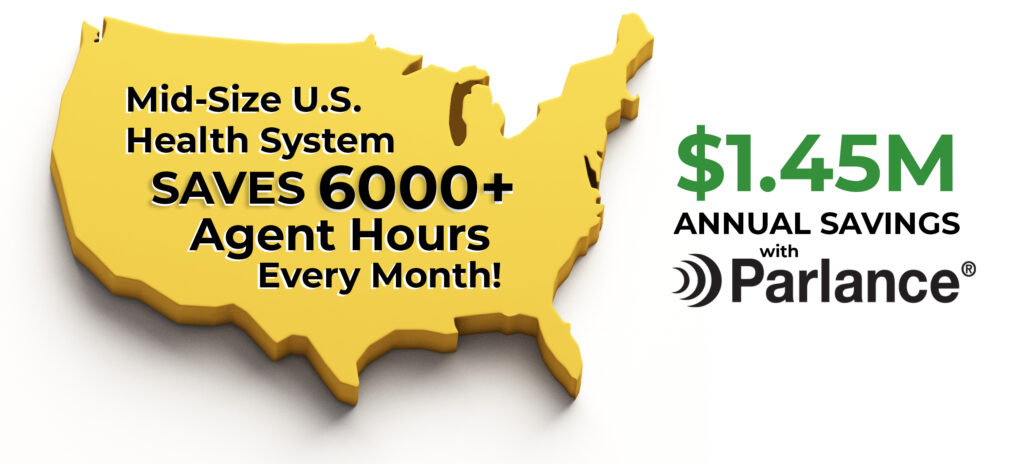
    A health system in the Western U.S with 10 hospitals and 65 clinics saved 6,070 agent hours each month by partnering with Parlance, contributing to annual savings of $1.45 million. At a time when hospitals are trying to do the most with the least staff, these savings are critical.

    USA Three Color Map – America Background

    CIOs are committed to implementing technology solutions that enhance patient care and boost operational efficiency while also integrating into the complex systems and business applications that are already a part of their health system’s unique environment. Implementing conversational AI to support contact center and switchboard operations is a practical approach that delivers results instantly. And scaling use of the technology can happen in phases that align with the business. A phased approach provides a steady stream of improvements – a win for patients and a win for the business.

    “For more than 25 years, Parlance has been developing and leveraging the best of speech-enabled technologies. Today, Parlance has a practical and affordable approach to deploying conversational AI, and it’s fueling unprecedented growth for our business,” says Scott D’Entremont, Chief Revenue Officer at Parlance. “Our legacy of results speaks for itself. We have references from health systems across the country who have partnered with us for decades. Not just C-suite executive references, but references from go-live teams, patient access managers, healthcare consultancies, and operators/agents too. Parlance is a managed service subscription that provides not only industry-leading technology, but an ongoing partnership with tenured experts who take ownership of performance and guarantee ROI. We deliver immediate operational efficiencies while leading the charge toward client-readiness for integration of cutting-edge digital health innovations in conversational AI.”

    Seventy-nine percent of CEOs ranked “burnout among non-physician staff” as one of the most pressing workforce challenges, according to a 2024 Becker’s Hospital Review article. “Patient satisfaction” and “access to care” were also ranked in the top 10 most concerning issues facing health systems today, by health system executives.

    Photo: NicolasMcComber, Getty Images

  • Abbott Earns FDA Approval For Dissolving Stent That Unclogs Arteries Below The Knee

    Abbott Earns FDA Approval For Dissolving Stent That Unclogs Arteries Below The Knee

    Abbott earned a groundbreaking FDA approval on Monday for its dissolving stent designed to unclog arteries below the knee. 

    The device, called the Esprit BTK System, is meant to treat patients who have chronic limb-threatening ischemia below the knee. This condition is characterized by insufficient blood flow to the lower extremities, which leads to persistent pain, ulcers and tissue necrosis — with a significant risk of limb amputation if left untreated

    Chronic limb-threatening ischemia below the knee may be the most severe form of peripheral artery disease, said Jennifer Jones-McMeans, divisional vice president of global clinical affairs at Abbott’s vascular business.

    “This is really a landmark moment,” she said in an interview. “We’re looking at the first dissolving stent to treat below-the-knee arterial disease. And really, when you look at this severe form of upper artery disease, it’s considered kind of the terminal end of this disease — meaning that these patients have very limited options and their lifespan is going to be impacted.”

    About 20 million people in the U.S. live with peripheral artery disease, and only about 10% of them are diagnosed with this severe form, Jones-McMeans noted.

    Until Monday, the FDA had never approved a stent or drug-coated balloon to help arteries stay open below the knee. The common standard of care for patients with chronic limb-threatening ischemia typically involves endovascular interventions, such as angioplasty and stenting, to restore blood flow in the affected arteries.

    Abbott developed a dissolvable device that keeps arteries open, as well as delivers a drug — Everolimus —  to support vessel healing. The device, which is made of a material similar to dissolvable stitches, is implanted using a catheter during a minimally invasive procedure.

    Abbott’s device is designed to provide support for about three years. After that point, the artery should be able to remain open on its own  and the device dissolves, Jones-McMeans explained.

    She added that by opening blood flow below the knee, the device can help wounds heal better, as well as prevent the development of new wounds. Patients face the “devastating risk” of amputation when a wound can’t heal properly, she pointed out.

    “[The device] will be the first of its kind approved in the United States to treat this devastating condition — where currently, patients go in and have a plain balloon angioplasty that is extremely limiting, with which the patient is really kind of on a pathway to have retreatment after the treatment,” Jones-McMeans said.

    Abbott’s newly approved device gives providers and patients a new tool that will keep patients healthier for longer, she declared.

    Photo: Michael Burrell, Getty Images

  • Drug Licensed from Sanofi Becomes First FDA-Approved Therapy for Ultra-Rare Primary Immunodeficiency

    Drug Licensed from Sanofi Becomes First FDA-Approved Therapy for Ultra-Rare Primary Immunodeficiency

    A primary immunodeficiency whose rarity means it can go undiagnosed or misdiagnosed in a patient for years now has its first drug. The FDA has approved a once-daily therapy that addresses the underlying genetic problem driving the inherited disorder, known as WHIM syndrome.

    The regulatory decision announced Monday for the X4 Pharmaceuticals drug covers WHIM patients age 12 and older. The daily capsule, known in development as mavorixafor, will be commercialized under the brand name Xolremdi (pronounced “zohl-REM-dee”).

    The name WHIM is an acronym for warts, hypogammaglobulinemia, infections, and myelokathexis, which are the four common clinical presentations of the disease. But the disease is not limited to those symptoms and it presents differently from one patient to another. There is no standard of care for WHIM, which is treated with various therapies that address its symptoms and frequent infections.

    “What’s exciting about this approval is for the first time, WHIM patients and their physicians have a treatment that targets the underlying cause of the disease,” Paula Ragan, CEO of Boston-based X4, said during a Monday conference call.

    There are more than 400 types of primary immunodeficiency, according to the Centers for Disease Control and Prevention. WHIM can confuse patients and clinicians, who either mistake the disease for one of those immunodeficiencies or chalk up the symptoms to children just getting a lot of infections—which many kids do, said Dr. Teresa Tarrant, a professor of rheumatology and immunology at the Duke University School of Medicine and a principal investigator in the X4 drug’s pivotal study. WHIM is suspected when the severity and frequency of infections goes above and beyond what’s typical in most kids, she said in an interview.

    WHIM can be thought of as a traffic problem for immune cells. In some immunodeficiencies, the body doesn’t make enough immune cells or the immune cells it makes don’t function properly. In WHIM, functioning immune cells are produced by the bone marrow but they cannot get into circulation to fight pathogens. Myelokathexis, the “M” in WHIM, is the retention of immune cells in the bone marrow. WHIM stems from a rare mutation in the CXCR4 gene, which encodes a chemokine receptor, a protein involved in regulating the movement of immune cells in the body.

    The first genetic mutation that leads to WHIM was identified in 2003. Scientific research, including work from X4, has since identified other mutations that lead to the disease. Defective CXCR4 protein keeps the signaling of the CXCR4 pathway in a hyperactive state, which in turn keeps immune cells trapped in the bone marrow, Tarrant said. She likens this pathway to an on-off switch for getting cells out of the bone marrow. X4’s drug is a small molecule designed to selectively target and block the CXCR4 cell receptor.

    “In WHIM, many patients have a problem with the off (switch), so the signaling is on all the time,” Tarrant said. “It’s hyperactive. This drug dampens down the hyperactive signaling.”

    X4 evaluated mavorixafor in a placebo-controlled Phase 3 clinical trial that enrolled 31 patients with WHIM syndrome. The main goal of the 52-week study was to show a statistically significant increase in time, measured in hours, that neutrophil counts were above a specified threshold. Results showed that the trial met this goal as well as a key secondary endpoint measuring lymphocyte counts. Additional results showed the X4 drug led to statistically significant reductions in annualized infection rates and clinically meaningful reductions in the severity and duration of infections. The drug was well tolerated by study participants.

    A rare disease is typically defined as one that affects 200,000 or fewer patients in the U.S. WHIM is ultra rare, affecting about 1,000 people in the U.S., according to X4’s market research. The median age of diagnosis is 5.5 years old. But some patients can go much longer before finding out what’s wrong. Tarrant said her first clinical encounter with WHIM was someone whose disease went undiagnosed until the patient reached the late 30s. While some primary immunodeficiencies can be detected with newborn screening, WHIM is not one of them. These tests only pick up children with extremely low levels of immune cells, Tarrant explained. The low levels in WHIM can be seen in bloodwork. But children typically don’t get a lot of blood draws, she said.

    While WHIM can be diagnosed with a genetic test that confirms the CXCR4 mutation, Chief Commercial Officer Mark Baldry noted that the FDA decision does not require it. The label of Xolremdi covers patients who have a clinical diagnosis of WHIM. Xolremdi, available in 100 mg capsules, is dosed according to a patient’s weight. Patients weighing 50 kg (about 110 pounds) or more are directed to take 400 mg once daily. For these patients, the drug’s annual wholesale price is $496,400. Those weighing less than 50 kg will take a 300 mg dose of Xolremdi once daily, which carries a $372,300 annual price. Based on clinical trial experience and company research, X4 estimates that 90% of WHIM patients will require the higher dose. Baldry said Xolremdi is available now, though he added it could take six months to a year before payers start covering it.

    Mavorixafor was licensed from Genzyme, a Sanofi subsidiary. With the molecule’s approval, X4 now owes a $7 million milestone payment, plus royalties from product sales, Chief Financial Officer Adam Mostafa said. The company is not providing any sales guidance for the drug at this time. The approval comes with a priority review voucher, which X4 may apply toward faster regulatory review of different rare disease drug in the future. But companies typically monetize these vouchers, selling them at prices topping $100 million. Mostafa said X4 plans to sell its voucher, and Sanofi-Genzyme is not owed any of the proceeds from that sale.

    X4 is also evaluating mavorixafor as a treatment for chronic neutropenia. The company expects to begin a Phase 3 study in this indication by the end of June, according to an investor presentation. The pipeline includes two additional CXCR4-targeting drugs. X4P-003 is a next-generation drug that X4 says has enhanced properties and potential applications in other diseases associated with the CXCR4 receptor. Meanwhile, X4P-002 offers the ability to cross the blood-brain barrier to reach that target. Both molecules are in preclinical development.

    Photo: ClarkandCompany, Getty Images

  • Navigating Healthcare’s New Era of Algorithmic Transparency

    Navigating Healthcare’s New Era of Algorithmic Transparency

    The recently released Health Data, Technology, and Interoperability (HTI-1) Final Rule from the Office of the National Coordinator for Health IT (ONC) has introduced groundbreaking transparency requirements for artificial intelligence (AI) and predictive algorithms used in certified health IT systems. 

    With ONC-certified health IT supporting the care delivered by more than 96% of hospitals and 78% of office-based physicians, this regulatory approach will have far-reaching effects on the healthcare industry.

    As EHR/EMR vendors seek to comply with these new regulations, they must navigate uncharted and frequently confusing territory and confront the challenges posed by the complexity and opacity of powerful AI tools, including Large Language Models (LLMs).

    The potential and challenges of Large Language Models (LLMs)

    LLMs are a type of AI that can analyze vast amounts of data, such as unstructured clinical notes, to generate insights and recommendations. While LLMs have the potential to revolutionize predictive decision support in healthcare, their inherent complexity and “black box” nature make it difficult to understand how they arrive at their conclusions. This opacity poses significant challenges for EHR vendors relying on these models to comply with the transparency requirements of the HTI-1 Final Rule.  

    Understanding the FAVES criteria

    The HTI-1 Final Rule introduces the FAVES criteria (fairness, appropriateness, validity, effectiveness, and safety) as a framework for assessing the transparency and accountability of AI and predictive algorithms. EHR/EMR vendors must ensure that clinical users can access a consistent, baseline set of information about the algorithms they use to support decision-making. Vendors must demonstrate that their systems meet each of these criteria:

    • Fairness: Algorithms must be free from bias and discrimination, ensuring equitable treatment for all patients.
    • Appropriateness: Algorithms must be suitable for their intended use cases and respect patient privacy and autonomy.
    • Validity: Algorithms must be based on sound scientific principles and validated using rigorous testing and evaluation methods.
    • Effectiveness: Algorithms must demonstrate real-world effectiveness in improving patient outcomes and clinical decision-making.
    • Safety: Algorithms must be safe to use and accompanied by appropriate monitoring, reporting, and risk mitigation measures.

    Evidence-based vs. predictive decision support

    The HTI-1 Final Rule distinguishes between evidence-based decision support tools, such as diagnostic prompts and out-of-range lab alerts, and predictive decision support systems that rely on LLMs and other AI algorithms. While evidence-based tools are not the primary focus of the new regulations, predictive decision support systems are subject to stringent transparency requirements, reflecting their greater potential for harm if not properly validated and monitored.

    Preparing for ONC certification criteria

    To maintain certification and comply with the HTI-1 Final Rule, EHR/EMR vendors must closely monitor the development of the ONC certification criteria, expected to be released by the end of the year. Vendors should proactively assess their current and planned use of LLMs and other predictive algorithms, ensuring that they are prepared to provide detailed information on training data, potential biases, and decision-making processes. Failure to comply with these requirements could result in loss of certification and market share.

    The importance of collaboration and transparency

    As the healthcare industry navigates this new landscape of algorithmic transparency, collaboration between EHR/EMR vendors, healthcare providers, and regulatory bodies will be essential. By working together to establish best practices, share knowledge, and address potential challenges, the industry can ensure that the benefits of AI and LLMs in healthcare are realized while prioritizing patient safety and trust. Healthcare providers also have a crucial role to play in providing feedback on the accuracy and usefulness of predictive decision support tools, helping to refine these systems over time.

    The HTI-1 Final Rule represents a significant step forward in ensuring the responsible and ethical use of AI and predictive algorithms in healthcare. As the industry continues to evolve, EHR/EMR vendors that prioritize transparency, collaboration, and patient-centered innovation will be well-prepared to navigate the challenges and opportunities that lie ahead. By embracing algorithmic transparency and working together to establish best practices, the healthcare community can harness the power of AI to improve patient care and outcomes while maintaining the trust and confidence of patients and providers alike.

    Photo: metamorworks, Getty Images


    Dr. Jay Anders is Chief Medical Officer of Medicomp Systems . Dr. Anders supports product development, serving as a representative and voice for the physician and healthcare community that Medicomp’s products serve. Prior to joining Medicomp, Dr. Anders served as Chief Medical Officer for McKesson Business Performance Services, where he was responsible for supporting development of clinical information systems for the organization. He was also instrumental in leading the first integration of Medicomp’s Quippe Physician Documentation into an EHR. Dr. Anders spearheads Medicomp’s clinical advisory board, working closely with doctors and nurses to ensure that all Medicomp products are developed based on user needs and preferences to enhance usability.

  • Pivot Podcast: A Conversation with Capital Rx CEO A.J. Loiacono

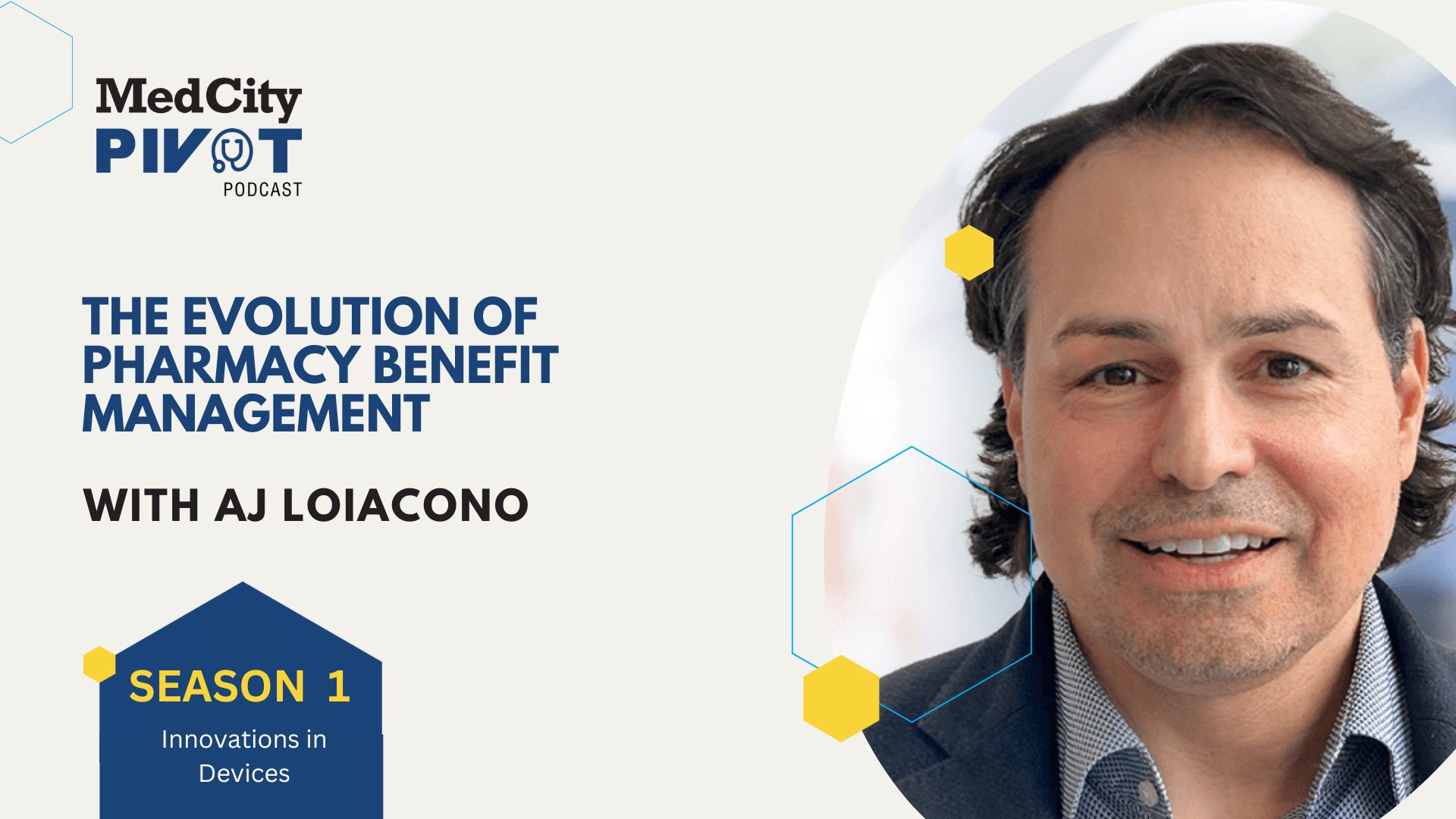
    Pivot Podcast: A Conversation with Capital Rx CEO A.J. Loiacono

    Season 2 of the MedCity Pivot Podcast has launched with a special focus on the evolution of phamacy and pharmacy benefit management. The first guest this season is A.J. Loiacono, who leads Capital Rx, a newer generation of PBM that is tech enabled and driven by a goal to be transparent and not have hidden costs and fees.

    Loiacono has been fiery and eloquent in the past, even calling the actions of the heavyweights of the PBM worlds — CVS Health Caremark, Unitedhealth Optum and Cigna Express Scripts — neither sustainable nor ethical. In this episode, though, there was less fire and brimstone though he did acknowledge that they have conflicts of interest.

    Capital Rx has found investors in both traditional PBMs like Prime Therapeutics and even large health systems, so it seemed only fitting to sit down with Loiacono to talk how the world of pharmacies and PBMs are evolving.

  • Ono Pharma’s Plan to Become a Global Player Picks Up a New Piece With .4B Deciphera Acquisition

    Ono Pharma’s Plan to Become a Global Player Picks Up a New Piece With $2.4B Deciphera Acquisition

    Ono Pharmaceutical is expanding its scope in oncology with a $2.4 billion deal to buy Deciphera Pharmaceutical, a company that has one commercialized cancer therapy and a drug pipeline that includes a late-stage candidate on track for an FDA submission.

    According to deal terms announced Monday, Japan-based Ono has agreed to pay $25.60 in cash for each share of Deciphera. That price represents a 74.7% premium to Deciphera’s closing stock price on Friday and a 68.8% premium to the stock’s average price over the past month. Shares of Deciphera opened Monday at $25.18 each.

    Deciphera’s cancer drugs are kinase inhibitors, small molecules that block enzymes key to driving cancer cell growth. The Waltham, Massachusetts-based company designs its drugs to target the region of the enzyme that activates it or inactivates it like an on-off switch. Deciphera contends its approach of directly targeting the switch pocket or other regions that control switch regulation and activation can lead to drugs that are broadly active against the target enzyme, covering the enzyme as it is found in nature as well as its mutant or amplified forms.

    Qinlock’s 2020 FDA approval made it the first Deciphera drug to enter the market. The regulatory decision covered use of the therapy as a fourth-line treatment of gastrointestinal stromal tumor (GIST). An effort to expand the drug’s use to include earlier lines of treatment resulted in a Phase 3 failure in 2021. An exploratory analysis of the Phase 3 data found “substantial clinical benefit” in the second-line setting for GIST patients whose cancer carried KIT exon 11 and 17/18 mutations. Those results were published in January in the journal Nature Medicine. A new Phase 3 study enrolling this patient population is underway. Qinlock generated $159 million in revenue in 2023, a 26.7% increase over sales in the prior year, according to Deciphera’s annual report. The vast majority of those sales came from the U.S.

    The most advanced drug candidate in Deciphera’s pipeline is vimseltinib, which is a potential treatment for tenosynovial giant cell tumor (TGCT), a group of rare, usually tumors benign tumors, that affect soft tissue around the joints. This drug is designed to selectively bind to the CSF1R switch pocket. Last October, Deciphera reported preliminary data showing this drug met the main goal of a pivotal study. In its annual report, the company said it expects to submit seeking FDA approval in the second quarter of this year, followed by regulatory submission to the Europeans Medicines Agency in the following quarter. Four other Deciphera programs are in early clinical or preclinical development.

    Ono’s main presence in cancer is Opdivo, the blockbuster immunotherapy it developed in partnership with Bristol Myers Squibb. The Japanese company’s oncology pipeline currently spans 17 internal and partnered programs, some of which are being evaluated in combination with Opdivo. The only kinase inhibitor listed in the pipeline is the internally developed ONO-4059, a Bruton’s tyrosine kinase inhibitor in mid-stage clinical development. Ono’s growth strategy includes a fiscal 2031 goal of becoming a global specialty pharma company that invests 200 billion yen (about $1.28 billion) annually in R&D.

    “We expect that this acquisition of Deciphera will not only expand ONO’s target oncology portfolio, but also accelerate ONO’s business development in the United States and Europe, and strengthen kinase drug discovery research,” Gyo Sagara, representative director, chairman of the board and CEO of ONO, said in a prepared statement.

    Oncology is one of four priority areas for Ono, along with immunology, neurology, and specialty drugs addressing high unmet patient need regardless of therapeutic indication. The company has been an active dealmaker as it picks up pieces to execute on its growth strategy. In February, it began a collaboration with Austin, Texas-based Shattuck Labs focused on developing bifunctional proteins for autoimmune and inflammatory diseases. Soon after, Ono announced a collaboration with InveniAI, an artificial intelligence drug discovery company based in Guilford, Connecticut.

    The boards of directors of both Ono and Deciphera have unanimously approved the acquisition. It still needs clearance from antitrust regulators and for the majority of Deciphera shareholders to tender their shares. Deciphera said certain shareholders owning about 28% of outstanding shares have already agreed to tender their shares. The deal is expected to close in the third quarter of this year. After it does, Deciphera will remain in Waltham, operating as a standalone business of Ono Group.

    Image: istocksdaily, via Getty Images

  • Inequity in Interoperability: The Haves and Have-Nots & How QHINs Can Help

    Inequity in Interoperability: The Haves and Have-Nots & How QHINs Can Help

    The future of interoperability is already here. It just hasn’t been evenly distributed

    Certainly, the healthcare interoperability movement has made strides in recent years, but there is still significant progress that needs to be made. For example, in 2021, 62% of hospitals engaged in all four major domains of interoperability (send, receive, integrate, and find), up from 41% in 2017, according to a report from The Office of the National Coordinator for Health Information Technology (ONC).

    However, a breakdown of those numbers reveals a divide between the “haves” (medium-to-large, urban and suburban hospitals) and the “have-nots” (smaller rural hospitals). Specifically, 72% of suburban and urban and 74% of medium and large hospitals engaged in all the four domains of interoperability in 2021, compared with just 48% of rural and 51% of smaller hospitals. 

    ONC has endeavored to advance interoperability with several measures in recent years, but none may be more impactful to small, rural hospitals than the Trusted Exchange Framework and Common Agreement (TEFCA).

    TEFCA to the rescue?

    By establishing a universal floor for interoperability across the nation, TEFCA stands to increase the number of hospitals and healthcare providers that are connected to national networks, although by how much remains an open question. At its essence, TEFCA is intended to describe the infrastructure model and governing approach for users in different networks to securely share basic clinical information with each other. The regulation does this by creating commonly agreed-to expectations and rules for data exchange, regardless of which national network a healthcare organization participates in.

    For the U.S. healthcare system overall, TEFCA creates a unique opportunity to connect providers, public health groups, and healthcare consumers by establishing a universal floor for interoperability. The promise of TEFCA is to help providers expand care coordination and care quality while decreasing delays in patient data exchange, ultimately delivering on interoperability’s potential to finally give patients real control over their health data. 

    Essential to the implementation of TEFCA are Qualified Health Information Networks (QHINs), which are networks of organizations working together to share data. QHINs will connect directly to each other to ensure interoperability between the networks and providers they represent.

    Four ways QHINs can help improve interoperability

    Establishing interoperability among healthcare providers is critical for delivering appropriate care, reducing costs, and making healthcare more efficient, according to ONC. However, it’s important that the benefits of interoperability are extended to rural patients and smaller providers, not just large urban and suburban providers. 

    Following are four ways QHINs can help improve interoperability across the nation, regardless of provider size:

    Creating more connections:  As QHINs streamline the technical requirements and reduce potential legal burdens of data sharing, more health entities will establish connections with national networks. 

    Making data more usable: Among the greatest barriers to widespread interoperability has been the challenge of dirty healthcare data, which is often incomplete, inconsistent in terminology, and fragmented across multiple information systems. TEFCA and QHINs will help solve this problem by providing the technical standards and framework to underpin health data exchange. With more accurate, complete, and up-to-date data, physicians can make better decisions to generate better health outcomes. 

    Providing more use cases for data:  The major use case of improving patient care and treatment through better healthcare data sharing has been well-established to date. However, QHINs are expected to support several emerging use cases, including individual access service, public health, benefits determination, and payment and operations. 

    Reducing siloes: As more complete and accurate data flows more freely between healthcare organizations, QHIN participants will improve care coordination, breaking down many of the siloes that continue to affect the industry. With more comprehensive patient information at their fingertips, providers can make better diagnosis and treatment decisions, reduce unnecessary and duplicative tests and procedures, and more productively collaborate across different disciplines. 

    Interoperability is moving ahead, but major health systems and hospitals in large population centers must ensure they don’t leave their smaller and more rural counterparts behind. By delivering a technical roadmap for data sharing, QHINs and TEFCA will create a more level playing field for interoperability among different provider types.

    Photo Credit: wigglestick, Getty Images


    A. John Blair, III, MD, F.A.C.S., III, MD, F.A.C.S. is the CEO of MedAllies, a national healthcare connectivity services provider. He is a health care and technology executive with broad experience across the health care industry including clinical practice, hospital planning and governance, revenue cycle management, managed care, public health and health care informatics. Prior to establishing MedAllies in 2001, Dr. Blair worked as a general surgeon for twenty years before becoming the President of the Taconic Independent Practice Association (TIPA), a network of over 5,000 physician members

  • Provider Feedback Loop: The Missing Link in AI Development, Use and Adoption

    Provider Feedback Loop: The Missing Link in AI Development, Use and Adoption

    The implementation of AI is becoming table stakes, with use cases and successes in healthcare becoming a reality. However, as the industry shifts the AI narrative from hype to cautious adoption, it necessitates a look beneath the surface, which is uncovering big questions around safety, governance and tangible impact.

    The usual concerns about the technology persist, including bias, sources of training data, misinformation, and hallucinations. Because of this, caution remains – and rightly so. The next step for AI is to show that it can bridge the gap between its data-founded, theoretical world and the complexities of live patient care where consequences are real and sometimes life and death.

    This leaves us in a predicament where we need to continue the development of the technology for the purposes of improving outcomes, while also insulating patients and providers from unexpected, negative outcomes. Guardrails and watchful eyes need to be standard as we continue to come up with a technology that can consistently provide appropriate outcomes.

    The right inputs for the right outputs

    Many health systems are eager to utilize AI, as it’s already delivering on its promise in a number of clinical areas by reducing providers’ workloads and improving performance. 

    For instance, AI solutions are expediting clinical documentation workflows by capturing and recapping provider-patient conversations, and saving providers hours of administrative work that’s usually done at home. AI models are also used to enhance diagnostic imaging, streamlining the discovery-to-diagnosis process, and identify patient risk factors. Some providers are even using ChatGPT to aid with research and help them communicate empathetically with patients. 

    However, there have been inconsistencies across outcomes, stressing caution over hype. For instance, one study might find poor outcomes for ChatGPT (users asked 39 medication-related questions to ChatGPT, and the model provided accurate responses to about a quarter of them; the rest were incomplete or inaccurate, and it did not address some questions), while another showed that ChatGPT passed the USMLE.  

    These results highlight the lapse in taking AI at face value. There is no room for these types of errors or inconsistencies in the precise world of medicine. Not only does AI need healthcare-specific training to avoid using public and unreliable sources, but the AI needs to be trained, managed and, most importantly, used the right way. There is no reason, at this time, that an AI should be functioning in healthcare without some form of human guidance. 

    Humanizing AI training for specificity

    AI has proven it can have an immediate and safe impact as a co-pilot for providers. This works because it’s here that AI can function with high accuracy, have the greatest impact, and see acceptance from providers. By including a human in the mix, AI can shine. AI will only be as good as the humans and the data that it is trained on. There are bound to be biases and inaccuracies that bleed through from training, but by adding more trained eyes to the mix before we deliver outputs to patients, we add collective checks and balances that reduce these issues.

    The aphorism of “garbage in, garbage out” is critical in any AI use case—meaning if we train AI models with low-quality data or a lack of guidance, we’ll receive low-quality outputs. This becomes even more important in clinical use cases. While every model should be trained with proven medical data and internal data from health systems and providers, looping in human providers will allow for more specific insights into how the AI should operate, providing better patient interaction, a heightened ability to assess a situation and more accurate outputs. 

    The benefits of a provider feedback loop 

    When AI models have a provider feedback loop, everything becomes more accurate, as is expected. The feedback loop acts as a built-in review stage where direct input from specialists and supervising providers can teach AI models about the intricacies and nuances of patient care. 

    The feedback loop has been used extensively in the Japanese national healthcare system, in over 1,500 clinics and hospitals to empower doctors for better patient care. It consists of patients using the tool for intake, which then feeds directly into a provider facing dashboard. This equips providers with a foundation for a conversation, allowing them more time to focus on empathetic care and crafting a personalized treatment plan. Moreover, it offers guidance on differential diagnosis that ensures doctors consider possibilities of rare and orphan diseases. At the end of the appointment, the provider assesses how well the AI functioned and confirms if their diagnosis matches the AI’s predictions, providing valuable feedback that ensures accuracy improves over time. 

    With a provider feedback loop, the benefits stretch beyond speed to diagnosis: 

    • AI goes from theory to practice: When providers are involved in AI training, they fill the gap between theory and practice. Importantly, this goes beyond the data, which may or may not improve the function of an AI. Humans can provide insights through more detailed context than a machine can, thereby bringing the AI closer to the accuracy of an actual human.
    • Providers trust the technology: Providers understandably only accept AI if it’s proven, of high quality, and demonstrates the ability to improve patient experiences. Technology partners, in turn, must have a vision that matches up with clinical validation. That’s how providers become champions or evangelists of the technology. Trained-by-them AI tools also give providers agency in the technology, as it’s working with them, not trying to replace them. 
    • Patients have better experiences: One study found that patients are more satisfied with their doctors when interactions aren’t rushed, when the doctor has a caring, friendly demeanor, and when they listen and ask for patient input. Conversely, most patients dislike it when providers spend too much time entering information on their computers rather than speaking to them.  

    With the right solutions, such as those that provide symptom insights before the appointment to doctors or help capture conversations in real-time, providers can spend more time with the patient, building the relationship, earning their trust, and focusing on the forward-looking health journey. 

    AI technologies have great promise within clinical care, but they cannot learn the intricacies and nuances of patient care on data and numbers alone. The humanization of AI, specifically through a provider feedback loop, is one of the key ways to elevate these solutions and to increase trust and adoption with health systems, providers, and patients.

    Photo:boonchai wedmakawand, Getty Images


    Kota Kubo graduated from the University of Tokyo Graduate School of Engineering. In 2013, while enrolled at the University of Tokyo, he began researching and developing software and algorithms that simulate the relationship between doctors, symptoms and disease names. He worked at M3 Corporation for about three years, working on software development and web marketing in the BtoC healthcare field, including doctor Q&A services. In 2017, he founded Ubie with his co-representative doctor Abe.

  • An Oveview of the Nation’s Largest SEED Fund

    An Oveview of the Nation’s Largest SEED Fund

    With over $1.3B dollars each year to fund U.S. startups, the National Institutes of Health (NIH) Small Business portfolio consists of life science companies dedicated to developing a full range of advanced technologies and products to improve the human condition.

    Eligible small businesses may receive multiple millions of non-dilutive dollars from NIH’s Small Business Innovative Research (SBIR) and Small Business Technology Transfer (STTR) programs. Funding comes in tranches, from $300,000 – $4 million, based upon the stage of development and likelihood of the end product “moving the needle” in healthcare. Only the most innovative projects, with reasonable research plans, a strong team, and access to commercialization resources are funded. NIH-funded companies are often leading the curve in solving the most intractable healthcare challenges.

    Once part of the NIH portfolio, companies have access to NIH’s deep scientific expertise and to a wide variety of product development resources through the Small Business Education and Entrepreneurial Development (SEED) office. Programs for customer discovery and gap analysis support research and development efforts and guide companies along the path to commercialization. SEED’s team of specialized advisers also offers focused consultations to help portfolio companies understand:

    • Business concepts – competitive analysis to term sheets
    • Regulatory pathways – breadboard or lead to clinical deployment
    • Reimbursement – pricing strategy to coding and coverage
    • Intellectual property – trade secrets to licensing
    • Developing a strong pitch deck – and planning for post-pitch conversations
    • Identifying and engaging vendors to perform the many activities a startup may outsource

    The combination of “free” money and resources makes the NIH Small Business program a vital tool for companies to leverage. Everything you need to know about who to contact, how to apply, and research areas of interest is on the SEED website, and you can subscribe to NIH’s Entrepreneurship News to stay abreast of new programs and funding opportunities. SEED is the name of our office, our website, our focus, and our passion.

    About Chris Sasiela

    Dr. Chris Sasiela has more than 15 years of experience educating and enabling academic innovators and small businesses engaged in therapeutic, device, and diagnostic product development programs. As the Director of Innovator Support Services in the SEED (Small business Education and Entrepreneurial Development) Office at the National Institutes of Health, Chris coordinates the activities of a team of seasoned professionals with experience in business strategy, business development, fundraising, partnerships, reimbursement, and regulatory affairs and oversees the Company Showcase, TABA Needs Assessment, TABA Consulting Services, and Business, Regulatory, Reimbursement, and SOW Development Consult Programs. Chris is passionate about enabling NIH’s innovator community to progress their discoveries as far as science and human biology permit. Starting her career as a basic science researcher, Chris quickly decided to get closer to human impact in her work and engaged in drug discovery, development, and improvement with several employers before moving even closer to human impact as a regulatory professional. Throughout her tenure at NIH, Chris has worked at the National Institute of Allergy and Infectious Diseases, the National Heart, Lung, and Blood Institute, and is currently in the Office of the Director. In addition to the formal programs mentioned earlier, Chris and her team deliver educational seminars and develop educational resources for internal and external stakeholders supporting solution development addressing a full spectrum of human disease and disorders.