Category: Health

  • Cancer Biotech Lands 5M for First-in-Class Drug to Block Elusive Tumor Target

    Cancer Biotech Lands $145M for First-in-Class Drug to Block Elusive Tumor Target

    FogPharma’s has reached early clinical development with therapeutic candidate that takes a novel approach to treatment solid tumors. The company now has $145 million to continue the drug’s clinical development and advance more programs in its pipeline.

    The drugs of Cambridge, Massachusetts-based FogPharma discovers and develops peptides capable of entering cells to address targets that drive disease. Such targets haven’t been drugged before due to the difficulty of getting a drug to act within a cell. FogPharma says its peptide drugs, which it calls Helicon therapeutics, can get inside a cell to modulate protein-protein interactions as well as protein-DNA interactions.

    FogPharma’s lead program is FOG-001, a Helicon therapeutic designed to block a key step I the Wnt/beta-catenin signaling pathway. Hyperactivation of this pathway is associated with the development and progression of various types of cancer, including colorectal, hepatocellular, and endometrial tumors. While this pathway has validation for playing a role in cancer, its location inside a cell has made it inaccessible to drugs that are antibodies or small molecules.

    FOG-001 is administered as a once-weekly infusion. A Phase 1/2 clinical trial is evaluating the drug in patients with locally advanced or metastatic solid tumors, including colorectal cancer. The first patient was dosed last June. The trial’s targeted enrollment is about 200 participants.

    “We believe FOG-001 may represent the long-awaited major technological breakthrough needed to address one of the most common yet unaddressed oncogenic signaling pathways,” FogPharma Chairman, President, and CEO Mathai Mammen said in a prepared statement. “This financing will allow us to execute on our expanded clinical development and commercialization strategy to deliver FOG-001 to patients, while simultaneously strengthening our discovery efforts against other compelling intracellular targets that drive a range of diseases.”

    The FogPharma pipeline also includes discovery-stage program in development to address targets associated with prostate cancer, ovarian cancer, lung cancer, and more. FogPharma’s last financing was a $178 million Series D financing in late 2022. The company was founded by Greg Verdine, a former Harvard chemistry professor who has become a serial biotech entrepreneur.

    The new financing announced Friday, a Series E round, was led by Nextech Invest. Investor and entrepreneur Alexis Borisy will join the FogPharma board in the position designated to Nextech. Other new investors that joined FogPharma’s latest financing include RA Capital Management, Rock Springs Capital, General Catalyst, Marshall Wace, Samsara Biocapital, Foresite Capital, Symbiosis, Catalio Capital Management, Sixty Degree Capital, and Johnson & Johnson’s former chairman and CEO Alex Gorsky.

    Image by the National Cancer Institute

  • StartUPDATES: New developments from healthcare startups

    StartUPDATES: New developments from healthcare startups

    Alpha Sophia is set to make waves at the LSI USA 2024 Emerging MedTech Summit in Dana Point, California, from March 18-22. Led by CEO Paul-Lukas Hoffschmidt, Alpha Sophia will unveil a major product update during the event, promising significant enhancements to its platform and model.

    Hoffschmidt will spearhead a thought leadership session on March 21 alongside industry experts Brad Patt (Tetrous), Robert Hamilton (Neurasignal), and James Peacock (Nocira). This session will mark the formal announcement of game-changing improvements to the Alpha Sophia platform, tailored to meet the needs of medtech sales leaders.

    The updates showcased at the LSI summit are poised to redefine the landscape of go-to-market tactics for the Medtech industry, offering innovative solutions that address the dynamic challenges faced by professionals in this field. Alpha Sophia remains committed to driving meaningful change and empowering sales professionals with cutting-edge tools and strategies.


    Baseimmune, a biotech company that uses proprietary, deep learning AI to predict future pathogen mutations to generate novel vaccines, has raised $11.3 million in a Series A funding round led by new investors MSD Global Health Innovation Fund and IQ Capital. Existing investors also too part in the round, including Hoxton Ventures, Creator Fund, Beast Ventures and Maki.vc.

    The funding will be used to accelerate development of Baseimmune’s three vaccine candidates currently in preclinical development for African swine fever, coronavirus, and malaria. The funding will also be used to advance its technology, add staff, increase the number of programs in development and accelerate new vaccine programs.

    To read more, click here.


    Abridge, which focuses on generative AI for clinical documentation, has raised $150 million in a Series C funding round. Abridge has also embarked on a new enterprise agreement with the Yale New Haven Health System, according to a press release.

    Lightspeed Venture Partners led the round and will also join the board. Other new and existing investors include co-lead Redpoint Ventures, with support from IVP, Spark Capital, Union Square Ventures, Bessemer Venture Partners, Wittington Ventures, Mass General Brigham Artificial Intelligence and Digital Innovation Fund (AIDIF), Kaiser Permanente Ventures, and CVS Health Ventures.

    To read more, click here.


    Carewell, an online retailer focused serving family caregivers with tools and resources to care for their loved ones, has raised a $24.7 million Series B round. The goal is to further accelerate streamlining access to home health products, according to a press release. The principals of MBF Healthcare led the round, with participation from existing investors Sageview Capital and Headline among others. Additionally, the company has made several senior level hires amidst plans to relocate their headquarters to Miami.

    Additional investors in this round of funding include Primetime Partners, Nextview, Florida Opportunity Fund, and Anchor.

    To read more, click here.


     Redi Health has closed $14 million in a Series B funding round. The funding round was led by Blue Heron Capital. North Coast Ventures and existing investors Refinery Ventures, Mutual Capital Partners, Rev1 Ventures and M25 also took pat in the round.

    Redi Health combines health management technology to help people manage chronic conditions with digital pharma services. It will use the fresh capital to develop and launch new products, expand its network and accelerate overall growth, according to a press release.

    To read more, click here.

    Photo: champpixs, Getty Images

  • Inside One Organization’s Efforts To Create the First National Pharmacy Union

    Inside One Organization’s Efforts To Create the First National Pharmacy Union

    race, racial groups,

    The Covid-19 pandemic greatly expanded the role of pharmacy staff, who suddenly had to take on the responsibility of Covid tests and vaccines in addition to their other tasks. However, even before Covid-19, pharmacists and pharmacy technicians struggled to manage their workload.

    “The phone was just ringing all day. … The lady on the phone was like, ‘Is anybody going to answer the damn phone?’ I was like, ‘Ma’am, I’m giving flu shots and shingle shots all day.’ She said, ‘Where’s your help?’ Well, the one help I had just had a mental breakdown so I have no clue,” said Maurice Shaw, a former pharmacist at CVS and Walgreens, in a recent interview. 

    Shaw now works as a clinical pharmacist at the University of Illinois Chicago and is a co-founder of the Pharmacy Guild, a union for pharmacy professionals that launched in November in response to working conditions at large pharmacy chains. The organization was formed after a series of walkouts occurred in the fall among Walgreens and CVS employees. It was created in partnership with IAM Healthcare, a union of diverse healthcare professionals, including nurses, medical administrators and lab technicians. 

    The Pharmacy Guild aims to be the first national pharmacy union in the U.S. (though there are some regional unions that exist). However, it’s a tall order given that many pharmacists work at large corporations like CVS Health and Walgreens. Shaw is undeterred and believes the effort will be successful.

    “Once we get that first set of stores unionized, I think it’s going to be a chain reaction. … I think people really feel like this is the only way,” he declared. “People have reached out to their pharmacy organizations and they feel like [the American Pharmacists Association] has failed them, they feel like their State Board of Pharmacy has failed them and they feel like their state legislators have failed them. So why not try the union?”

    What the Pharmacy Guild wants

    The Pharmacy Guild has several demands of pharmacy chains. The first is better pay and secure hours for pharmacy technicians, according to Shane Jerominski, a pharmacist and co-founder of the union. Pharmacy technicians help prepare and refill prescriptions, pack medications and process insurance claims, among other responsibilities.

    The median hourly wage for pharmacy technicians was a little over $18 in May of 2022, with some making as low as $14.25 an hour, according to the Bureau of Labor Statistics. And oftentimes, their hours will get cut if there is a downturn at the company (such as post-flu season), even if they were hired full-time, Jerominski said. Because of these two factors, it’s very difficult for a pharmacy technician to make a living. 

    “Even when you have a well-trained, highly-skilled technician that makes pharmacies safer, that makes pharmacists’ jobs easier to navigate, when you have 400-500 prescriptions a day that you’re responsible for checking and getting out safely and accurately, those technicians are always looking for an exit,” Jerominski said. “This is a placeholder job for some of them now because they can’t support their families and they can’t be assured of their hours.”

    Then there is the issue of sheer workload. He added that the Pharmacy Guild wants a limit to the volume of work that pharmacists have to deal with. For example, nurses have staffing ratios in which one nurse can only work with a certain number of patients. However, there is no equivalent for pharmacists, which creates the potential for mistakes and dangerous outcomes for patients. 

    “It’s not like some regulatory body comes in and says a pharmacist can’t legally check 700 prescriptions alone,” Jerominski said. 

    Difficult working conditions ultimately affect workers’ lives outside of the pharmacy, Shaw said. For example, some people struggle starting a family. He said he’s also seen workers get anxiety and depression prescriptions filled at the pharmacy, likely due to the stress of the job.

    “You start to see how much it’s just affecting people’s personal lives,” he stated. 

    Some efforts have been made to curb staffing problems at pharmacies. This month, the Ohio Board of Pharmacy imposed on a CVS pharmacy a $250,000 fine and three-year probation for understaffing. While Jerominski said he’s glad the agency took action, the infractions at this particular CVS pharmacy can be found elsewhere in the nation.

    And understaffing is not only a matter of worker anxiety, burnout and patient safety. There are other dire consequences. USA Today recently reported the story of Ashleigh Anderson, a CVS pharmacist in Indiana who died in 2021 after suffering a cardiac arrest during her shift. As the only pharmacist working that day, Anderson was unable to leave work and go to the emergency room when she felt ill because that would require having to close the pharmacy. 

    “I really think that unless we unionize, they’re not going to change on their own. If the death of a pharmacist on their watch wasn’t enough, we’re going to have to organize in order to force their hand,” Jerominski said.

    Michael DeAngelis, CVS’ executive director of corporate communications, told USA Today that Anderson’s death was a “tragedy that never should have happened.”

    However, he added that “it’s impossible for me to comment on why Ashleigh made the decision she made. I think, by and large, pharmacists are highly dedicated health care professionals, and I would not be surprised if there are pharmacists who have the mindset of, ‘I need to keep taking care of my patients,’ versus ‘I’m afraid of being punished by my employer.’”

    What’s ahead for the Pharmacy Guild?

    The organization is in its early stages and still needs to file for an election with the National Labor Relations Board (NLRB). Elections “certify or decertify a union as the bargaining representative of a unit of employees,” according to the NLRB website. Given that this step hasn’t been taken, the Pharmacy Guild technically doesn’t have any members yet. But Jerominski insisted that there is a lot of interest, noting that 30,000 people went to the Pharmacy Guild website the first day it launched and briefly crashed it.

    Jerominski added that the Pharmacy Guild is being “strategic” about where it starts unionizing members. One of the first locations will be “very close to one of the headquarters for one of the major chains,” he said but declined to give more detail. The headquarters for Walgreens is in Deerfield, Illinois, while the headquarters for CVS is in Woonsocket, Rhode Island. Rite Aid’s headquarters are in Philadelphia.

    The union is also in “full campaign mode,” with the Pharmacy Guild attending the American Pharmacists Association conference in March to gain supporters.

    The response from CVS and Walgreens

    So far, Walgreens and CVS have been “kind of downplaying” the creation of the Pharmacy Guild, according to Jerominski. But he doesn’t think “they will be for very much longer,” he predicted.

    MedCity News reached out to both of the retail pharmacy chains. Amy Thibault, lead director of external communications at CVS Pharmacy, said the company respects “employees’ right to either unionize or refrain from doing so.”

    Thibault added that in response to feedback from its pharmacy teams, CVS has made several investments. The company is making about a $1 billion increase in wages for pharmacists between 2021 and 2024. It’s also giving about $70 million in bonuses to its pharmacists, pharmacy technicians and other frontline colleagues.

    “Patient safety is our highest priority,” Thibault said in an email. “Our CVS pharmacists take safety seriously and we work hard to earn the trust of our patients. Safeguards to support patient safety are integrated throughout our prescription workflow, and our pharmacists and pharmacy technicians receive extensive training on all pharmacy systems. We strive to ensure we have appropriate levels of staffing and resources in place at each of our pharmacies through a combination of staffing, labor hours, workflow process, and technology.”

    A Walgreens spokesperson who declined to be named also said in an email the company respects the right of its employees to be represented by a union.

    However, the spokesperson added that “we continue to believe the best way to accomplish results is through the direct relationship between our team members and their managers, who are striving every day to achieve our shared purpose of serving our communities and reimagining local healthcare.”

    The company is making sure “team members’ contributions are acknowledged and rewarded” through “competitive pay and benefits,” the spokesperson said. It has also implemented efforts like micro-fulfillment centers and value-based care models to “free up pharmacists’ capacity to focus on clinical services,” the spokesperson said. In addition, the company has an initiative called the Walgreens Deans Advisory Council, which comprises 17 colleges of pharmacy and aims to encourage more people to go into pharmacy careers.

    What will make the Pharmacy Guild successful?

    Going up against large chains like Walgreens and CVS won’t be easy, according to Gerald Friedman, a labor union expert and economics professor at the University of Massachusetts Amherst. 

    “It’s really hard to fight a company like CVS. They’re really big. They can handle a long strike. … They can replace the workers or they can close the store,” he said. “At a minimum, CVS is sitting on billions of dollars of cash flow. They can survive a strike.”

    To be successful, the Pharmacy Guild needs to gain national interest, which is going to take a lot of money. It also has to get the message across that “pharmacists are workers, not professionals,” Friedman said. But this is a tough message for people to accept, as most want to consider themselves a professional.

    What’s the difference between a worker and a professional? It’s the autonomy of the work and the possibility to walk away from the job, Friedman said. This is an independence that pharmacists have largely lost. Pharmacists used to be able to talk to their customers, get to know them and explain their medications to them. But now, they’re more strapped for time. And if the pharmacist chooses to leave their job at a large retail pharmacy, there are few options for them to go.

    “You have to accept that you are working for a paycheck and come to the point where you believe that you need this outside, independent advocate,” Friedman said. “I think it’ll be easier with younger pharmacists. But also, the way CVS treats its people is the biggest asset the Guild has. Issues like giving them a lunch or providing adequate staffing. … They have to point to the specific failures of CVS management.”

    When asked what he hopes to achieve with the Pharmacy Guild, Jerominski said “to have changed the face of the profession.

    “[I hope] that we have a renewed interest in pharmacists, that kids want to go to pharmacy school again. … That we go back to having pharmacists who want to work in that setting because they have connections with patients and they feel like they’re doing the job of a healthcare professional and they’re changing people’s lives, instead of treading water and worrying every single day that they’re making a mistake,” he said.

    To that end, the Guild also wants to work with those in the academic community to encourage more people to go into the pharmacy industry.

    “There’s been a massive reduction in the amount of students who want to go into pharmacy because of all this negative media attention,” Jerominski said. “It sounds like a really bad deal, unless you get a clinical position or unless you’re working in a hospital. They’re like, ‘I don’t want to work at Walgreens. I don’t want to work at Rite Aid. It’s going out of business.’”

    Photo: Irina Devaeva, Getty Images

  • Hims & Hers CMO: The Healthcare Industry’s Strengths and Weaknesses Regarding Telehealth

    Hims & Hers CMO: The Healthcare Industry’s Strengths and Weaknesses Regarding Telehealth

    Telehealth has emerged as an important way to receive care, especially after Covid-19 when many providers were forced to provide care virtually. San Francisco-based Hims & Hers, however, has always been telemedicine-based, even before the pandemic. It offers care across all 50 states for conditions related to sexual health, hair care, mental health, skincare and primary care.

    At the ViVE conference on Monday, MedCity News sat down with Dr. Pat Carroll, chief medical officer of Hims & Hers, to discuss where he thinks the healthcare industry is excelling when it comes to telehealth and where he thinks it’s lacking.

    He said that what the industry is doing well with telehealth is expanding access to care. But he added that in order to “win” in telehealth, the care needs to be specialized and personalized.

    “[The care should] relate to the individual customer and be really customer-focused,” Carroll said. “You just can’t offer a generic telehealth offering and say people are going to gravitate towards it because what we’ve seen coming out of the pandemic in routine primary care, that acute episodic care, urgent care … folks are going back to their primary care providers.”

    Where there has especially been a lot of traction in telehealth is with mental health, Carroll said.

    “You can actually connect with a psychiatrist, psychiatric nurse practitioner or a family physician who is trained in mental health in less than six hours,” he said. “It takes eight weeks to see a psychiatrist in the brick-and-mortar world.”

    But when it comes to where the healthcare industry is lacking with telehealth, Carroll said that “investment in quality sometimes wasn’t the first inclination.”

    “I think sometimes for telehealth companies, they get into it and they may have a part-time chief medical officer or [quality] is not a big focus to start with,” he declared. “But it has to be because it’s healthcare. It’s not just tech. … You’ve got to start with quality. Build the structure so you can add on verticals, but still have that same quality structure in place.”

    He said that to ensure Hims & Hers provides quality care, the company has three full-time nurse practitioners reviewing charts every day to know which providers are following guidelines, if their notes are easy to understand for the next provider and to make sure the right medications are being prescribed.

    The company also reported its fourth quarter and full year 2023 financial results on Monday. It had a net income of $1.2 million in the fourth quarter of 2023, compared to a net loss of $10.9 million during the same period in 2022. For the full year, it had a $23.5 million net loss, versus a $65.7 million net loss in 2022. Its revenue for 2023 was $872 million. The company expects to surpass $1 billion in revenue in 2024 and have its first full year of net income profitability.

    Hims & Hers has also expanded its service lines recently. In December, it launched a weight loss program and in August, it began offering men’s cardiovascular health treatment. In January, it announced a partnership with Hartford HealthCare to connect people to in-person care.

    Photo: Alisa Zahoruiko, Getty Images

  • Healthcare Docket: A Near Doubling of Hospital System Cyberattacks Triggers Bipartisan Bill

    Healthcare Docket: A Near Doubling of Hospital System Cyberattacks Triggers Bipartisan Bill

    While the world frets over legal and clinical perils of the growing use of artificial intelligence in healthcare, cybersecurity may have become the IT genie already out of the bottle.

    Attacks on healthcare information systems are accelerating at an extraordinary pace, according to numerous reports. In one evaluation, a threat analyst for the cybersecurity firm Emsisoft found that cyberattacks on hospital systems last year nearly doubled from those of 2022, rising from 25 to 46. Those 46 systems represented a total of 141 affected hospitals.

    The paydays for criminal hackers and ransom seekers have gotten bigger too, with the average payout jumping from $5,000 in 2018 to $1.5 million in 2023. Another report said that about one in three Americans were affected by health-related data breaches in 2023. 

    Increasing costs and healthcare cybersecurity worries have sparked draft national legislation aimed at boosting protections within the U.S. Department of Health and Human Services (HHS) purview. The bipartisan “Strengthening Cybersecurity in Health Care Act” by four senators would require the HHS to perform routine evaluations of its systems and deliver biannual reports on practices and progress.

    As an example of the severity of threats facing institutions, a ransomware gang last month gave a Chicago safety-net hospital two days to cough up $900,000 or else face a leak of its patient data.

    Another Chicago facility, Lurie Children’s Hospital, was forced to take its networks offline earlier this month in response to a likely ransomware attack. The response resulted in limited access to medical records and impaired phone and email communications.

    Hospitals and large health systems aren’t the only victims. A Colorado ophthalmology group experienced an attack affecting 6,000 patients, while the operator of more than 100 fertility clinics nationwide has proposed a $5.75 million settlement to resolve a data breach exposing the data of about 900,000 patients.

    And a respiratory homecare provider has proposed a $7.25 million settlement of a class action lawsuit over a breach affecting nearly 3 million patients.

    Meanwhile, Florida prosecutors have charged a 21-year-old with leading a scamming ring that allegedly hacked into doctors’ electronic prescribing accounts and wrote tens of thousands of bogus orders for addictive drugs. Officials say the scheme mainly involved oxycodone, promethazine, and codeine. The latter two can be used to create a recreational drug known as sizzurp or purple drank.

    Attacks not only increase dangers of drug misuse and medical mistakes but also expose patients to public embarrassment. Last year a leak at a Pennsylvania health network led hackers to post cancer patient photos to the dark web.

    Officials linked the action to Black Cat, a ransomware gang associated with Russia. A warning from HHS alleged that the group has demanded ransoms as high as $1.5 million per incident.

    In response to the wave of attacks, in January HHS unveiled a set of healthcare-specific cybersecurity performance goals aimed at helping the healthcare sector prioritize key security safeguards. The proposed “Strengthening Cybersecurity” legislation pending in the U.S. Senate would supplement those goals by requiring HHS to submit to Congress a report every two years describing how the agency is identifying and addressing vulnerabilities.

    Editor’s Note: This article first appeared in the Healthcare Docket newsletter. Click here to subscribe and read the full newsletter. 

    Photo: Traitov, Getty Images

  • Startup Orbis Medicines Launches With €26M for Next-Generation Peptide Drugs

    Startup Orbis Medicines Launches With €26M for Next-Generation Peptide Drugs

    For all of the benefit that biologic drugs provide as treatments for chronic conditions, these medications also require chronic dosing by injection or infusion. Biotech companies have been pursuing ways to hit the same targets as biologics, but with drugs that can be dosed orally. Orbis Medicines aims to do so with peptide-based therapies and it’s now out of stealth to advance its technology.

    Copenhagen-based Orbis launched Thursday backed by €26 million (about $28 million) in seed financing led by Novo Holdings and Forbion.

    Peptides are chains of amino acids. They can bind to targets that are challenging for small molecules, making them attractive for drug research, said Morten Døssing, partner at Novo Holdings and chair of Orbis’s board of directors. But the hurdle for developing peptides in oral formulations is their poor oral bioavailability. The gut is a harsh environment that degrades proteins and peptides. Even if a peptide survives the digestive ecosystem, its size—larger than a small molecule—makes it difficult to pass through intestinal walls. Consequently, too little of the peptide makes into the bloodstream to offer a therapeutic effect.

    Orbis’s peptide drugs are macrocycles, compounds that take on a ring shape whose larger surface area gives the molecule versatility in binding to various targets. These compounds come from Orbis’s technology platform, which enables the design of macrocycles with desired properties, such as oral bioavailability and cellular permeability to address targets inside of cells.

    Macrocyclic peptides have already reached the clinic in the hands of some big pharmaceutical companies. Merck is in late-stage clinical development with compound that inhibits the liver protein PCSK9 to treat an inherited form of high cholesterol. Johnson & Johnson has reached pivotal testing with an orally administered peptide for treating plaque psoriasis.

    While acknowledging that the Merck and J&J candidates have advanced the field of oral peptides drug research, Døssing noted that they are the products of years of chemistry R&D. Compared to conventional methods that yield tens of compounds against a given target, Orbis’s technology can make as many as 100,000 compounds, and do so much faster, he said. The technology tests those compounds, leveraging machine learning-techniques to predict the next set of compounds to make. Døssing describes the technology as a highly automated chemical synthesis and screening platform. What would take months or even years with conventional methods can be done in weeks with the Orbis technology. He claims this platform can produce drug candidates better suited for oral delivery and cellular permeability.

    “They are smaller, cell permeable, and we can make them at scale,” Døssing said. “We see us as being very different from other companies in this space.”

    Orbis is based on research from its scientific co-founders, Christian Heinis and Sevan Habeshian, professors at the Swiss Federal Institute of Technology in Lausanne. Heinis is also a co-founder of Bicycle Therapeutics, a Cambridge, U.K-based company developing peptide-based drugs for cancer. Its drugs are comprised of peptides arranged in a circular shape resembling a wheel, which the company calls Bicycles. While the company is making progress, Døssing said Bicycles are still relatively large in size, continuing to pose challenges for oral delivery.

    Heinis has continued his research with macrocycles, leading to compounds that are smaller and better suited for oral dosing. Orbis was founded in 2021 by the Seeds Investment team of Novo Holdings, based on the scientist’s research. João Ribas, principal of the Seeds Investment team and Orbis’s interim chief business officer, said that as investors, the firm has looked at macrocycles for some time. Heinis’s work solves challenging problems for developing macrocycle drugs, he said.

    Late last year, Nature Chemical Biology published a paper describing the application of the Orbis technology to the disease target thrombin, an enzyme involved in clotting. Scientists were able to synthesize 8,448 cyclic peptides, proving it can deliver orally available peptides against a given target.

    Orbis is keeping mum on specific disease targets for now. But speaking generally, Døssing said Orbis is looking to address validated targets currently addressed by antibody drugs. In addition to the inconvenient dosing by subcutaneous injection or intravenous infusion, these medicines also require a cold supply chain.

    “Having an antibody-based therapy, subcu or IV dosing is not what the patient wants,” Døssing said. “If you can convert an antibody therapy to an oral macrocycle format, it’s a great opportunity.”

    Orbis will use the financing to continue to develop its macrocycle technology, called nGen, and building its pipeline of drug candidates, called nCycles. Døssing declined to offer any timelines for bringing an nCycle into the clinic. The startup’s launch comes as the macrocycle field heats up. Merck is pursuing more macrocyclic drugs under a recently announced collaboration with Unnatural Products focused on an undisclosed oncology target. Meanwhile, Astellas Pharma is pursuing macrocyclic peptide drugs for cancer under a partnership with PeptiDream, which has a peptide discovery platform technology.

    Photo: Getty Images

  • Healthcare Moves: A Monthly Summary of Hires and Layoffs

    Healthcare Moves: A Monthly Summary of Hires and Layoffs

    Healthcare Moves: A Monthly Summary of Hires and Layoffs

    This roundup will be published monthly. It is meant to highlight some of healthcare’s recent hiring news and is not intended to be comprehensive. If you have news about an executive appointment, resignation or layoff that you would like to share for this roundup or the MedCity Moves podcast, please reach out to moves@medcitynews.com.

    Here is a selection of recent executive hires, promotions, departures and layoffs occurring across the healthcare industry.

    Hires

    CVRx named Kevin Hykes as its new CEO. He joins CVRx from Augmedics, where he also served as CEO.

    Doximity welcomed Lisa Greenbaum as its new chief commercial officer. She has previously held leadership positions at several healthcare companies, including Verily, Progyny and WebMD.

    Helio Genomics appointed Gary Frazier as its chief growth officer. In the past, Frazier founded and acted as CEO for two different healthcare startups, Worksite Labs and OM Healthcare.

    QuantHealth welcomed Adam Petrich as its first chief medical officer and Adam Goldenberg as its first CFO.

    RWJBarnabas Health named Lynda Markoe as its new chief people officer. Before joining the health system, she served as chief people and culture officer at Bed, Bath and Beyond and held human resources roles at J. Crew and Gap.

    Verily welcomed Myoung Cha as chief product officer. He comes to the company from Carbon Health, where he served as president and chief strategy officer.

    Walgreens recently hired three new leaders. The company welcomed Elizabeth Burger as chief human resources officer and hired Lanesha Minnix as chief legal officer. It also appointed Mary Langowski to lead its U.S. healthcare segment. Langowski comes to Walgreens the company from Solera Health, where she had been serving as CEO. Before that, she was executive vice president and chief strategy and corporate development officer at CVS Health.

    Promotions

    Centene promoted Erika McConduit from her position as chief diversity, equity and inclusion officer to chief impact officer. She has been with Centene since 2019.

    Emory Healthcare appointed Madhu Behera as its inaugural chief research informatics officer. She has been with the health system since 2009, previously serving as chief informatics and data officer for Emory’s Winship Cancer Institute. 

    HCA Healthcare named Chad Wasserman as its new CIO. He has been working at HCA for 28 years and previously served as senior vice president and chief operating officer for HCA’s Information Technology Group, which provides tech strategy and support for all HCA facilities.

    UnitedHealthcare appointed Michael Baker as its new COO. He has been with the company since 2013, recently leading consumer operations and serving as the insurer’s COO for provider operations.

    Walgreens promoted Manmohan Mahajan from interim CFO to permanent CFO. He has been with the company since 2016.

    Exits

    UnitedHealth Group COO Dirk McMahon plans to retire in April. He has been in the COO role at UnitedHealth Group since 2021 — before that, McMahon served as CEO of UnitedHealthcare and COO of Optum. 

    Layoffs

    Amazon disclosed plans to lay off hundreds of workers across its healthcare business units, such as One Medical and Amazon Pharmacy. 

    Astarte Medical is shutting down its operations and laying off its remaining staff members.

    Elevance Health laid off more employees. The exact number of job cuts isn’t clear, but reports say that Elevance has let go of thousands of workers in the past six months.

    Included Health has made the decision to let go about 6% of their workforce. CEO Owen Tripp said that this new structure will create narrower leadership, narrower projects and narrower budgets.

    Noom laid off some of its workers as well. The exact number is unknown, but Endpoints News reported the layoffs affected employees in health coaching and engineering roles.

    Rush University System for Health laid off an undisclosed number of employees working in administrative and leadership positions, citing financial headwinds.

  • Short-Term Thinking Is Undermining Healthcare — Here’s What We Need Instead

    Short-Term Thinking Is Undermining Healthcare — Here’s What We Need Instead

    This past July, the staffing group American Physician Partners (APP), with merely two weeks’ notice to its clients, left health systems scrambling to transition their contracts — a process that ideally should take several months. More crucially, the APP shutdown highlighted the worrying trend of prioritizing short-term profit over long-term impact, stability, and legacy in the healthcare industry.

    One alternative to short-term thinking that can benefit healthcare is the infinite mindset. Let’s explore how health system leaders can encourage buy-in for its sustainability strategy.

    The high cost of a quick buck

    It’s old news that the cost of healthcare is too high. While the reasons for America’s higher costs are complicated, it gets even more complicated when companies use a business strategy structured to capitalize on an already economically fragile industry. Although measuring the cost per patient is a metric that we have come to accept, the private equity boom and collapse show how this metric is ill-equipped to analyze the true impact of the practice.

    Private equity firms typically invest in companies to grow them swiftly and sell them for a profit, usually within five to seven years. While this strategy works well in industries like manufacturing, it raises questions when the “product” is patient care. The profits generated from this equity flip are siphoned from the local community to maximize investors’ returns.

    This practice worsens healthcare costs by placing additional margin expectations on an already anemic economy. It also takes clinical decision-making away from the very people best equipped to do it – frontline clinicians who know better than anyone how to deliver quality patient care.

    In recent years, private equity has been on a healthcare-buying spree, acquiring hospitals, nursing homes, physician groups, and even hospices. Supporters argue that private equity investments cut costs and enhance quality through economies of scale.

    However, these claims are increasingly being questioned, considering growing research suggesting otherwise. A 2023 study published in the BMJ found that private equity investments actually increased costs for payers and patients (in some cases by as much as 32 percent) while having a mixed or even negative impact on quality.

    Moreover, many private equity firms achieve their ROI not through innovation or efficiency but by overworking front-line clinicians and nurses. These firms regularly reduce staffing and clinical resources to boost profits, leading to longer wait times, care delays, and lower quality for patients.

    All of this is happening on the heels of a global pandemic, which stretched nurses and clinicians to their limits, leading to severe burnout. Current projections show that the United States will need nearly one million more nurses by 2031 — and that 80% of those positions could go unfilled. If we don’t prioritize the well-being of our providers today, who will care for our patients tomorrow?

    The value of a legacy

    Adopting an infinite mindset could be the antidote to the slow destruction of healthcare by short-term thinking.

    As popularized by ethnographer and author Simon Sinek, infinite thinkers prioritize legacy and lasting impact over short-term rewards. They strive for constant growth, learning, and future-building. By focusing leaders on a just cause, infinite thinking helps them navigate volatile environments — from regulatory upheavals to global pandemics — while staying true to their values.

    Business history is replete with companies that went all in for easy, short-term “wins” — and paid the price. For instance, Apple, after bringing personal computing to the masses, nearly went bankrupt in the 1990s, struggling to compete in the camera, portable CD player, and personal device markets. Only when Apple again began building for the future — disruptively integrating digital photography and music into the iPhone — did its fortunes shift.

    So, how might an infinite mindset look in healthcare? First, we must start measuring success not in dollars but in the number of lives improved. Health systems must focus on patients and providers, including investing resources to mitigate burnout and ensure clinicians have long and satisfying careers.

    We must also consider what is best for patients, providers, communities, and organizations over the long term. Prioritizing patients’ well-being should always be at the forefront of healthcare decisions. When providers are empowered to focus solely on clinical outcomes without the distractions of profit and revenue concerns, it increases patient satisfaction and enhances the hospital’s reputation. It also becomes easier to attract impassioned clinicians who value the autonomy to deliver care with the patient’s well-being front and center.

    Infinite benefits

    If the infinite mindset is such a sound business strategy, why isn’t everyone adopting it? The truth is that planning infinitely often means sacrificing short-term profit for long-term impact. This can be a tough sell to boards and shareholders.

    But it’s possible. When advocating for an infinite approach, here are a few benefits to highlight:

    • Patient-centered care – The infinite mindset prioritizes delivering the best possible care and patient outcomes over the long term. It values patient well-being and satisfaction, improving patient loyalty, trust, satisfaction scores, and quality payments.
    • Adaptability and resilience – The healthcare landscape constantly evolves due to advances in medical technology, changes in regulations, and shifting patient needs. An infinite mindset encourages organizations to be agile, adapt to new challenges, and pivot when necessary. This adaptability helps businesses thrive in the face of uncertainty.
    • Continuous improvement – An infinite mindset fosters a culture of continuous improvement. Healthcare organizations can consistently refine their processes, enhance the quality of care, and find innovative solutions to healthcare challenges. This leads to better patient outcomes and the organization’s long-term success.
    • Collaboration and partnerships – Healthcare involves a network of providers, institutions, and stakeholders. An infinite mindset encourages collaboration toward shared goals and joint accountability for patient outcomes. Building strong relationships within the healthcare ecosystem can enhance your organization’s sustainability.

    In summary, the short-term thinking demonstrated repeatedly throughout healthcare destabilizes our industry and adversely affects patients and providers. Infinite thinking isn’t easy in the face of volatility and short-term pressure. But it’s time to adopt an infinite mindset that refocuses healthcare on what truly matters – improving lives.

    Photo: Topp_Yimgrimm, Getty Images

  • The Future of Innovation Metastatic Breast Cancer: 2024 Outlook

    The Future of Innovation Metastatic Breast Cancer: 2024 Outlook

    The annual San Antonio Breast Cancer meeting drew clinicians and researchers for a few days at the end of 2023 to discuss advances in the field. While the past several decades have seen progress in early detection, recent innovations in metastatic breast cancer—or cancer that has spread to distant parts of the body, including the bone, brain, or lungs—continues to cause excitement. In the US, around 40,000 women and 4,000 men are diagnosed annually with metastatic breast cancer, and around 200,000 Americans are living with advanced disease.

    But nearly 300,000 US citizens are diagnosed with breast cancer annually, and the specter of this non-metastatic disease converting to metastatic disease amplifies the weight of this issue. Two thirds of all breast cancer patients have a type of breast cancer called hormone receptor-positive (HR+). For these patients, a key part of treatment has been reducing the activity of hormones like estrogen, which fuel the growth of cancer cells. In 2017, the standard treatment approach changed to include the use of one of three drugs called CDK4/6 inhibitors – abemaciclib (brand name: Verzenio), ribociclib (brand name: Kisqali), or palbociclib (brand name: Ibrance). These drugs are used alongside other medications that modify hormone levels, such as letrozole or fulvestrant.

    These drugs have improved both PFS (progression free survival or the time until disease starts to grow again) as well as the overall survival of patients, although that is much more modest and the 5 year survival rate for this class hovers around 30%. Unfortunately, many patients appear to be intrinsically resistant to these therapies and gain no benefit at all, and most others acquire resistance with time, forcing the field to reckon what is next in the post CDK4/6 inhibitor space?  While there have been advances in developing drugs that can adjust hormone levels, they haven’t led to significant improvements in how long people live with the disease. As a result, there’s still a need for new therapies that can make a bigger difference in improving survival rates.

    But the field is responding and several new medicines have entered clinical usage in the last few years, with the goal of providing additional choices to delay the use of chemotherapy and increase overall survival.

    The consensus now is that these CDK4/6 inhibitor resistant breast cancer patients should be screened for several genetic perturbations, which are now actionable in terms of novel therapies. Olaparib, capivasertib or everolimus are all new additions to the post CDK4/6 inhibitor arsenal. This use of precision oncology screening in the breast cancer space reinforces the observation that not all metastatic disease is the same and this heterogeneity requires understanding on a per-patient level and therapies may have to be administered sequentially as disease evolves. Even when a patient needs to move to chemotherapy, for many, a less toxic option may now be available. Enhertu is an antibody drug conjugate (ADC), or a chemotherapy linked to an antibody that recognizes the Her2 receptor.

    This therapy was approved with great fanfare as it helps target the chemotherapy to the Her2+ tumor cell and has been shown to reduce toxicity relative to the untethered chemotherapy. Many CDK4/6 inhibitor resistant patients have now been reclassified as eligible for this therapy with the advent of a new biomarker designation, Her2 low.

    Of course, all of these new therapies carry potential adverse effects with them, and that is part of the reason for the robust pipeline of new therapies in the phase one clinical trial or preclinical setting. The clinical resistance seen with the CDK4/6 inhibitors appears to be due at least in part to the activation of a previously undrugged target, CDK2. While the field has tried unsuccessfully for several decades to drug CDK2, new more specific CDK2 monotherapies have entered phase one (Ph1a) trials over the last year (Pfizer, Blueprint Medicine, Incyclix, Incyte). The CDK2 monotherapies may have more limited response due to observations that both CDK4/6 and CDK2 have to be inhibited simultaneously, so there is effort to combine them with either existing CDK4/6 inhibitors such as Ibrance or new, more untested CDK4 inhibitors: Pfizer is testing a new CDK2 and CDK4 inhibitor combination and Beigene will begin testing of their new monotherapy combinations.

    The incredible focus in the drug-resistant breast cancer space will likely drive the development of therapies that will ultimately cross over into usage in other tumor types. For example, the Destiny trial last year demonstrated that Enhertu, which was originally developed for and approved in a different form of breast cancer, Her+ BC, showed response in numerous other tumor types, including uterus, cervix, ovaries, bladder, which were Her2+ paving a way for its broader use. A second observation is the sequencing of these new therapies combined with biomarker analysis, or identifying additional actionable targets in each patient, will be important to continually add to the therapeutic pipeline for patients. Creating a repertoire of add-on possibilities should help reduce the stigma of metastatic breast cancer as a terminal disease.

    Public domain image by the National Cancer Institute

  • Strengthening Infection Prevention and Control in Sierra Leone and Ethiopia | Blogs

    Strengthening Infection Prevention and Control in Sierra Leone and Ethiopia | Blogs

    Experts are working together to bring down rates of healthcare-associated infections (HAIs) in low- and middle-income countries, which can be at least 3 times higher than those in high-income countries. Healthcare professionals trained in infection prevention and control (IPC) are critical to reduce HAIs and improve patient and healthcare worker safety, but many healthcare facilities in low- and middle-income countries lack trained IPC professionals.

    CDC and ICAP at Columbia University collaborated with partners in Sierra Leone and Ethiopia to develop and establish IPC training programs. These programs aim to equip IPC professionals with the knowledge and skills needed to effectively implement IPC programs in a variety of healthcare settings.

    Sierra Leone

    Strengthening Infection Prevention and Control in Sierra Leone and Ethiopia | Blogs
    Daniel Sesay, a graduate of the first cohort of Sierra Leone’s Advanced IPC Certificate Course, provides training to frontline workers at the onset of COVID-19 in Sierra Leone, March 2020.

    During the 2014–2016 Ebola outbreak in West Africa, the Sierra Leone Ministry of Health (MoH) recognized the need for trained IPC personnel and appointed and trained healthcare professionals to become IPC staff at all district hospitals. Following the outbreak, the Sierra Leone MoH requested assistance from U.S. CDC to develop and implement a comprehensive training program for IPC professionals.

    This request led to CDC’s collaboration with ICAP, Sierra Leone MoH, the World Health Organization, and Infection Control Africa Network in 2017 to develop Sierra Leone’s IPC training program, named the Sierra Leone Advanced IPC Certificate Course.

    “This initiative has revolutionized Sierra Leone’s approach to infection prevention and control,” said Christiana Kallon, National IPC Coordinator. “By empowering and mentoring healthcare professionals, we have significantly bolstered our defense against infectious diseases.”

    ICAP led the development of the competency-based curriculum, a 6-month course that combines classroom learning with hands-on training. Program participants receive mentorship from Sierra Leone MoH, CDC-Sierra Leone, ICAP and other local partners throughout the program.

    The course officially launched in 2019 and 60 healthcare providers have graduated across three cohorts (10 from the national level, 15 from districts, 35 from health facilities). The majority of graduates (70%) continue to work as IPC focal points – healthcare workers responsible for implementing IPC measures – at the national, district, or health facility level or hold other IPC roles. These graduates have played pivotal roles in implementing IPC activities across all health system levels including:

    • Being actively involved in the national IPC program (88% of national IPC unit personnel are training program graduates), which plays a vital role in overseeing implementation of national IPC guidelines to ensure healthcare safety.
    • Teaching classes in the Advanced IPC Certificate Course and providing one-on-one mentorship to new trainees in the program (30% of graduates have taught or mentored new program trainees).
    • Participating in emergency response teams to develop and implement effective IPC strategies during outbreaks such as Lassa fever and COVID-19.

    Ethiopia

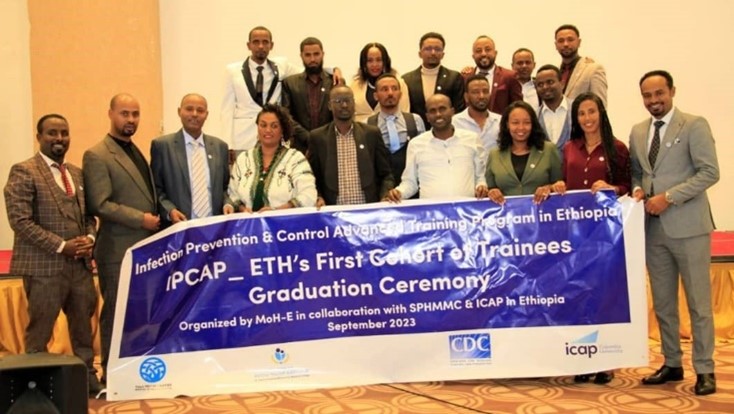
    A group of people poses for a photo holding in front of them an IPCAP graduation banner.
    The first cohort of IPCAP graduates in Ethiopia at their graduation ceremony, October 2023, Addis Ababa, Ethiopia.

    Using knowledge gained from Sierra Leone’s Advanced IPC Certificate Course, CDC and ICAP began work in February 2023 with partners in Ethiopia, including the Ethiopian MoH and Saint Paul’s Hospital Millennium Medical College, to implement a similarly structured 6-month program known as the Infection Prevention and Control Advanced Training Program or IPCAP.

    The hands-on learning projects were adapted for Ethiopia’s current priorities, including microbiology, injection safety, and HAI surveillance. Members of the National IPC Program at the MoH, CDC-Ethiopia, and other IPC professionals in Ethiopia mentored the trainees throughout their field work.

    The first cohort of 19 trainees in Ethiopia graduated in October 2023. The trainees were IPC focal points from 16 different healthcare facilities and 3 Regional Health Bureaus (RHBs). IPC focal points from healthcare facilities with ongoing collaborations with the National IPC Unit were prioritized for the first training cohort. Although in early stages of implementation, the recent graduates of IPCAP continue to serve as IPC focal points at healthcare facilities and RHBs where they are now leading quality improvement projects and implementation of HAI surveillance per the national protocol.

    Sustaining Success

    The third cohort of Sierra Leone’s Advanced IPC Certificate Course was delivered in partnership with Njala University. Sierra Leone MoH is now exploring the possibility of expanding course delivery to other local universities to meet demand and improve sustainability. Ethiopia’s MoH is also identifying opportunities to sustain the IPC training program.

    Learn more about what CDC and partners are doing globally to monitor and prevent HAIs.


    Authors:

    Lindsay Tompkins, PhD, MS is an epidemiologist on the Implementation Team in the International Infection Control Branch in the Division of Healthcare Quality and Promotion at the U.S. Centers for Disease Control and Prevention in Atlanta.

    Karen Wu, DVM, MSPH is an epidemiologist on the Implementation Team in the International Infection Control Branch in the Division of Healthcare Quality and Promotion at the U.S. Centers for Disease Control and Prevention in Atlanta.