Category: Health

  • Stark Law Crackdown Jacks Up Fines, Settlements and Physician Pressures

    Stark Law Crackdown Jacks Up Fines, Settlements and Physician Pressures

    Enforcers of anti-kickback laws are turning up the heat on hospitals, health systems and physicians alike, with 2024 on track to see ever increasing penalties and stress on providers.

    Commonly known as the Stark Law, the Physician Self-Referral Law (42 U.S.C. §1395nn) of 1989 prohibits physicians from referring patients to receive “designated health services” payable by Medicare or Medicaid from entities with which the physician or an immediate family member has a financial relationship, unless an exception applies.

    The goal, of course, is to prioritize helping patients obtain the best available care over physician self-dealing. Healthcare providers who believe they may have violated the Stark Law may report possible infractions within six years through a self-referral disclosure protocol (SRDP).

    Experts generally applauded updates to Stark implemented in 2020 designed to relieve Stark administrative burdens. Then, in early 2023, the Centers for Medicare & Medicaid Services again revised the protocol in an aim to streamline SRDP submissions.

    As a result, from 2021 to 2023, self-disclosures rose from 27 to 176 – a 552% increase.

    Perhaps one motivating factor is the burgeoning size of Stark settlements. For example, late last year, Community Health Network, Inc., of Indianapolis, agreed to pay $345 million to resolve alleged Stark violations – an all-time record.

    The settlement sprang from U.S. Department of Justice charges that senior management conspired to hire physicians from private practices at as much as double their salaries for the purpose of capturing “downstream referrals.” A whistleblower former executive reported the scheme in 2014 under the False Claims Act’s (FCA) qui tam provisions.

    In another qui tam case, regional hospital operator Covenant Healthcare Systems and two of its physicians agreed to pay more than $69 million in a suit brought by a former physician-executive for improper financial relationships between Covenant and its doctors. More typical is a $1.8 million fine in March this year against a Houston neurologist for allegations of Medicare and Medicaid billing for medically unnecessary services and for referring patients to his own diagnostic centers.

    However, critics say that the widened Stark enforcement net is not only catching more offenders but is simultaneously squeezing physicians unfairly.

    Ramped-up FCA and Stark enforcement is throwing doctors into a vise between patients and corporately owned and managed hospitals, health systems and medical practices, argues Harry Severance, MD, a high-profile author and frequent public speaker on healthcare policy and workplace safety.

    As private equity firms and business-focused management teams increasingly take control over American healthcare, doctors complain that pressure to increase provider productivity and profitability is approaching intolerable levels. Patient care subsequently suffers.

    Management boards typically function without physician members and defend their earnings-focused decisions as “common business practice,” says Dr. Severance, adjunct assistant professor at Duke University School of Medicine. While acceptable outside of healthcare, such conduct tends to draw doctors into risking FCA/Stark violations, sometimes unknowingly as guidelines and regulations grow.

    Dr. Severance points to research finding that primary care physicians need 26.7 hours per day just to follow nationally recommended guidelines for preventive care while also seeing patients.

    “[I]f there are no practicing physicians on board, my legal sources tell me that it’s much easier to avoid federal oversight and federal inquiry, especially if presented as ‘common business practice,’…” Dr. Severance told Becker’s ASC Review.

    Photo: adventtr, Getty Images

  • Keeping Your Hands Clean and Healthy | Blogs

    Keeping Your Hands Clean and Healthy | Blogs

    Keeping Your Hands Clean and Healthy | BlogsAs a healthcare worker, clean hands count. Clean hands prevent the spread of illness in healthcare facilities. Unfortunately, the frequent handwashing and sanitizing needed to achieve this all too often results in painful, cracking, or broken skin on the hands. This raises an important question: what can we do to ensure our hands are clean to protect ourselves and patients, and still have healthy and beautiful hands?

    As dermatologists, hand dermatitis is one of the most common issues we see. Hand dermatitis often comes with redness, dry skin, itching, burning, blisters, and crusts. It is made worse by wet work: when hands are wet for more than 2 hours per day, hand washing more than 20 times per day, or wearing gloves for more than 2 hours per day. In 2020, hand dermatitis was reported(1,2) as the second most common nonfatal occupational illness.

    This discomfort can make proper hand hygiene unappealing and can lead to healthcare workers occasionally skipping this essential task. However, there are some preventive measures that can help:

    • Avoid or minimize wet work.
    • Wear gloves to do household chores, especially when washing dishes.
    • Wear gloves when using cleaning products and gardening.
    • Keep hands well moisturized with thick creams and ointments like plain petrolatum or petroleum.
    • Remove rings when washing hands.
    • Use warm or cold water when washing hands, do not use hot water.
    • Use alcohol-based hand sanitizers when recommended.

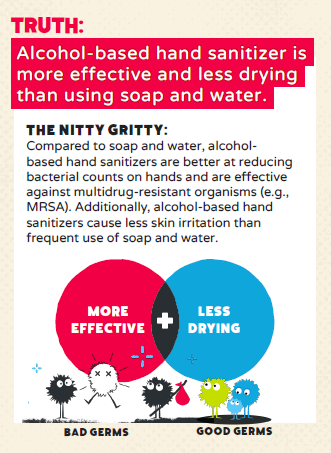
    The CDC recommends the use of alcohol-based sanitizers, rather than soap and water, as the preferred method to reduce germs on your hands in most clinical situations. Unless there is visible bodily fluid, dirt, oil, or grease on your hands, sanitizers are usually the better choice. Why?

    • Compared to soap and water, alcohol-based sanitizers remove fewer natural protective oils and cause less drying and damage.
    • Many people believe that hand sanitizer is more drying than soap and water; this is a widespread myth not supported by science.
    • If alcohol-based sanitizer burns, this is because the skin is already cracked and damaged. The burning is not a sign of further damage.
    • The sooner you make the switch from soap and water to sanitizer, the sooner your hands will heal.
    • Choose a hand sanitizer with few ingredients, and ideally one that is fragrance-free, to reduce the risk of irritation or allergy.
    • Also look for ingredients like dimethicone or glycerin to help protect the skin.
    • At work, use facility approved moisturizers and consult with your occupational or employee health department for additional measures.
    • You may use thick moisturizers to protect the skin and cover the hands with cotton gloves as directed by your facility and when off duty.

    Order free CDC’s Clean Hands Count materials for your clinic to dispel hand hygiene myths.

    Even with good habits, some people are prone to developing chronic hand dermatitis due to factors outside their immediate control. This is particularly true if you have a history of eczema, or work in a healthcare setting.

    Be sure to seek help if you are suffering from hand dermatitis and it is impacting your daily life or failing to improve. Your dermatologist is your partner to help you maintain clean and healthy hands.

    Learn more about hand hygiene in healthcare settings.


    References

    1. Survey of Occupational Injuries and Illnesses Data [Available from: https://www.bls.gov/iif/nonfatal-injuries-and-illnesses-tables.htm#charts. TABLE SNR07. Nonfatal occupational illnesses by major industry sector and category of illness, 2021 Accessed 6 Dec 2022
    2. Fartasch M. Wet Work and Barrier Function. Curr Probl Dermatol. 2016;49:144-51.


    Authors:

    Aída Lugo-Somolinos MD
    Professor Dermatology, Director Dermatology Clinical Trials Unit, University of North Carolina, Chapel Hill
    Dr. Lugo-Somolinos is the Director of the Contact Dermatitis Clinic at UNC and serves at the Board of Directors of the American Contact Dermatitis Society

    Brandon L. Adler, MD
    Clinical Assistant Professor, Department of Dermatology, Keck School of Medicine, University of Southern California
    Dr. Adler is the Director of the Contact Dermatitis Clinic at USC and serves on the Board of Directors of the American Contact Dermatitis Society.

    Jennifer K. Chen, MD
    Clinical Professor, Department of Dermatology, Stanford University School of Medicine
    Dr. Chen specializes in contact dermatitis and is currently the President of the American Contact Dermatitis Society.
    “On behalf of the American Contact Dermatitis Society”

  • There’s Still Time to Register for MedCity INVEST

    There’s Still Time to Register for MedCity INVEST

    Join MedCity News and nearly 300 healthcare investors, startups, and innovative-minded executives in Chicago at the Ritz Carlton on May 21-22 for MedCity INVEST 2024. The conference is the premier boutique healthcare investment event in the U.S.  Equal parts networking and curated panels covering the latest healthcare investment trends, women’s health and AI, as well as a startup pitch contest, MedCity INVEST 2024 is the ideal event to discuss healthcare funding with investors looking for investment opportunities.

    Among the speakers are:

    • Brian Montgomery, Chief Strategy Officer, GE Healthcare
    • Dr. Chris Sasiela, Director of Innovator Support Services, Small business Education and Entrepreneurial Development (SEED), National Institutes of Health
    • Steven Knight, Chief Operating Officer, Quantum Health
    • Dr. Rekha Kumar, Chief Medical Officer, Found
    • Ellen Herlacher, Partner, LRVHealth
    • Dr. Henry Ting, Chief Health and Wellness Officer, Delta
    • Laura Fox, Director of Payment Innovation, Blue Shield of California
    • Zachary Stadnyk, Senior Manager, Life Science and Innovation,
      TMX Group (Toronto Stock Exchange)
    • Meredith Wilkerson, Investment Principal, Plains VC
    • Michael Greeley, Co-founder and General Partner, Flare Capital Partners

    Space is limited. Secure your spot today to attend!!

    Photo: Laurence Monneret, Getty Images

  • Research Shows Generative AI In The EHR Can Work Well, But Only With Human Oversight

    Research Shows Generative AI In The EHR Can Work Well, But Only With Human Oversight

    As the burden of documentation and various other administrative duties has increased, physician burnout has reached historical levels. In response, EHR vendors are embedding generative AI tools to aid physicians by drafting their responses to patient messages. However, there is a lot that we don’t yet know about these tools’ accuracy and effectiveness.

    Researchers at Mass General Brigham recently conducted research to learn more about how these generative AI solutions are performing. They published a study last week in The Lancet Digital Health showing that these AI tools can be effective at reducing physicians’ workloads and improving patient education — but also that these tools have limitations that require human oversight.

    For the study, the researchers used OpenAI’s GPT-4 large language model to produce 100 different hypothetical questions from patients with cancer.

    The researchers had GPT-4 answer these questions, as well as six radiation oncologists who responded manually. Then, the research team provided those same six physicians with the GPT-4-generated responses, which they were asked to review and edit.

    The oncologists could not tell whether GPT-4 or a human physician had written the responses — and in nearly a third of cases, they believed that a GPT-4-generated response had been written by a physician.

    The study showed that physicians usually wrote shorter responses than GPT-4. The large language model’s responses were longer because they usually included more educational information for patients — but at the same time, these responses were also less direct and instructional, the researchers noted.

    Overall, the physicians reported that using a large language model to help draft their patient message responses was helpful in reducing their workload and associated burnout. They deemed GPT-4-generated responses to be safe in 82% of cases and acceptable to send with no further editing in 58% of cases.

    But it’s important to remember that large language models can be dangerous without a human in the loop. The study also found that 7% of GPT-4-produced responses could pose a risk to the patient if left unedited. Most of the time, this is because the GPT-4-generated response has an “inaccurate conveyance of the urgency with which the patient should come into clinic or be seen by a doctor,” said Dr. Danielle Bitterman, who is an author of the study and Mass General Brigham radiation oncologist.

    “These models go through a reinforcement learning process where they are kind of trained to be polite and give responses in a way that a person might want to hear. I think occasionally, they almost become too polite, where they don’t appropriately convey urgency when it is there,” she explained in an interview.

    Moving forward, there needs to be more research about how patients feel about large language models being used to interact with them in this way, Dr. Bitterman noted.

    Photo: Halfpoint, Getty Images

  • Biden’s Executive Order for Studying Women’s Health: How to Not Squander This Opportunity

    Biden’s Executive Order for Studying Women’s Health: How to Not Squander This Opportunity

    There are innumerable examples of when we have been faced with moments of great opportunity to make progress and failed to meet the moment. Just a few years after the global Covid-19 pandemic, the fast development of life-saving vaccines was juxtaposed against several unsolved problems, such as a growing shortage of healthcare providers, a mental health epidemic, hospital closures and overflowing emergency departments

    We now find ourselves at one of those same crossroads. Last month, President Biden signed an executive order aimed at advancing the study of women’s health. This is an initiative largely considered to be long overdue. But, given our questionable track record of driving consistent progress, it’s important that – as a nation and an industry – we create a roadmap to optimize the success for this exciting moment.

    Inclusion is paramount 

    When it comes to research into the issues affecting women, we must look comprehensively across all demographics. Historically, certain groups have been left out of research, which means we do not always have enough data to give us an accurate picture. For example, when it comes to clinical trials, nearly 75% of participants are white. With nearly 40% of the U.S. population belonging to a racial or ethnic minority, that statistic shows clinical trial participation – one small piece of the system-wide problem – is not at all representative. 

    But it’s not just participants, or patients. The people delivering care, running clinical trial sites and making the decisions are not representative either. Research shows that physician race influences the race of the clinical trial participants, and trial leadership by minority physicians is well below that observed among white physicians, especially in FDA-regulated clinical trials funded by industry. It is nearly impossible to ensure all clinical research is diverse, equitable, and inclusive, if those characteristics aren’t prioritized in the leadership roles conducting the studies themselves. 

    To address racial disparities among clinical investigators, major changes must be both implemented and monitored. This is not limited to strategies, policies, incentives, and reforms. We know that trust is essential to the success of population health, and minority patients benefit from being cared for by minority doctors. 

    As we look to this exciting opportunity in front of us, we have to ensure that future research considers all impacted groups so that we can determine needs accordingly. 

    Intentional design should be prioritized 

    Healthcare is complex. So many times, we have seen the development of a new, exciting tool aimed at solving one of the many problems facing the larger system, only to watch it fail. This results in a waste of time, money, resources and productivity. That’s why it is so important to build solutions around clearly-identified needs, audiences and where there is a system in place to support them. 

    We don’t need to start from scratch; there are already outstanding examples of companies questioning whose voices are missing from the design process, and demonstrating how to be more intentionally inclusive. For example, in 2021, a global medical technology company launched a first-of-its-kind project aimed at capturing more insights about the experiences of people of color in order to identify ways the company can better support communities that aren’t getting relevant care due to mistrust, social determinants of care, inconsistent access to health insurance, biases, lower income and other factors. They will use those insights to design tools that support Philips’ goal of improving access to care for 400 million people per year in underserved communities by 2030.

    A strong foundation supporting strategic innovation needs to be in place now 

    The President’s executive order promises billions of dollars in new funding for women’s health research. The findings of that research will help identify needs and gaps in women’s healthcare, and solutions to address those gaps will inevitably emerge. But without a solid foundation that ensures those solutions are adopted across the system – e.g., by physicians – they will fail to drive change. We must start fortifying that foundation now to ensure inclusion and intentional design are a natural part of any future development, and that there is a clear pathway to get those developments into the hands of the women who need them. 

    First, we need to ensure that we have a way to support female innovators. It’s well-documented that much of the innovation in women’s healthcare has been spearheaded by women founders, yet these entrepreneurs face significant hurdles — from obtaining venture capital to navigating a predominantly male-driven business ecosystem.

    Second, companies that are focused on designing solutions must prioritize the infrastructure needed to get those solutions into the hands of the people who need them. More than 30% of all drugs launched in recent years have failed to meet market expectations. That staggering data point demonstrates just how important it is for companies and organizations that set out to address a healthcare problem to have a solid plan in place to get that solution into the hands of the people who need it. 

    For example, a focused and inclusive approach to market research can significantly enhance the effectiveness of marketing strategies, ensuring a successful launch and long-term success of a drug, digital tool or therapy in a competitive market. If companies simply look to their own networks to gather insights about a perceived problem and neglect to collect feedback from a broader community of healthcare professionals, when it comes time for those professionals to prescribe that new therapy, you may learn – too late – that they already have an effective solution. Building a strong foundation begins long before any solution is designed, yet it is critical to its future success. 

    Third, we need to redefine the patient experience and address access and diversity challenges in healthcare. Innovations – e.g., drugs, digital health solutions – can have varied responses across ethnic groups, so it’s critical to put structures in place to ensure the right people are part of the design and trial processes. Without the collection of this data and input from all populations, that innovation may not even make it through regulations.  

    Looking ahead, there are many reasons to be optimistic and hopeful about our ability to start closing the healthcare gaps; President Biden’s executive order is one of them. The real evidence will be in our ability to take the right steps – and include all the right stakeholders – along the way.

    Photo: Malte Mueller, Getty Images


    Shelli Pavone is President and Co-founder of Inlightened. She has more than 20 years of commercial experience in healthcare and is dedicated to partnering with clinicians and innovators alike to help shape the future of the industry. Shelli was named a Forbes‘ Next 1000 and is a graduate of The Ohio State University, with a BS in Psychology.

  • Opinion: Why PHTI’s Recent Assessment of Digital Diabetes Management Tools is Inadequate

    Opinion: Why PHTI’s Recent Assessment of Digital Diabetes Management Tools is Inadequate

    In late March, PHTI (Peterson Health Technology Institute) raised the bar for all of us working to digitize healthcare when they issued their first evidence assessment reporting the evaluation of digital diabetes management tools that support improved glycemic control in people with type 2 diabetes—or claiming to. 

    The head-scratcher here is that despite claiming to assess a technology – and despite using an assessment framework purpose-built to evaluate digital health technologies – the report did not evaluate any technology products. Rather, it evaluated eight companies providing well-established care pathways virtually (i.e. healthcare services). 

    Now, all these companies met the inclusion criteria of “connecting to a noncontinuous glucose monitor.” However, these tools – some connected to EHR and some not – are also pervasive as part of routine diabetes care provided in the clinic. As far back as 2006, 87% of adults with diabetes treated with insulin checked their blood glucose at least daily, and 63% of all adults with diabetes did the same. 

    So, what exactly was being evaluated?

    Honestly, I’m not sure. Except I’m certain it was not a digital technology.  

    The decision to apply a product evaluation framework to digitally enabled healthcare services represents a larger issue plaguing the digitization of healthcare that must be addressed as a priority because quality patient care is at stake. 

    Critical considerations for evidence evaluation in the digital era of healthcare:

    1. We must distinguish between digital health products and digitally enabled care services

    As Steve Steinhubl and Eric Topol said, digital medicine is on its way to being just plain medicine. And just like every other big industry that has gone before us, every aspect of healthcare will be digitized: From back office administration to direct patient care, quality improvement to clinical research, and population health to precision medicine. 

    In the same way that we don’t apply the evaluation frameworks for the ROI of diagnostic assays, molecular products, or traditional medical devices to one another *or* to healthcare services, we must take a more nuanced and fit-for-purpose approach to the evaluation of digital health products as distinct from digitally enabled healthcare services. 

    The PHTI assessment concluded that most of the services they evaluated are bad technologies, akin to saying an apple is a bad-tasting orange. However, this mischaracterization of digital products and services in healthcare is not a problem unique to PHTI’s assessment framework but an industry-wide issue. 

    I cannot tell you how many times I’ve been asked about how the FDA regulates virtual-fist care; they don’t. The FDA regulates medical products, not healthcare. I’ve also watched digitally enabled care providers get passed around payer organizations, pushed towards reimbursement pathways for vendors with software-as-a-service models when they are, in fact, using providers, as defined in federal law, to provide healthcare as defined in federal regulations.

    Until well-intended work such as PHTI’s rectifies this mischaracterization of digitally enabled services, its output will only add to confusion and friction in the progress we’ve seen from digitally enabled patient care.

    2. Value and the patient must be our North Star

    It is not by accident that the digitization of healthcare – characterized by high-resolution, liquid data and rapidly advancing computing capabilities – is being accompanied by a resurgence of value-based care initiatives. We need flows of high-quality data to support the evaluation of care outcomes and insights into the processes of care that drive those outcomes (and those that do not) to make the business case for assuming risk. 

    To successfully advance value-based care in an increasingly digitized industry, we must develop appropriate evaluation frameworks for digital health products and digitally enabled healthcare services. 

    This requires that we differentiate between the evaluation of whether a digital health product or a digital component of a digitally enabled care service is fit for purpose – an evaluation that should include evidence that supports any performance claim it may make as well as consideration of privacy, security, accessibility, usability, and equity – and whether this solution is delivering value. 

    This also requires that we define value more holistically than in the recent PHTI assessment, in which short-term clinical effectiveness and cost-effectiveness were the primary drivers. 

    Let’s start with the patient. While PHTI did engage patient users of the digitally enabled services in their report, their perspectives were not systematically included in the value or throughout the evaluation process. This feels rather performative and consistent with ongoing critiques of product evaluation frameworks issued by the Institute of Clinical and Economic Research (ICER), PHTI’s partners in developing the ICER-PHTI Assessment Framework for Digital Health Technologies.

    We should also include equity and access as essential measures of value alongside effectiveness and cost-effectiveness. , as our team did when we partnered with the Veteran’s Health Administration to develop a value-based innovation framework that applies to all digital health innovations, whether products or digitally enabled services. 

    I was alarmed by PHTI’s conclusion that there was no evidence that diabetes management programs evaluated advanced health equity. Their study design—particularly the selection of companies whose business models are contingent on serving patients covered by self-insured employers—rendered a data set that could never be used to answer the question, “Is it used in diverse settings and by groups that need it most?” 

    Their evidence assessment also failed to recognize that a comparator arm of ‘usual care’ absent considerations of access to this care is a flawed framework. For example, Omada Health –  one of the eight companies evaluated in the PHTI report – provides diabetes management solutions to tens of thousands of rural Alaskans who otherwise would not have access to any support to manage their condition. To every one of those patients accessing care previously out of reach, achieving statistically equivalent clinical outcomes is not a failure of the digitally enabled program. It is an enormous success. 

    3. Altitude is everything

    The PHTI assessment reports ROI at the ‘category level’, breaking digital diabetes management solutions (ahem, services) into three different categories: Remote patient monitoring, behavioral and lifestyle modification, and nutritional ketosis. 

    Setting a discussion of these categories aside, if we want to evaluate ROI at the ‘category level’ – and we should – we need a more inclusive approach to solutions in scope.

    PHTI evaluated eight different start-ups providing three different categories of digitally enabled diabetes management solutions (not technologies) and conducted a systematic review of the scientific literature to draw ‘category level’ conclusions about the digitization of a $23Bn (2022) market. And they did so without contemplating all of the other digital solution providers in this space, the patient perspective, or equity and access to care. 

    In addition, this assessment—summarized by a dashboard of big red dots and warnings not to adopt—uncovered critically important findings that digitally enabled behavioral and lifestyle modifications can have outsized positive impacts on particular subpopulations, particularly individuals with high HbA1c – a measure from a blood test of how much sugar is in your blood and used to diagnose diabetes – starting insulin for the first time. But it buried them in a roll-up of the findings to the ‘category level.’ 

    These issues highlight the risks of extrapolating and translating findings – either from the scientific literature to a single solution or a small handful of solutions to a ‘category level’ in our complex, $4.3Tn industry – without sufficient contextual information. 

    In the digital era of healthcare, we have the ability to interrogate comprehensive datasets when we want to draw industry-wide ‘category level’ conclusions. We also have the capacity to conduct targeted subanalysis to identify the greatest opportunities to benefit every one of the patients our industry exists to serve. Methodological mashups that jump altitudes between ‘category level’ and solution studies and report population-level conclusions without championing sub-population variance are simply not appropriate, given the proliferation of data available. 

    New eras are characterized by reinvention

    PHTI is truly a pioneer in digital health, holding us accountable for delivering value in this digital era of healthcare. Their first assessment has started conversations across the field about our responsibility to evaluate the return on the substantial investment required to digitize our enormous and complex domestic healthcare industry. That is an impressive achievement.  

    Their report’s intent to deliver data supporting an evidence-based approach to investing in healthcare innovation in our resource-constrained environment is spot on. But first, we must establish a shared and fundamental understanding of the different components of digital health.

    And this is a need that stretches far beyond the impact of the PHTIs assessment framework.

    When most people in our industry cannot differentiate between traditional and generative AI, how can we appropriately evaluate these models and maintain their security?

    When accreditation bodies are actively building certifications for virtual care, how will they recognize that it’s all just healthcare in the digital era and reflect these updates in their certification programs for traditional care?

    When the failure of a single digitally enabled provider results in cries of the ‘collapse of telehealth’ but the closure of dozens of rural hospitals is ignored, how on earth do we plan to care for every person our industry exists to serve?

    Definitions are important. A common unifying language is important. And fit-for-purpose evidence-based evaluation frameworks are important. 

    As Taylor Swift taught all of us, a new era is characterized by successful reinvention. As we enter the digital era of healthcare at scale, we must redefine how we care for people… and how we evaluate that care. And this begins with a deep understanding of the new products, care pathways, and the difference between the two.

    Photo credit: Venimo, Getty Images


    Jennifer C. Goldsack founded and serves as the CEO of the Digital Medicine Society (DiMe), a 501(c)(3) non-profit organization dedicated to advancing digital medicine to optimize human health.

    Previously, Jennifer spent several years at the Clinical Trials Transformation Initiative (CTTI), a public-private partnership co-founded by Duke University and the FDA. Jennifer spent five years working in research at the Hospital of the University of Pennsylvania, first in Outcomes Research in the Department of Surgery and later in the Department of Medicine. More recently, she helped launch the Value Institute, a pragmatic research and innovation center embedded in a large academic medical center in Delaware.

    Jennifer earned her master’s degree in chemistry from the University of Oxford, England, her masters in the history and sociology of medicine from the University of Pennsylvania, and her MBA from the George Washington University.

  • Navigating Policy Terrain: Perspectives for Payers on Tackling Ghost Networks

    Navigating Policy Terrain: Perspectives for Payers on Tackling Ghost Networks

    It’s not uncommon for a patient, when searching their insurer’s provider directory, to find listings for physicians who are no longer practicing and no longer in-network, as well as inaccurate addresses, phone numbers, and websites. These phantom entries create “ghost networks” in health insurance.

    For more than a year ghost networks have made headlines as an increasingly serious issue for payers, providers, and especially patients. Riddled with inaccurate data, these networks often lead to delayed care and surprise bills, significantly impacting member experiences and trust.

    Frustrated patients have been contacting their elected officials to address the ubiquity of ghost networks. Legislators have been hearing from constituents that this problem is impacting patients’ lives and ability to get care–and they are doing something about it. Three bills–two in the Senate, and one in the House–have been proposed that specifically address inaccuracies in health insurance provider directories, with more stringent guidelines, tighter timeframes, published scores, and possible fines if providers fail to keep their directories compliant.

    Payers have good reason to prepare for any regulation changes now as the traditional means of checking directory accuracy–call campaigns, attestations, or manual roster intake–are cumbersome and costly processes that have not proven effective. What is proven? Automated solutions to meet the implementation windows and level of accuracy these new bills propose.

    Policy reform initiatives

    Three recent legislative efforts are aimed at addressing the root causes of ghost networks and enhancing healthcare access for patients.

    U.S. Senators Michael Bennet (D-CO), Thom Tillis (R-NC), and Ron Wyden (D-OR) introduced the REAL Health Providers Act in October 2023. The bipartisan-supported bill is backed by the Senate Finance Committee and aims to ensure that Medicare Advantage plans keep accurate directories and protect their members–most of them seniors–from receiving surprise medical bills.

    The House version of the REAL Health Providers Act – H.R. 7708 – was introduced in March 2024 by Representatives Greg Murphy (NC-03)  and Jimmy Panetta (CA-19), among others. It mirrors the language in the Senate bill and aims to protect seniors from delayed care and unnecessary costs.

    Also in March 2024, Senator Tina Smith (D-Minnesota) joined Wyden to introduce the Behavioral Health Network and Directory Improvement Act. This bill addresses the problem of ghost networks for people enrolled in private health insurance plans with a focus on mental health care and coverage. In addition to targeting network directory accuracy, timeliness, and adequacy, it also aims to improve mental health providers’ network participation by establishing parity for mental health and physical health reimbursements.

    Regulatory compliance

    To stay ahead of policy changes, payers can track evolving requirements and compliance standards governing provider directory accuracy and network adequacy.

    Here are the common themes among the proposed legislation

    • High accuracy benchmarks– this includes:
      • Periodic accuracy verification: Health plans must verify their provider directory data every 90 days and, if necessary, update that information
      • Public accuracy disclaimer: If a health plan cannot verify the data, the plan must indicate in its directory that the information may not be valid. 
    • Detailed provider directory information that must be kept current– Health plans must keep certain information in their provider directories up-to-date, including a provider’s name, specialty, contact information, primary office or facility address, availability, accommodations for people with disabilities, cultural and linguistic capabilities, and telehealth capabilities.
    • Speedy processing turnaround times and rapid removals and updates to inaccurate or outdated information. For example, health plans must remove a provider within 5 business days if the provider is no longer participating in the plan’s network.
    • Publicly available accuracy scores and audit results – these include:
      • Annual Accuracy Assessments: Health plans must analyze their provider data accuracy annually and submit a report to HHS/CMS with the results of that analysis. 
      • Public Accuracy Scores: Based upon the annual accuracy assessments submitted by health plans, HHS will make accuracy scores publicly available.
    • In-network rates if directory information is inaccurate: If an MA member receives care from an out-of-network provider that a health plan’s directory indicated was in-network at the time the appointment was made, the plan may only charge that patient in-network prices. 

    Make an action plan

    Payers must anticipate these emerging policy trends and regulatory developments, as they will no doubt impact payer strategies and operational workflows in managing provider networks. Also, these compliance changes create the perfect opportunity to help your organizations get even better with their data, to improve member and patient experiences. Payers can break this process down into three steps:

    1. Examine your current approach

    It is unlikely that traditional, manual approaches to provider data accuracy–such as call campaigns, manual roster intake, and old-school attestation–will help payers reach the necessary level of compliance.

    Payers need to scrutinize their current approaches to information gathering, whether it be using attestation from provider rosters or industry portals, call campaigns, roster intake, or other manual or automated efforts. What are you doing, and how well is it working? Across the industry, we see about 20-30% of provider organizations are not responsive to questions about demographic changes or requests to provide data on a regular basis.

    Call campaigns are costly and time-consuming, and with a high level of variability and inaccurate results. Two different people from the same call center can contact the same practice on the same day and get different answers each time. In addition, phone calls have become an outdated, inefficient method of gathering information. They are invasive and abrasive, and therefore often ignored. It may be possible to do away with phone calls completely by relying on more technologically advanced approaches. The rostering process is difficult for both provider organizations and health plans– it’s a heavily manual process on both sides; there are significant delays in data updates; and it’s a source of provider abrasion.

    2. Identify what does not align with new requirements

    Processing times and mandated display of accuracy scores will require a new, technology-based approach to accuracy. Currently, health plan information processing times are too slow and accuracy verification isn’t robust enough.

    The attestation that is necessary for compliance takes a long time and is not sufficient to create the required updates in a timely manner. Payers need to measure all these parts of their workflows to see where results are compliant and where they might need to change processes to stay ahead of the new legislative requirements.

    3. Incorporate technology-based, non-manual solutions into provider directory management systems to boost accuracy scores

    Health plan members rely on the utility and accuracy of provider directories. There are now tools that allow both health plans and provider organizations to quickly screen their entire network of information for accuracy and identify where ghost networks exist.

    Once payers have uncovered inaccuracies in their directory data and “decluttered” the ghosts, they can move to the second step: examining the adequacy of the remaining information in their directories. Technology tools exist that can help fill these gaps by identifying active, in-network providers who are taking new patients.

    Technology-based, non-manual tools are available to address both accuracy and adequacy gaps, from front end to back end in provider data systems. How could an AI/machine learning model identify accurate provider data, when information directly from the provider is often inaccurate? A supervised learning-based model learns the answers that a patient would get if they were trying to make an appointment and ingests all of the information that a provider creates in their daily workflow.

    Machine learning models look at all of this information and can accurately predict the right answer to a higher degree of accuracy than manual outreach and other traditional methods of attestation. The models are frequently tested and recalibrated to ensure they’re performing at the optimal level. They can even accurately predict the results of a CMS audit within a 5 percent margin of error. Such models could be part of a health plan’s overall provider data strategy to ensure that information is correct and up-to-date every day. 

    Legislation currently in the works about ghost networks involves some big changes for health plans, but payer organizations don’t have to tackle them alone; there are opportunities for partnerships to ease the transition into a technology-based approach to these new regulatory requirements.

    Photo: Bigstock


    Meghan Gaffney is Co-Founder and CEO of Veda, an artificial intelligence (AI) and machine learning platform that saves healthcare payers and providers up to 90 percent by automating healthcare administrative data processing and its associated administrative costs. Veda enhances data processing speeds and accuracy and is working to solve a $1 trillion problem within the healthcare industry. Meghan has over 15 years of experience working with elected officials and impact organizations, as well as consulting on technology opportunities. She is a passionate advocate for artificial intelligence and machine learning and believes these technologies will create unprecedented economic opportunities for the United States and the world.

  • Q1 Was Pretty Good For Hospital Finance — But It’s Unclear If It Will Stay That Way

    Q1 Was Pretty Good For Hospital Finance — But It’s Unclear If It Will Stay That Way

    Hospitals’ operating margins and patient volumes dropped slightly in March, according to a new report from Kaufman Hall. 

    Hospitals’ single-month operating margin index closed out March at 3.4% — a small dip from February’s 3.6%. It’s also worth noting that March ended with a year-to-date operating margin index of 3.9% — which is still significantly higher than the 1.9% index that ended 2023.

    While hospitals were doing relatively well financially during the first quarter of the year, the report’s data could suggest more financial challenges ahead for hospitals. Right now, it’s unclear whether the recent declines in hospitals’ margins and volumes will be short- or long-term, said Erik Swanson, senior vice president at Kaufman Hall.

    “Nothing we have indicates that we should expect a large drop in volumes, but the next couple of months will help us understand those longer-term trends more fully,” he explained.

    The report also revealed that hospitals’ outpatient revenue decreased by 5% in March, due mainly to the competitive outpatient care landscape.

    “Many hospitals are pivoting to offer more outpatient care options in the wake of shifts of volume. However, they are often finding themselves competing for patients with an increasing number of peer organizations, retailers and other nontraditional providers,” Swanson noted.

    He also highlighted hospitals’ ongoing increases in incurred bad debt and charity, as well as increased days in accounts receivable, as additional financial challenges.

    In his view, some of the increase in accounts receivable balances is due to the Change Healthcare cyberattack, as organizations are extending the time period in which they will collect. But rising bad debt may also be a symptom of larger trends, such as shifting payer mix away from commercial payers, Swanson added.

    To offset declining revenue and volume trends, the report recommended that hospitals consider boosting their growth in high-performing areas like ambulatory surgery centers, pharmacies and imaging services. Depending on the hospital, it might also be a good idea to establish a retail presence, Swanson noted.

    Photo: claudenakagawa, Getty Images

  • Navigating the Transition to Value-Based Care: Addressing Fears and Embracing Risk in ACO REACH

    Navigating the Transition to Value-Based Care: Addressing Fears and Embracing Risk in ACO REACH

    Established healthcare organizations, whether it be health systems, accountable care organizations, or independent provider groups often grapple with the dilemma of fully embracing risk. Fears of taking downside risk and capitation payments are intimidating given the known unknowns regarding participating in fully risk-based programs, regardless of whether one operates within the Medicare Shared Savings Program or ACO Reach. Accommodating varying provider maturity levels and comfort with risk is crucial. By offering blended options, individual risk pools, and net neutral capitation payments providers can embark on their journey toward value-based care at a pace aligned with their tolerance and readiness. However, groups need to be further educated on the differences between MSSP and REACH and how partnering with a different value-based care enablement company can ease the transitions, de-risk the move to alternative value-based care programs, and improve their upside potential.

    Typical fears to transitioning to ACO REACH 

    Downside risk: Only 18% of Medicare ACOs participate in downside risk arrangements. It’s rational for any provider group to want to avoid downside risk. The uncertainty of losses can be burdensome even for high-performing medical groups as relatively healthy patients can have a catastrophic accident that drives up the cost of care, leaving the entity with downside risk liable for the high fees they had not already identified and planned for. Provider groups typically associate MSSP ACOs with no downside risk while assuming that because you move to REACH, you automatically have to take on downside risk. Much of this can be credited to traditional value-based care enablement companies operating exclusively in the MSSP space which historically offered fee-for-service payments and capping downside risk while new entrant ACOs predominantly operating in the ACO REACH space offer capitation payments and downside risk-sharing arrangements. In reality, the latest entrant value-based care enablement organizations can also remove downside risk and often do to onboard provider groups; the downside is capping your upside savings, however, your projected shared savings are typically more significant in a REACH model.

    Capitation: First, what is capitation? According to CMS capitation is a way of paying health care providers or organizations in which they receive a predictable, upfront, set amount of money to cover the predicted cost of all or some of the health care services for a specific patient over a certain time. According to a study completed by the American Medical Association, 38% of providers are participating in a Medicare ACO. Fee for serviceis the most common form of payment, with 86% reporting FFS payments making up the largest portion of their practice’s revenue. Ultimately, switching to capitation payment models comes down to two things — first, eat what you treat culture and second, sticking to what you know. Change is difficult, and to a provider’s credit, it’s their livelihood. Asking them to take a chance on a prospective new payment model is a big ask.  

    A VBC enablement company can ease the transition to ACO REACH and make it financially viable in a few ways.

    • Implementation incentives —Switching programs can be a big undertaking, from convincing providers to accept alternative forms of payment to changing clinical staff workflows. Value-based care enablement companies can provide implementation incentives through upfront payments to ease the transition and make it financially viable.
    • Net neutral payments — Offering capitation payments using this method looks at the average amount a provider was billing FFS monthly over a lookback period and converts that to upfront monthly capitation payments. This way, a provider sees no decrease in their primary source of revenue.
    • Quality bonuses — Traditional VBC enablement companies participating in MSSP providers would have to wait 12 to 18 months to realize any shared savings. Another strategy for transitioning providers to an ACO REACH capitation model is to offer quality bonuses that are advancing on their shared savings on a monthly or quarterly basis for achieving certain standards of care. This way provider groups earn their shared savings throughout the year allowing them to help pay for day-to-day operations or use them to invest back into the business.
    • Shared savings — Depending on the provider group’s performance, they will also receive a portion of the shared savings remaining from the quality bonuses they receive throughout the year.

    Photo: crazydiva, Getty Images


    With over 10 years of healthcare technology experience, and having led sales strategies for top-tiered companies including Athenahealth, DataRobot, and ClosedLoop.ai to name a few, Mike Ward‘s long history of driving successful healthcare tech has made significant strides in bringing innovative healthcare solutions to market. Ward’s experience in the healthcare industry including hospitals, payers, independent medical providers, and biotechnology, paired with his knowledge of sales, Software as a Service (SaaS), Data Analytics, Customer Experience, and Business Development, make him a key player for the Spatially Health team. Ward holds a Master of Science – MS in Healthcare Management from The Johns Hopkins University – Carey Business School.

  • Amgen Puts Its Weight Behind Obesity Drug With Potential Edge Over Lilly, Novo Nordisk Meds

    Amgen Puts Its Weight Behind Obesity Drug With Potential Edge Over Lilly, Novo Nordisk Meds

    Amgen aims to challenge the Novo Nordisk and Eli Lilly duopoly in the market for injectable obesity medications, and the company is now preparing for Phase 3 testing of an injectable drug candidate that would introduce new competition. While executives are not yet sharing specific details of the clinical data that support these plans, Amgen’s drug candidate could have dosing and manufacturing advantages.

    The update for the drug, maridebart cafraglutide or MariTide (known in earlier stages of development as AMG 133), came with Amgen’s report of financial results for the first quarter of 2024. CEO Robert Bradway said the company does not normally comment on interim data, particularly for a drug candidate in Phase 2, but would offer some information given the significant interest in MariTide.

    “We are confident in MariTide’s differentiated profile and believe it will address important unmet medical needs,” Bradway said during a conference call Thursday.

    The Phase 3 program for MariTide will evaluate the drug in obesity, obesity-related conditions, and type 2 diabetes, Bradway said. Amgen has also begun expanding its manufacturing capabilities to support both clinical and commercial supply of the drug.

    The popular weight medications Wegovy from Novo Nordisk and Zepbound from Eli Lilly are peptide drugs engineered to activate the GLP-1 receptor, which has the effect of helping patients feel full so they eat less. Lilly’s drug offers the additional mechanism of activating a second receptor, GIP. Both drugs are administered as weekly injections.

    MariTide leverages Amgen’s experience developing antibody drugs. The molecule’s design consists of an antibody conjugated to a polypeptide and it offers a dual mechanism. It activates the GLP-1 receptor like the Novo Nordisk and Lilly products. But unlike Lilly’s medication, MariTide blocks the GIP receptor. In Phase 1 testing, the drug led to dose-dependent weight reductions. Amgen reported preliminary data from this study in late 2022. Full results were published in February in the journal Nature Metabolism.

    The Phase 2 test of MariTide is a placebo-controlled dose-ranging study evaluating three doses in nearly 600 patients who are obese and overweight, including patients with or without type 2 diabetes. The main goal is measuring the change in body weight after 52 weeks.

    While Amgen is staying mum on efficacy details from the Phase 2 study, Amgen Executive Vice President, Research and Development, and Chief Scientific Officer Jay Bradner said MariTide could be dosed monthly via an autoinjector device, offering less frequent dosing than the Novo Nordisk or Lilly drugs. This dosing schedule offers additional advantages, William Blair analyst Matt Phipps wrote in a Friday research note. Phipps said he still expects MariTide will lead to the same nausea and vomiting side effects that are common with other GLP-1 agonists, but monthly or potentially even quarterly dosing would still result in meaningfully fewer total sick days compared to drugs that are administered weekly.

    “We believe this will be particularly important for patients who have lost meaningful weight and are less tolerant of continued side effects, but would still benefit from maintenance therapy to prevent weight rebound,” Phipps said.

    Less frequent dosing would also have the advantage of reducing the manufacturing burden of producing the drug and the autoinjectors, Phipps added. Strong demand for new metabolic disorder medications has outpaced drugmakers’ ability to supply their products. Novo Nordisk and Lilly have invested billions of dollars in their own manufacturing capabilities and acquired manufacturing assets to increase production capacity.

    Amgen expects the preliminary Phase 2 data for MariTide will be announced in late 2024. In the meantime, a different Amgen drug is dropping out of the race to bring patients an oral obesity medication. Bradner said the company will no longer pursue development of the small molecule code-named AMG 786, which has completed Phase 1 testing. Bradner offered no additional details other than to say that given the drug’s profile, the company has chosen instead to focus its metabolic disease efforts on MariTide and several other preclinical assets. The company has never disclosed the target of AMG 786.

    Photo: Patrick T. Fallon/Bloomberg, via Getty Images